
Music theory and technique for beginners
Tuning, reading sheet music, chords, scales, breathing and exercises explained step by step.
Guides to theory and technique

Colombian December songs on guitar: chords and rhythms for the holiday season
With four or five open chords and a strumming pattern for each rhythm, you can accompany the novena and December celebrations. We explain which ones to use, in what keys, and how to practice them starting in November.
Read article
How to Play Bambuco on Guitar and Tiple: Strumming, Chords, and Your First Songs
Bambuco plays with two pulses at once, which makes it tricky at first. We explain 6/8 versus 3/4, a basic strumming pattern, simple progressions, and how to practice.
Read article
How to Play Colombian Pasillo on Guitar and Tiple
Pasillo is played in 3/4, with bass on the first beat and shifted chord entries. Strumming patterns, progressions, and exercises for guitar and tiple, from slow pasillo to the lively fiestero style.
Read article
How to play vallenato on guitar: paseo, merengue, and easy chords
Paseo and merengue strumming patterns explained stroke by stroke, alternating bass notes that imitate the band's bass player, simple progressions, and how to accompany a singer.
Read article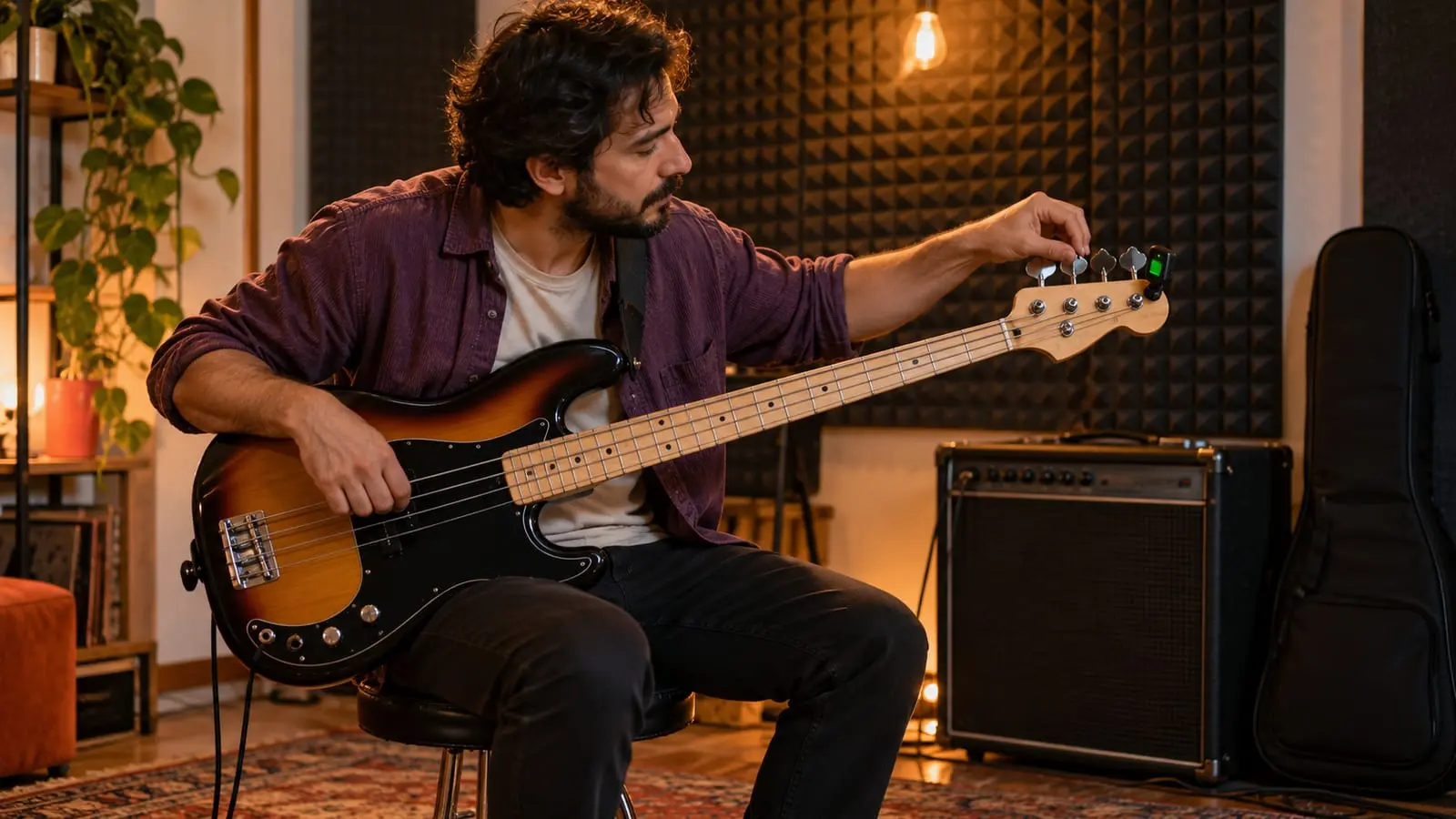
How do you tune an electric bass? E, A, D and G
E, A, D and G: the four lowest strings of the guitar, an octave lower. Here's how to tune your bass with a tuner, by ear and with harmonics, and how to check the intonation.
Read article
How do you tune a tiple? A step-by-step guide to its 12 strings
Twelve strings, four courses and some tuned an octave apart: here's how to tune a tiple with a tuner and by ear, without getting tangled up in the tuning pegs or snapping a string.
Read article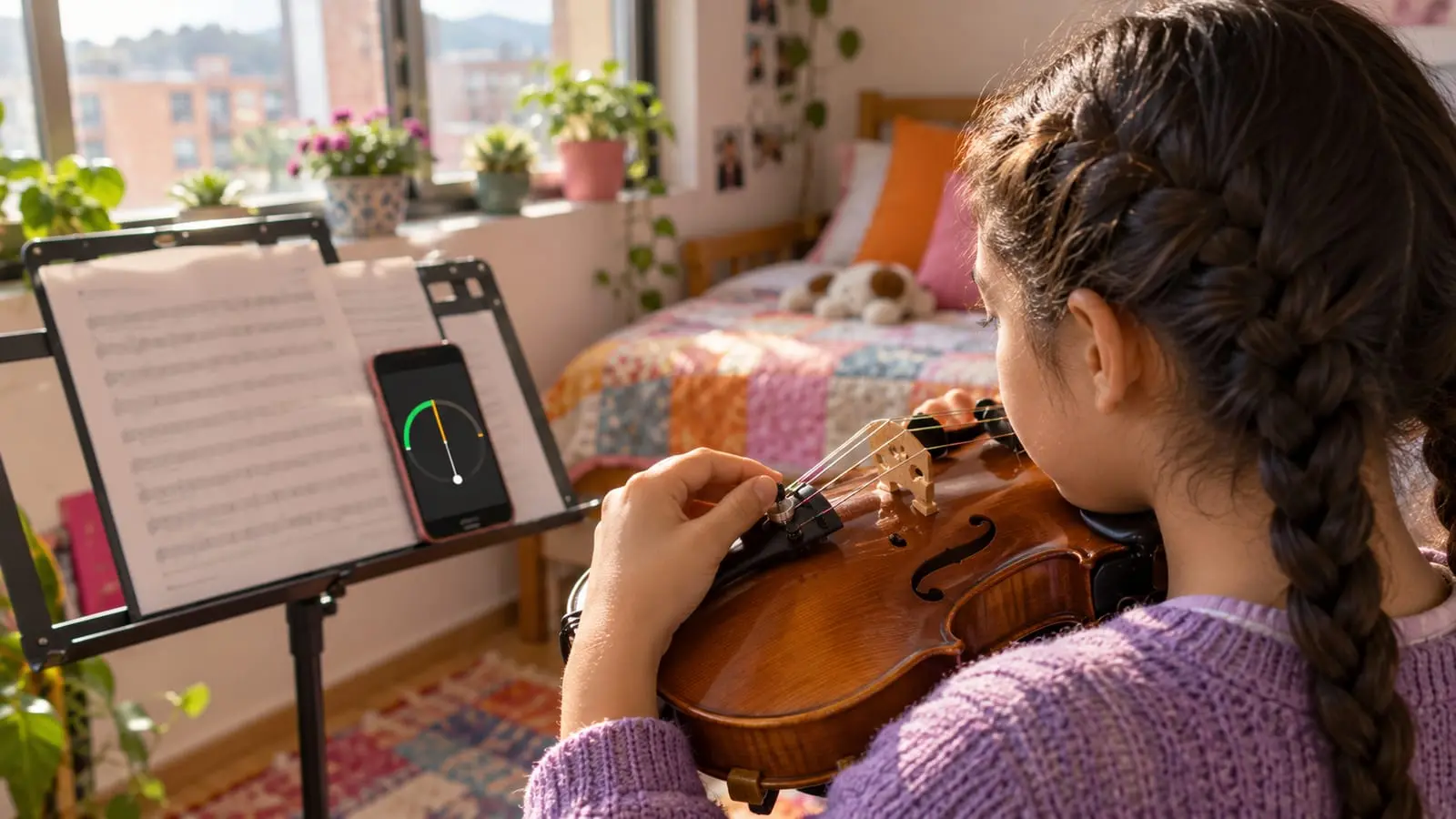
How do you tune a violin? Pegs, fine tuners and fifths
The violin's strings are G, D, A and E, tuned in fifths. Learn to use the pegs and fine tuners without forcing anything, and to check the bridge afterwards.
Read article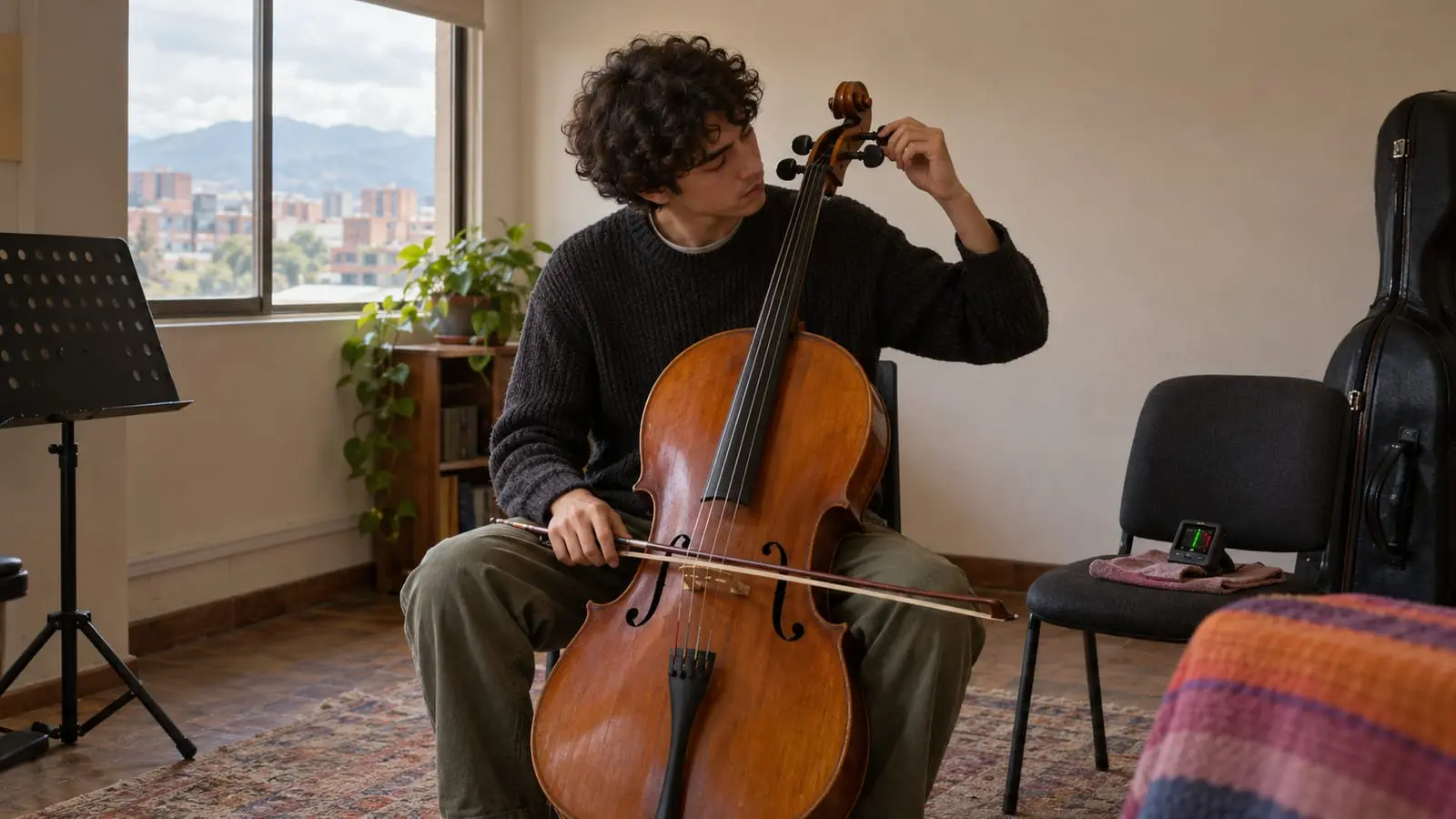
How do you tune a cello? C, G, D and A
The cello's strings are C, G, D and A, tuned in fifths. Here's how to tune it with a tuner, by fifths and with harmonics, plus the tricks that come with a big instrument.
Read article
How do you tune a guitar step by step, with and without a tuner?
Standard tuning is E, A, D, G, B, E. We explain how to get there with a tuner, by ear using the fifth fret, and what to do if it won't stay in tune.
Read article
How to expand your vocal range without straining your voice
New high and low notes do not come from pushing: they emerge as your voice learns to use less effort. Exercises, a practice plan and signs that it is time to stop.
Read article
How to sing in tune: why you go off pitch and how to improve
Singing off pitch is rarely a lack of musical ear: coordination, breath and tension are involved. Exercises using a reference note, recordings and intervals to help you sing each note in tune.
Read article
How to sing without hurting your throat
If your throat hurts when you sing, something is tightening. Learn to release your jaw, tongue and neck, sing strongly without shouting, and recognize when to stop.
Read article
How do you start improvising? A beginner's guide
You learn to improvise by limiting your options: five notes, a backing of one or two chords and short phrases. We give you concrete exercises and tips for losing your fear of mistakes.
Read article
How do you do vibrato on the violin? Step by step
Vibrato isn't a tremble: it's a controlled motion you learn slowly, first without the bow and then with a metronome. When to start and how to practice it without tension.
Read article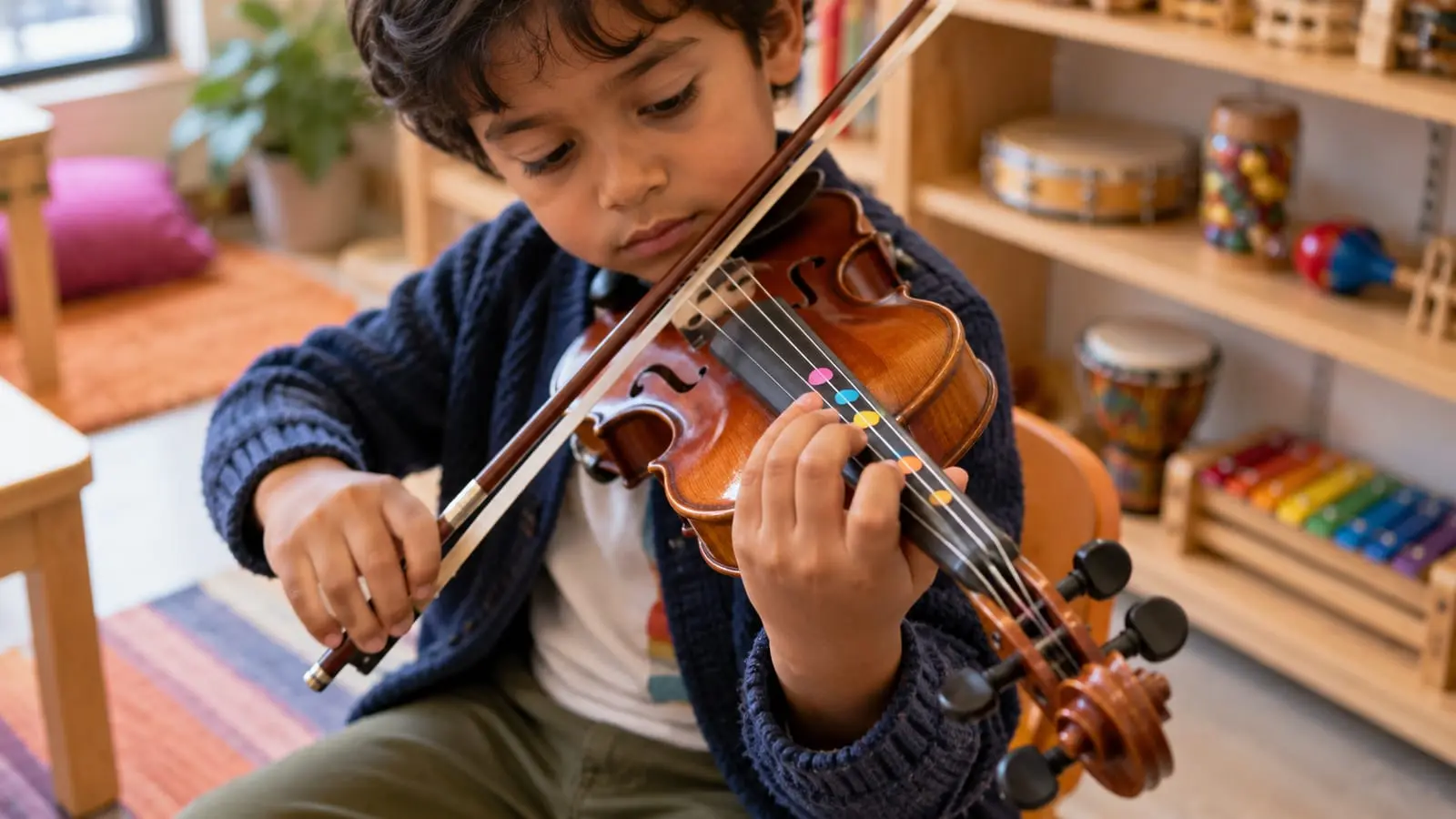
How do you place your fingers on the violin? First position
Fingers together for a half step, apart for a whole step: that's how the left hand works in first position, with a note map and exercises to play in tune without frets.
Read article
How should you breathe when playing a wind instrument?
Flute, clarinet, saxophone or trumpet: they all need low breathing, but each one uses air differently. Exercises and tips to breathe better and shape phrases without running out of air.
Read article
How do I know my voice type? A guide to finding your tessitura
Your voice type isn't set by the highest note you can reach, but by where your voice sings comfortably and what color it has. Here's how to find it with a keyboard or a microphone.
Read article
How do you get a sound out of the flute?
Blowing harder won't make the flute sound: the key is the angle, the opening of your lips and the air speed. We explain how to find them, step by step.
Read article
How do you hold a violin bow? A step-by-step bow hold
Bent thumb, curved pinky and a relaxed hand: here's how to build your bow hold finger by finger, with pencil exercises to lock it in without tension.
Read article
What is the correct hand position on the piano?
Rounded hand, firm fingertips, level wrist and a bench at the right height. We explain posture from your body down to your fingers, with fingering and daily exercises.
Read article
How long does it take to learn to read sheet music?
Recognizing notes and note values takes weeks; reading fluently while you play takes one to two years. We explain each stage and how to shorten the path.
Read article
What is solfège and how do you practice it every day?
Solfège is reading music aloud, in rhythm and with a steady pulse. We explain its types, how to practice it every day and how to use it for an admission test.
Read article
What is harmony in music? Chords, functions and progressions
Harmony is what sounds underneath the melody: chords that rest, move or build tension. We explain triads, chord functions, chord progressions and a method for analyzing songs.
Read article
What is a musical interval? Explained with examples
An interval is the distance between two notes. Learn to measure it in half steps, name it and recognize it by ear with songs you already know.
Read article
Basic guitar chords for beginners
With just eight open chords you can already play along with a huge number of songs. Here's how to finger each one, what order to learn them in and how to switch between them without stopping.
Read article
How to train your musical ear: a step-by-step plan
You train your musical ear in order: singing in tune, recognizing intervals and scale degrees, telling chords apart, following progressions and taking dictation. Here's a 12-week plan.
Read article
How to play barre chords on guitar: technique and exercises
A barre isn't about strength; it's about placement and arm weight. Step-by-step technique, the mistakes that mute it, and exercises from a four-string F to a full barre.
Read article
How to read bass clef: notes, tricks and exercises
Lines G-B-D-F-A, spaces A-C-E-G and three landmark notes so you don't have to count up from the bottom. Everything you need to read bass clef, with exercises by instrument.
Read article
How to read sheet music: a beginner's guide
Sheet music tells you which note to play and how long it lasts. We explain the staff, clefs, note values, time signatures and accidentals, with daily exercises to read fluently.
Read article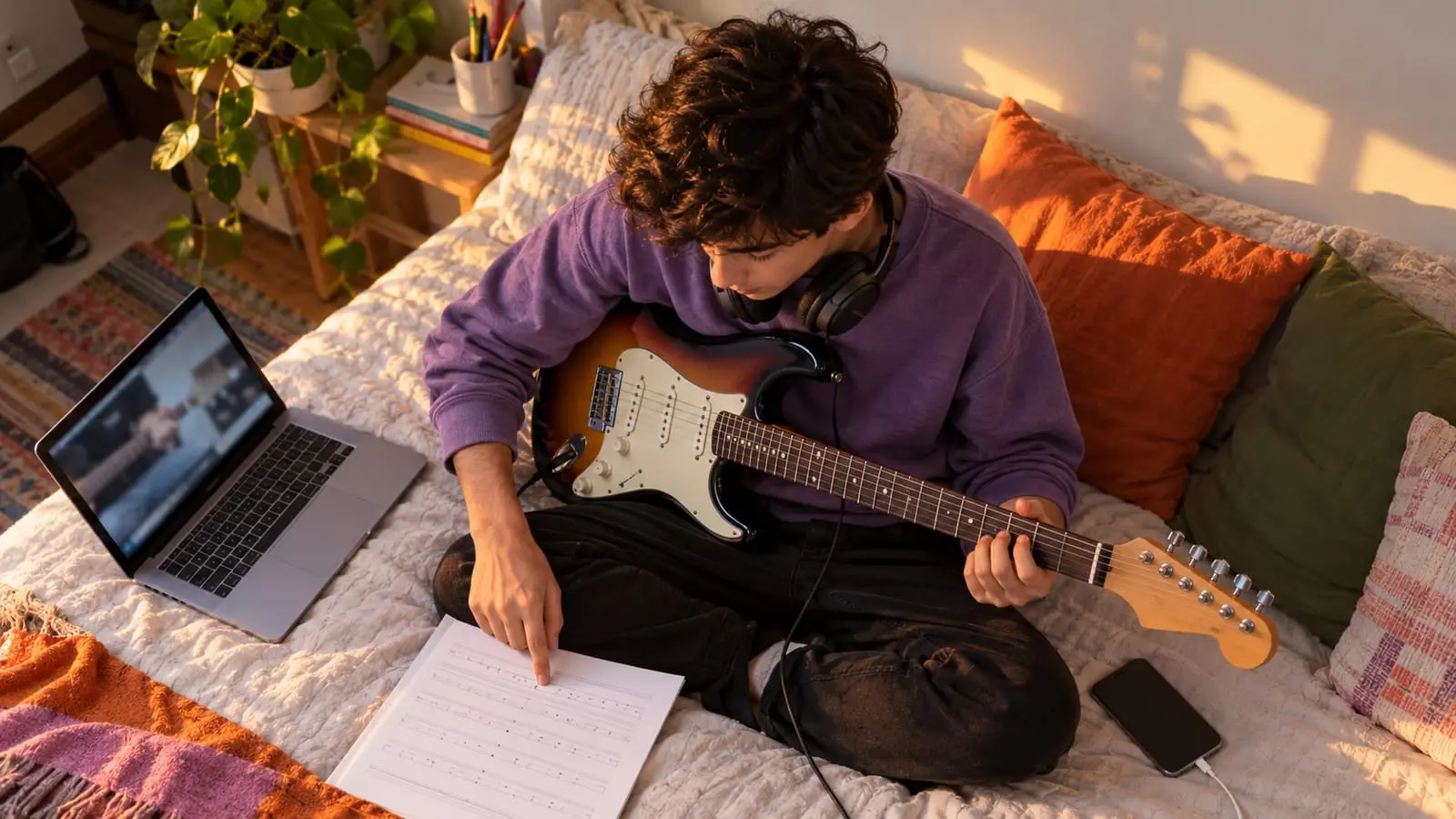
How to read guitar and bass tabs
In tab, each line is a string and each number is a fret. We explain how to read it on guitar and bass, its most common symbols and where it falls short of standard notation.
Read article
How to transpose a song to another key
Transposing means moving every note and chord by the same distance. Learn to do it by half steps or by scale degrees, with a capo and for clarinet, trumpet or saxophone.
Read article
How to practice with a metronome: a step-by-step guide
The metronome isn't there to pressure you: it's a mirror of your pulse. Here's how to pick a starting tempo, work on subdivisions and speed up without rushing.
Read article
How to use the piano pedals: a beginner's guide
The right pedal sustains the sound; the trick is to change it just after you play the new chord. We explain the three pedals, how they're written and the most common mistakes.
Read article
Time signatures explained: 2/4, 3/4, 4/4 and 6/8
2/4, 3/4 and 4/4 split each beat in two; 6/8 splits it in three. Understand that difference and learn to count each time signature with examples and exercises.
Read article
Vocal warm-up exercises: a 10-minute routine
Ten minutes that change how your voice sounds: from body to scales, starting gently and in your comfortable range. With adjustments for when you're short on time.
Read article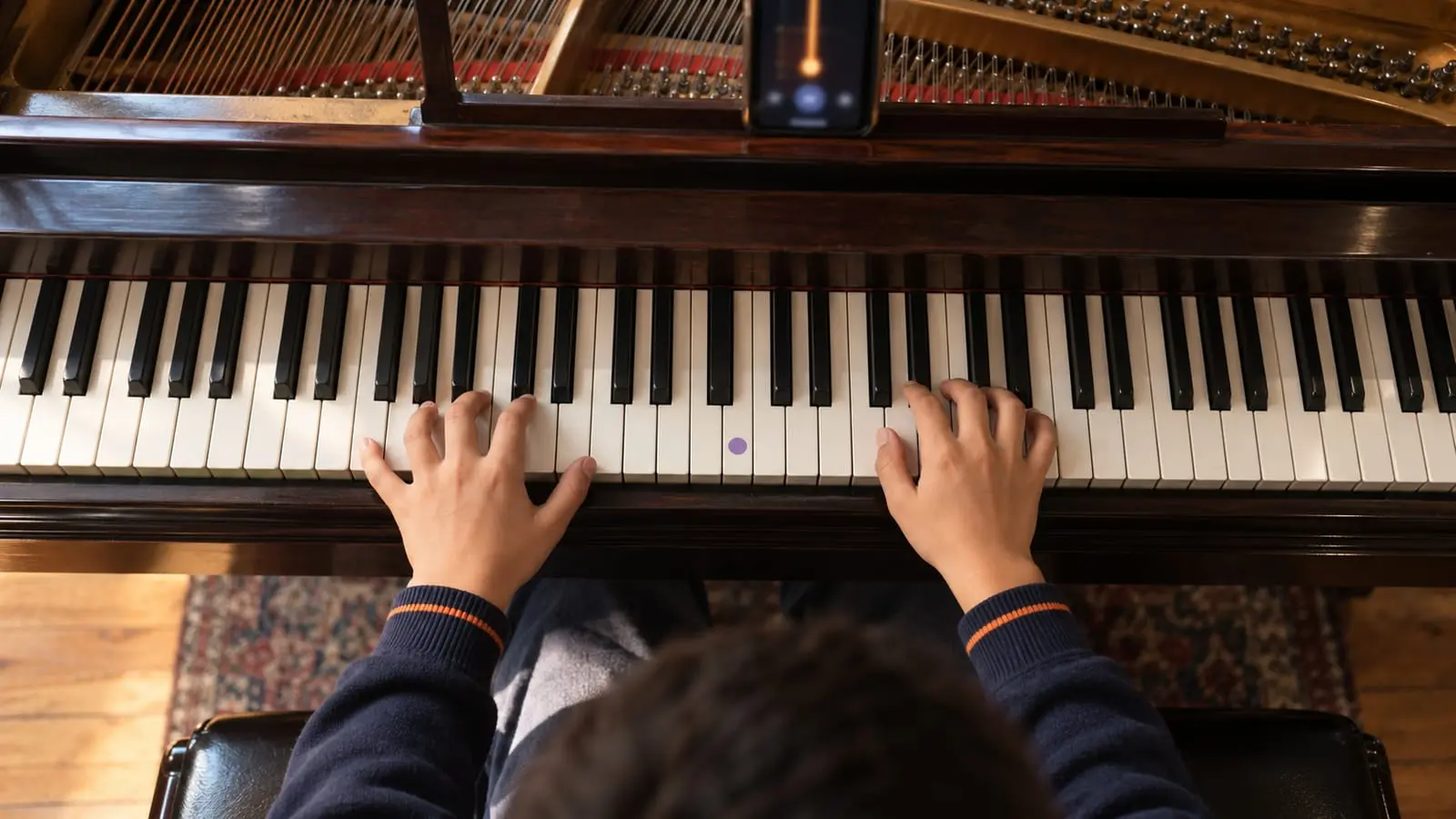
Hand independence exercises for piano
Hand independence is built in steps: first each hand on its own, then both together in short fragments, with difficulty that rises gradually. Eight exercises to get there.
Read article
Breathing exercises for singing, step by step
Good singing starts with how you take in and let out air. A 10-minute routine with specific counts to train costal-diaphragmatic breathing and breath support.
Read article
The circle of fifths explained simply
The circle of fifths arranges the 12 keys like a clock. Learn to draw it, read key signatures and relative minors with it, and use it in practice.
Read article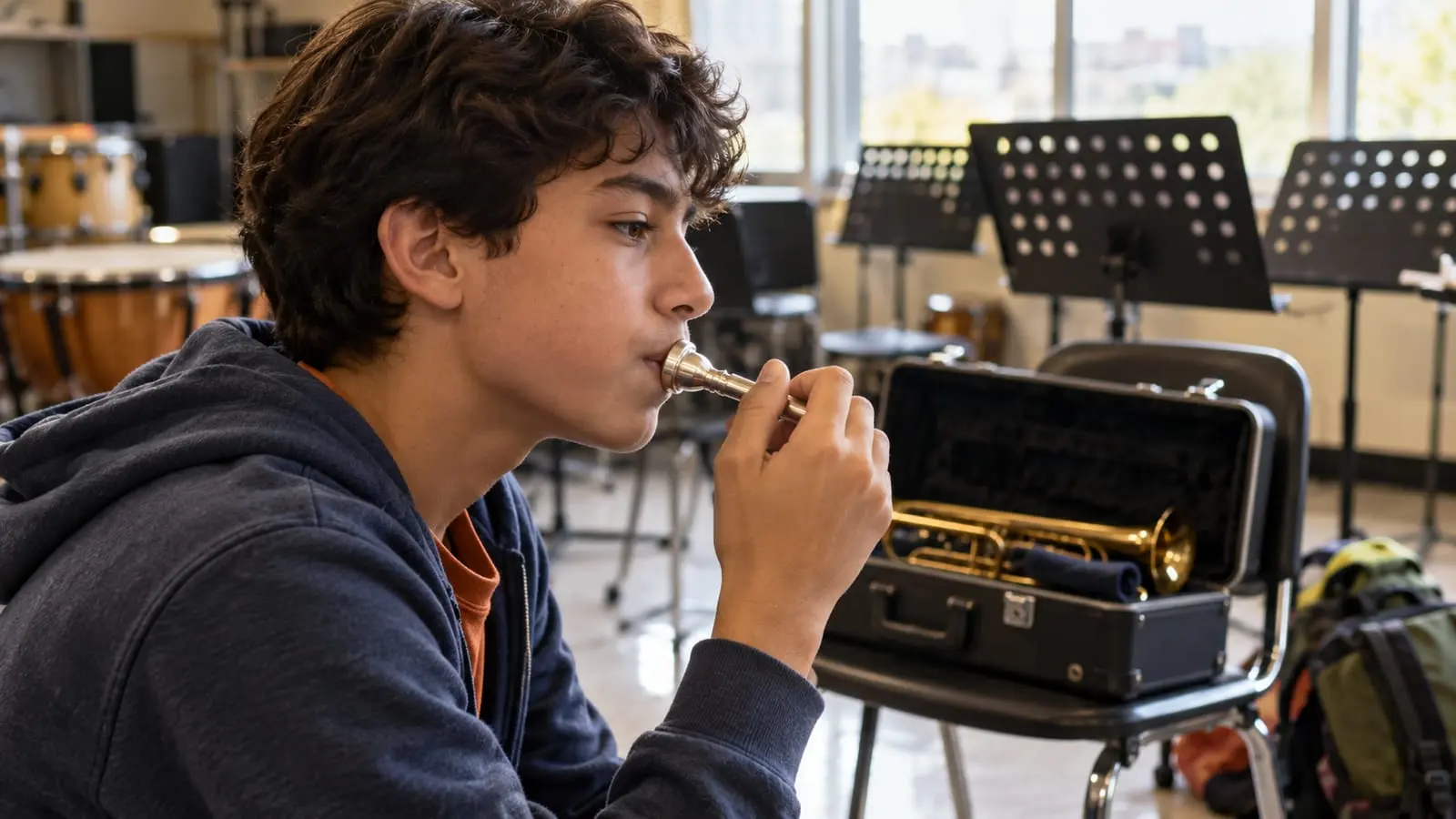
Trumpet embouchure: how to start without straining your lips
A trumpet's sound starts at the lips. Here's how to form the embouchure, train your buzzing and build endurance without pressing the mouthpiece.
Read article
Major and minor scales explained step by step
Every major scale follows the same pattern of whole and half steps, and minor scales come in three versions. Learn to build them from any note.
Read article
The Greek modes explained: from Ionian to Locrian
The modes are seven scales that come from the major scale, each with its own center and its own color. Learn to recognize them by their characteristic note and how to practice them.
Read article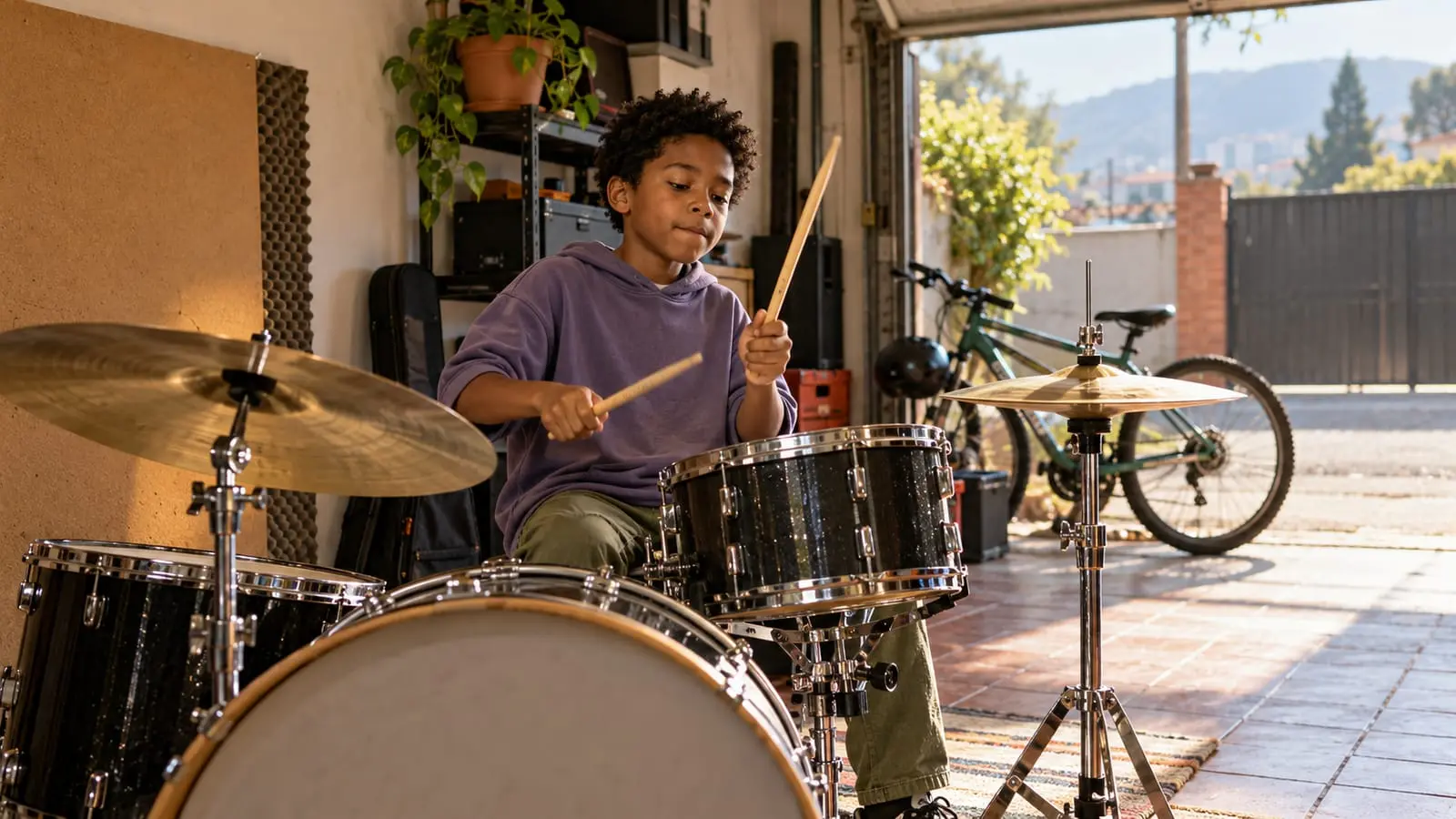
First drum beats: 5 patterns to learn first
Five beats cover much of what a drummer plays in the first few months. Here they are, broken down beat by beat, with starting tempos.
Read article
Colombian rhythms: bambuco, pasillo, cumbia and more
Why is bambuco written two ways, and why is cumbia counted in two? Time signatures, feel and instruments of Colombian rhythms, with exercises to get started.
Read article
Guitar rhythms: basic strumming patterns for beginners
A strumming pattern is a repeating sequence of downstrokes and upstrokes. Here are the basics in 4/4 and 3/4, written out with arrows, and how to practice them without your rhythm falling apart.
Read article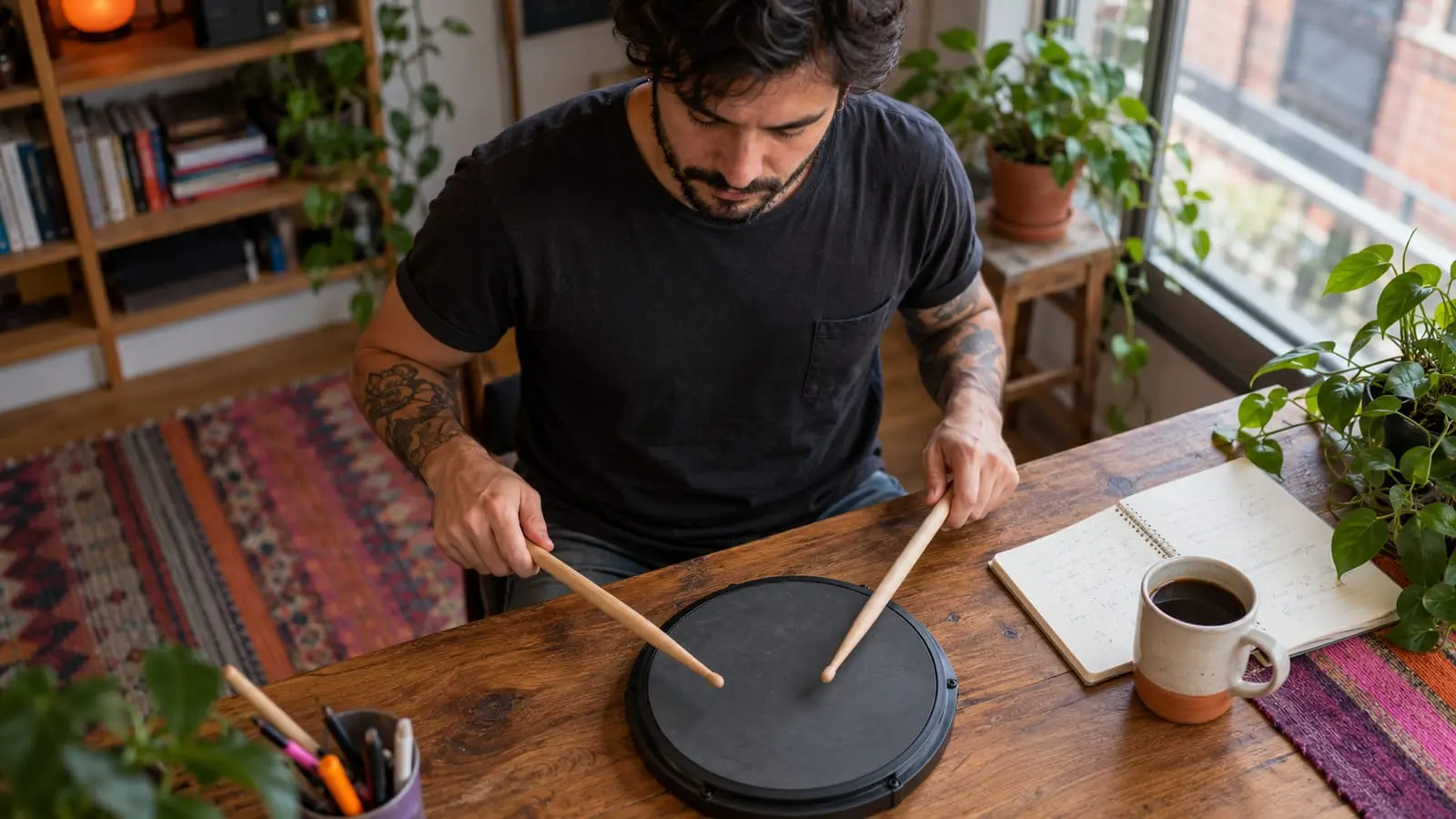
Drum rudiments for beginners: where to start
Five rudiments are enough to start: single stroke, double stroke, paradiddle, flam and five-stroke roll. Here's the sticking for each and how to practice them on a pad.
Read article
Chest voice, head voice and falsetto: the differences and mixed voice
Vocal registers explained without the mystery: what you feel in each one, why the break happens and how mixed voice is built, in classical and popular singing.
Read article
Prefer to learn with a teacher?
Online or in-home lessons in Bogotá, for all ages, with vetted teachers.