
Benefits of music for children: what you can actually expect
Learning music helps children listen, focus, persevere and express themselves. Here's which benefits you can expect and which are overblown promises.
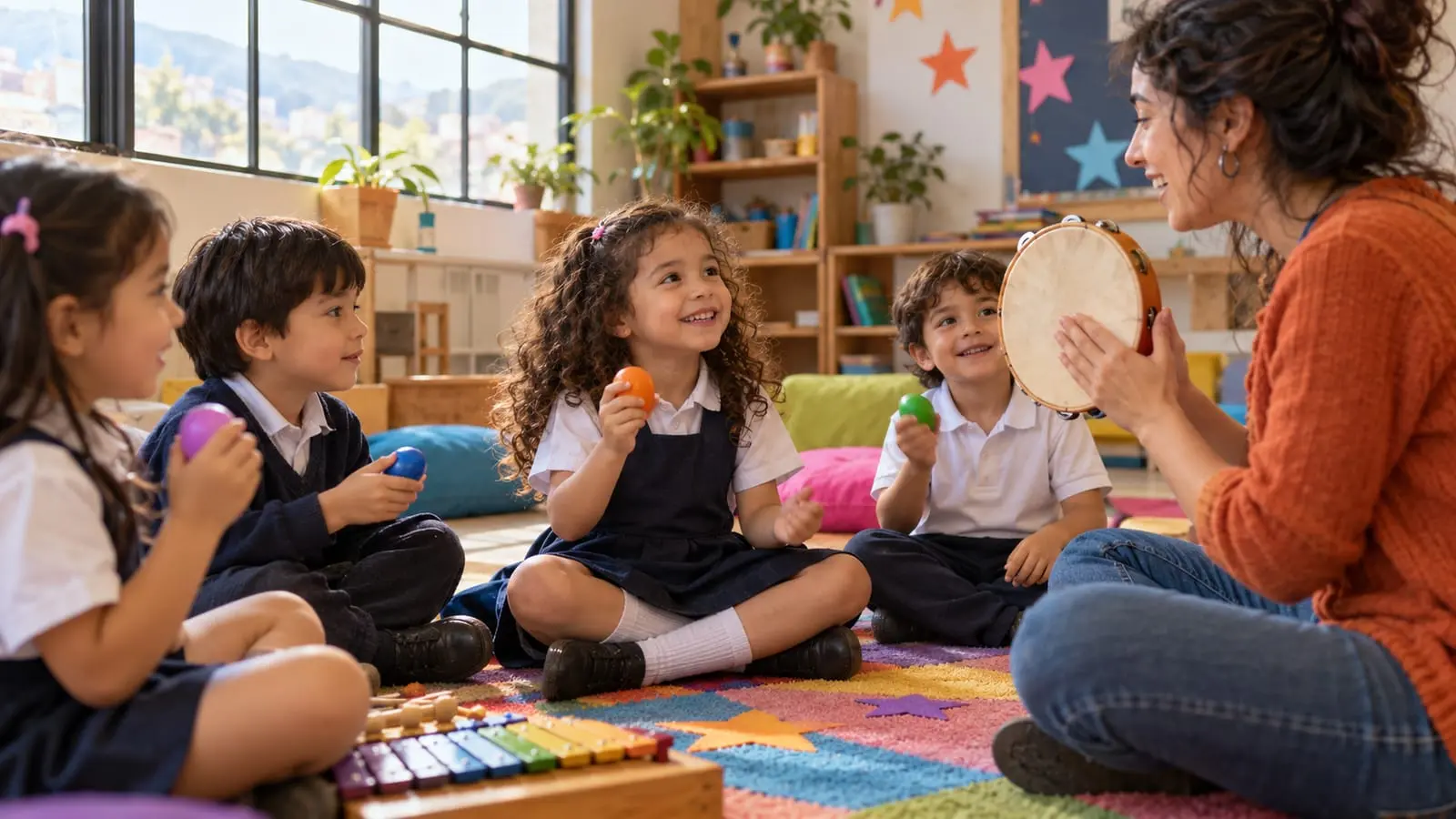
Learning music gives a child regular practice in skills that go far beyond playing: listening carefully, sustaining effort, accepting mistakes, expressing themselves in front of others and working as a team. These benefits show up in lessons and often at home too.
They don't happen by magic or overnight, though, and shouldn't be exaggerated. Music isn't a formula for improving school grades or “making someone smarter.” Here we explain what you can realistically expect and what helps those benefits develop.
In short
- Music develops listening and attention: following a beat, noticing when something is out of tune and waiting for an entrance.
- Learning an instrument teaches consistency: progress comes with frequent practice and patience with mistakes.
- Playing for others creates room for expression and confidence, including for shy children.
- Bands, choirs and ensembles teach children to listen to others and take responsibility within a group.
- The benefits depend on the learning process: a good teacher, consistency and enjoyment. Results aren't automatic.
Attention and listening
In a music lesson, a child is constantly listening: to the teacher's example, their own sound and the song's beat. Playing a piece means paying attention to several things at once (which note comes next, which finger to use, how fast to play) and gradually sustaining that attention for longer.
At home, you notice it in small details: they recognize when a song changes speed, distinguish instruments in the music they hear and notice that something “sounded odd.” This more attentive listening doesn't develop on its own; it's practiced week by week.
Consistency and coping with frustration
Few activities show so clearly that effort pays off. A passage that seemed impossible on Monday comes together on Friday after a few days of slow practice. Repeated experiences like this teach something valuable: not knowing how to do something yet isn't the same as being unable to do it.
It also teaches children to live with mistakes. In music, mistakes happen all the time, and you learn to keep going: correct them and carry on. A good teacher celebrates the process as well as the result, which changes how a child faces challenges.
Expression and confidence
Music is a way to say things without words. Playing a happy or sad piece, improvising, making up a song: all of these give a child another language for self-expression.
Performing for others, even in a little family concert, builds confidence. Nerves come up, and learning to manage them through preparation and gradual experience is a skill that helps at school and in life. If your child finds this especially hard, this guide to overcoming stage fright may help.
Teamwork and belonging
In a band, choir or ensemble, everyone has a role. If the clarinet player doesn't practice their part, the band notices. That teaches responsibility toward the group, listening to others and the satisfaction of creating something no one could make alone.
Music also connects children with their roots. Learning a bambuco, cumbia or currulao is a way to experience Colombian culture from within, and many families love discovering that their child plays the songs heard in their grandparents' home.
Coordination and body awareness
Each instrument calls for different coordination, and learning it is part of the challenge:
- On the piano, each hand does something different and the fingers move independently.
- On the violin, one hand controls pitch and the other controls the bow, with the whole body's posture involved.
- On wind instruments, breath is paced and coordinated with the fingers and tongue.
- In percussion, hands and feet play different rhythms at the same time.
- In early music education, young children coordinate movement, voice and rhythm through play.
They also learn to notice their own body: where they feel tension, how to sit and how to breathe to play or sing better.
What music doesn't promise
There are plenty of promises surrounding music for children. Some should be treated cautiously:
| What people often say | A more realistic view |
|---|---|
| “Music makes children smarter.” | They practice attention, memory and listening within music. How this carries over into other areas depends on many factors. |
| “It will improve their school grades.” | Some children carry over study habits and consistency; it isn't automatic and can't be promised. |
| “It will calm them down if they're very restless.” | It can offer a space to channel energy and focus; it doesn't replace professional support if needed. |
| “If they start very young, they'll become a great musician.” | Starting early helps build foundations, but interest, practice and good guidance matter more than age. |
If your child has a diagnosis such as ADHD, music can be a very positive activity with the right adaptations, but it isn't a treatment. We discuss this in music and ADHD.
What helps the benefits develop
- A teacher who knows how to teach children of their age and combines expectations with warmth.
- Consistency: a weekly lesson and short practice sessions almost every day.
- Repertoire they enjoy, so they want to return to the instrument.
- Opportunities to play for others and with others.
- Parents who support and celebrate effort, without pressure or comparisons.
If you're still unsure where to start, this guide to choosing an instrument for your child helps you take the first step.
Frequently asked questions
Does music make children smarter?
That isn't something you can promise. It does develop skills such as listening, attention, memory and consistency within a challenging, enjoyable activity. It's worthwhile in itself, rather than as a shortcut to something else.
At what age do the benefits of music become noticeable?
From a very young age, music at home and early music education offer opportunities for play, connection and expression. Benefits tied to an instrument, such as consistency or fine coordination, become more visible after a few months of regular lessons.
Which instrument offers the most benefits for a child?
No particular one. The best instrument is one they like, that suits their age and body, and motivates them to practice. An instrument they enjoy offers much more than an “ideal” one they don't want to play.
Are school music lessons enough?
They're a good introduction, but in large groups it's hard to work on each child's technique. If your child shows interest, individual or small-group lessons let them progress at their own pace with closer guidance.
Sources
We checked the facts in this article against these sources on October 22, 2026.