
How to overcome stage fright when playing or singing
Nerves never disappear completely, not even for experienced musicians. The goal is to play well with them, and that can be trained.
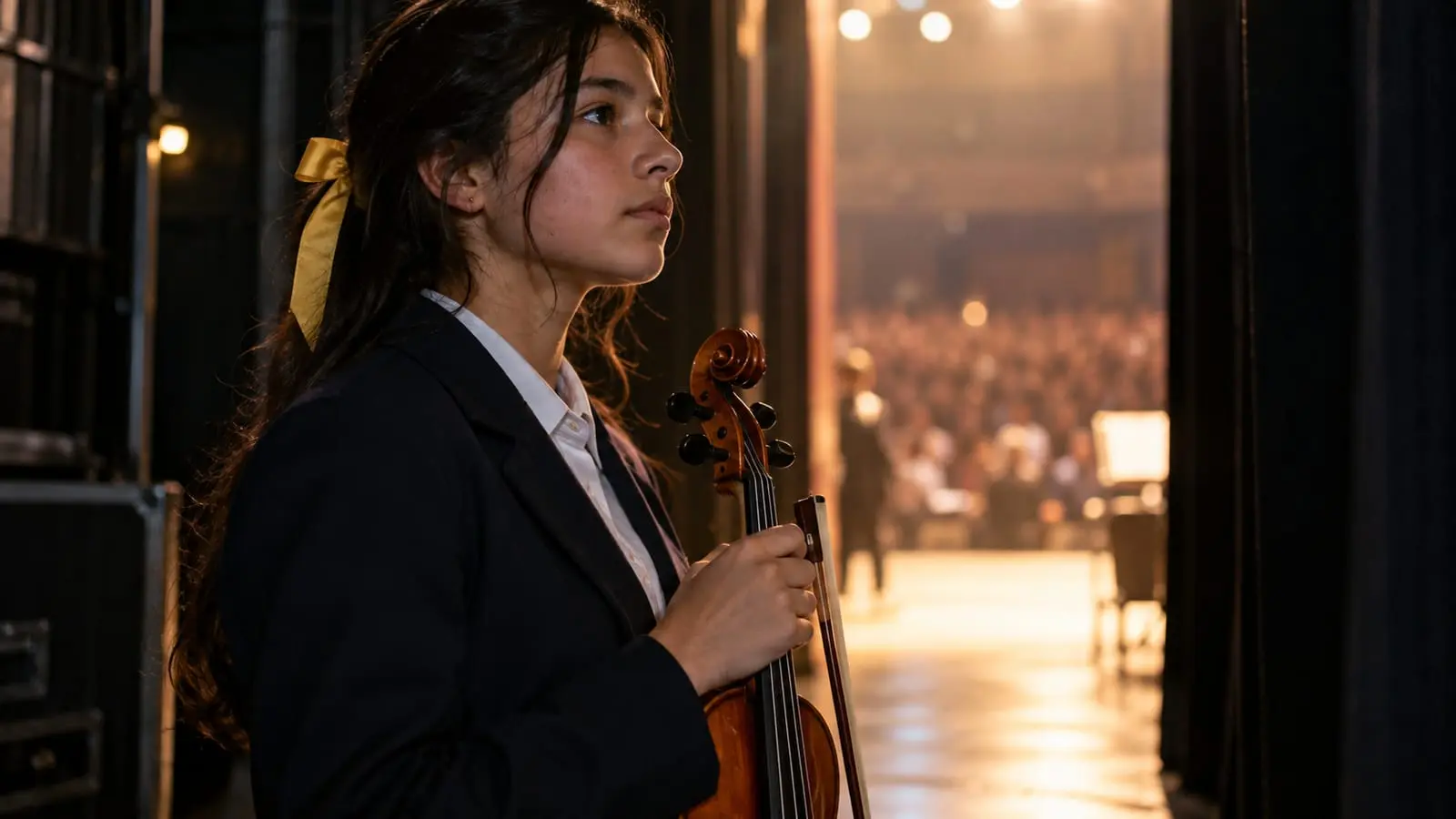
You don't eliminate stage fright; you learn to manage it. Three tools work together: preparation that goes beyond "I can do it at home," small performances before big ones, and practical strategies for your body (breathing and releasing tension) and your mind (where you focus your attention).
Feeling nervous before playing or singing is normal, even for musicians with many years of stage experience. The difference is that they know what happens in their bodies and have a plan for when the nerves kick in.
In short
- Nerves are a normal physical response; the goal is to play well while feeling them, rather than to stop feeling them altogether.
- A thoroughly prepared piece that you can start from several points is your best defense against fear.
- Exhaling longer than you inhale and relaxing your shoulders and jaw helps you settle down before going onstage.
- Build up gradually: record yourself, play for one person, then your family, and finally an audience.
- If you make a mistake, keep going: stopping is much more noticeable than a wrong note.
What happens to your body when you get nervous
When your brain perceives a situation as risky, your body prepares to react: your heart races, your breathing becomes short and shallow, and blood flow shifts toward the large muscles. That's useful for running, but less so for precise finger movements or breath control. Knowing each symptom lets you prepare a response to it:
| Symptom | How it affects playing or singing | What helps |
|---|---|---|
| Cold or sweaty hands | Clumsy fingers on piano and guitar, a slipping bow | Warm your hands with lukewarm water and do a short technique exercise |
| Shaking | An unsteady violin bow, a trembling embouchure on wind instruments | Play long tones and feel the weight of your arm instead of gripping tightly |
| Dry mouth | Singers and wind players lose control | Stay hydrated throughout the day and keep water nearby |
| Shallow breathing | Running out of breath before a phrase ends | Breathe slowly, allowing your lower ribs and abdomen to expand, before starting |
| Racing heart | A tendency to rush the tempo | Think through the tempo of the first phrase before playing |
| Your mind goes blank | Memory lapses | Prepare places in the piece where you can pick up again |
Prepare thoroughly: half the work happens beforehand
Nerves can lower your performance level a little. That's why the piece needs to be more secure than seems necessary. These are signs that it's ready to perform:
- You can play it all the way through without stopping, even after a mistake, several times in a row.
- You can start at the beginning of any section, not just the first measure.
- You can play it well at a tempo slightly slower and slightly faster than your intended performance tempo.
- You've played it "cold," without much warming up, as might happen on performance day.
- If you play piano, you've tried it on an instrument other than your own: every keyboard and pedal responds differently.
- You can sing the melody or name the chords without your instrument.
If you're going to play from memory, use several kinds of memory, rather than relying only on your fingers. We explain how in how to memorize a piece of music.
Breathing and your body: what to do in the minutes beforehand
While you wait for your turn, it's time to prepare your body, rather than run through the entire piece:
- Breathe in through your nose for a count of four, then out through your mouth for a count of six or eight. Repeat several times: a longer exhale than inhale helps many people calm down.
- Gently shake out your arms and hands, lift your shoulders toward your ears, then let them drop.
- Slowly open and close your jaw; facial tension directly affects your voice and embouchure.
- Feel your feet on the floor and the weight of your body. It seems simple, but it brings you back to the present.
- Do a short warm-up on your instrument or with your voice, without trying to fix anything at the last minute.
If you sing, breath control matters even more. Singing lessons develop breathing technique, helping you both sing better and feel calmer onstage. You'll find practical routines in breathing exercises for singing.
Gradual exposure: from your living room to the stage
Fear eases when playing in front of others stops being a new experience. The key is to progress in small steps, repeating each one several times before moving on:
| Step | Who you're performing for | What you practice |
|---|---|---|
| 1 | Your phone recording you | Play all the way through without stopping, knowing there will be a recording |
| 2 | Someone you trust | Have someone watch and listen to you |
| 3 | Your family or a group of friends | Introduce yourself, greet the audience, and play |
| 4 | A video call or a short livestream | Play for people you can't see clearly |
| 5 | A school performance or student recital | A real audience in a welcoming setting |
| 6 | A public event, a Mass, or a school stage | Play in conditions you can't fully control |
Your lesson is a stage too: ask your teacher to let you play the whole piece, from start to finish without interruptions, as if it were the performance. Then discuss what happened.
What to think about before and during a performance
Before you start
Replace "What will they think of me?" with "What do I want them to feel through this music?" Focus on the character of the piece and sing the first phrase in your head at the right tempo before playing the first note. A clear beginning helps everything else fall into place.
It also helps to describe what you're feeling differently: a racing heart and extra energy are signs of activation, just like what you feel before something exciting. You don't have to convince yourself you're calm; simply stop fighting the feeling.
If you make a mistake
Keep going. Don’t repeat the passage, make a face, or look apologetic. Jump to your next anchor point and keep the pulse going. Many mistakes go unnoticed by the audience; stopping is what they do notice.
After playing: how to learn from each performance
- Before judging yourself, write down three things that went well. Your memory tends to focus only on mistakes.
- Choose just one thing to improve for the next performance.
- Watch the recording the next day, rather than as soon as you leave the stage. It almost always sounded better than it felt.
- Tell your teacher how the nerves affected you so you can adjust your preparation next time.
If your next challenge is your first performance, follow our guide to preparing for your first recital: it includes a rehearsal schedule and what to do on performance day.
Frequently asked questions
Does stage fright go away with experience?
It usually eases considerably, but rarely disappears completely. Each performance teaches you how your body reacts and what works for you, so nerves start giving you energy instead of holding you back.
Why do my hands shake when I play in front of others?
It's part of your body's alert response. Warming your hands, taking long exhales, and thinking about your arm's weight rather than squeezing with your fingers can help. With gradual exposure, the shaking usually eases.
What should I do if my mind goes blank halfway through a song?
Keep the beat going and jump to the next place you've prepared to pick up again, such as the chorus or the start of a section. That's why it helps to practice starting from several points in the piece, rather than always from the beginning.
How can I help my child if they get nervous before a performance?
Let them know their feelings are normal, practice walking on and greeting the audience together at home, and talk first about what went well afterward. Avoid phrases like "Don't make a mistake," which direct their attention straight to errors.
Sources
We checked the facts in this article against these sources on October 22, 2026.