
Music lessons for children with autism: how to adapt them
Routine, previewing what comes next and care with sensory input: teaching adaptations so your child enjoys their music lessons, and why they're not the same as music therapy.
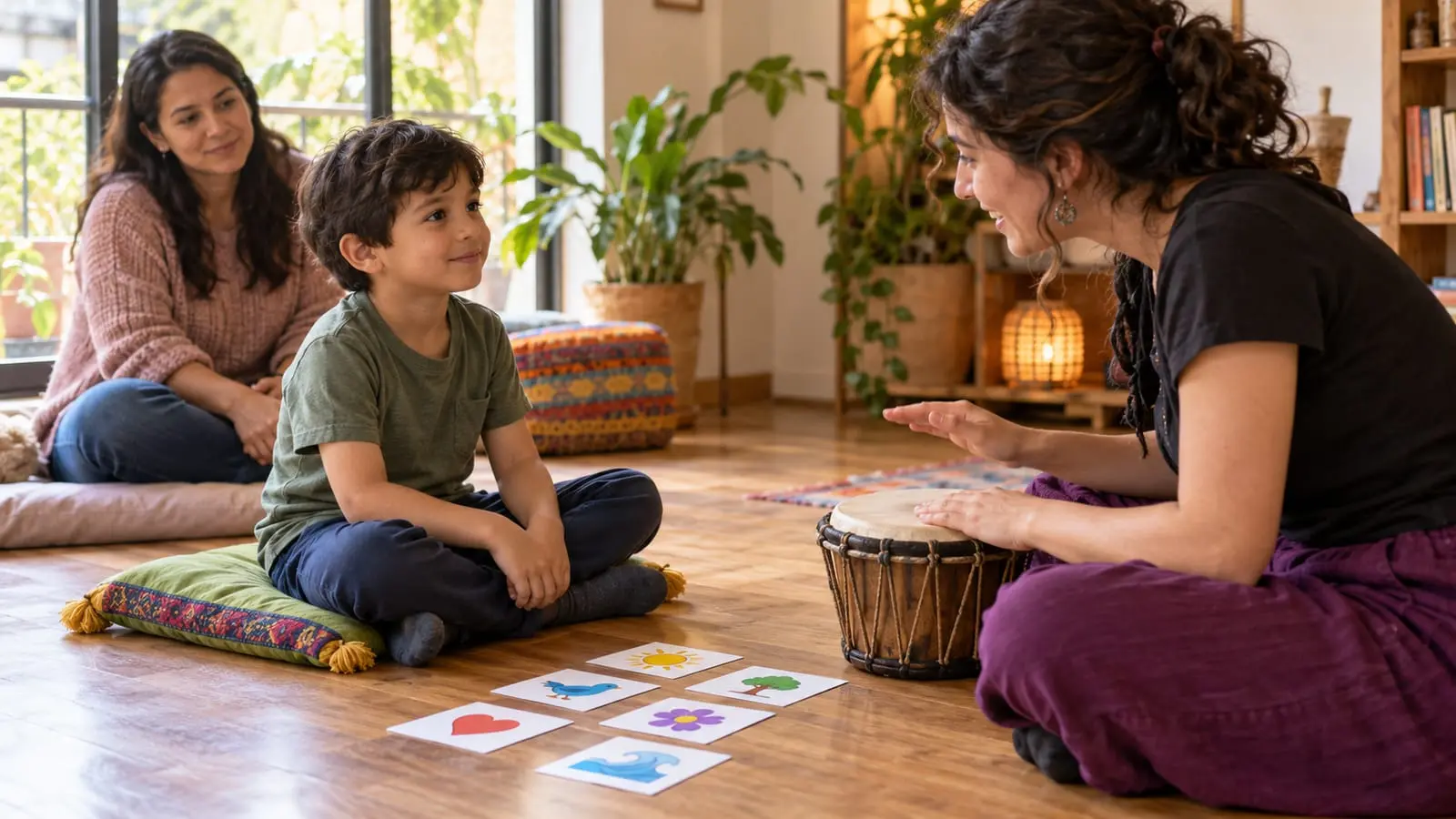
Yes, a child on the autism spectrum can take music lessons. Often, the key is adapting how they are taught: a consistent routine, knowing what will happen next, managing volume and sensory input, giving clear instructions and starting with their interests. Every child is different, so adaptations are developed with the family rather than following a fixed formula.
One point to make clear from the start: music lessons are not therapy and do not replace the professional care your child receives. Music therapy is a separate profession. This guide is about teaching: how to teach music in a way that works for your child.
In short
- Music lessons have musical goals; music therapy is a separate profession with therapeutic goals, and neither replaces the other.
- Routine and knowing what to expect help: the same schedule, the same opening and closing activities, and advance notice of changes.
- Volume, textures and physical contact are adapted to each child; the teacher asks permission before touching their hands to make a correction.
- Starting with a child's interests and accepting different ways of responding makes lessons more accessible.
- The family knows the child best: sharing that knowledge with the teacher is the most valuable adaptation.
Music lessons and music therapy: understanding the difference
These are two different things, and it helps to understand that before you start looking:
| Aspect | Music lesson | Music therapy |
|---|---|---|
| Goal | Learning music: playing, singing, keeping a beat and enjoying it. | Therapeutic goals set by the professional together with the family. |
| Who leads it | A music teacher. | A music therapist with specific training in the discipline. |
| How progress is assessed | Repertoire, technique, music reading and independence with the instrument. | According to the plan set by the professional. |
| When to seek it out | When the child wants to learn or enjoy an instrument or singing. | When the professionals supporting the child recommend it or consider it appropriate. |
Both can be part of a child's life. But if you are looking for a therapeutic process, the right professional is a music therapist, rather than a music teacher. Music lessons do not replace therapy, school support or guidance from the professionals working with your child. Gissi connects families with music teachers: we offer music lessons, not music therapy.
A note on language
Some families and autistic people prefer “autistic person”; others prefer “person with autism.” We use both here. What matters is using the wording your child and family prefer, and asking the teacher to do the same.
Routine and predictability: lessons without surprises
Knowing what will happen helps many children feel at ease. These simple adaptations can make a big difference to the experience:
- Same day, same time, same place. For in-home lessons, use the same spot in the house; for online lessons, use the same screen in the same location.
- A consistent opening and closing. A hello song and a goodbye song clearly mark when the lesson begins and ends.
- Visual schedule. Use pictograms, photos or a short list of lesson activities, removing or crossing them off as you go.
- Announce transitions. “Two more times, then we'll move to the drum.” A visual timer can also help.
- Give advance notice of changes. If the time or teacher changes, or a new instrument is coming, tell your child ahead of time and show photos if helpful.
Before the first lesson
Showing your child a photo of the teacher, a short video of the instrument being played or a simple story about what the lesson will be like can make the first meeting easier. Another option is to use the first session just to get acquainted and explore the instrument, without learning targets.
Sensory input: volume, textures and touch
Every child has their own sensory profile: some find certain sounds uncomfortable, while others love loud sounds; some avoid particular textures, while others seek them out. Lessons should adapt to that, rather than the other way around.
Sound and volume
- Start at low volumes and let the child control the volume whenever possible, for example on a digital piano.
- For percussion, use soft-headed mallets, brushes or a practice pad instead of a very resonant drum.
- If your child uses hearing protection, they can wear it in lessons; the teacher can adapt the activities.
- Give a warning before loud or sudden sounds, such as a cymbal or a chord spanning the keyboard.
Textures, posture and touch
- Some instruments bring intense sensations: a violin resting against the neck, metal strings under the fingertips or a drum's vibration. Take time to explore them without rushing.
- The teacher should ask permission before touching the child's hands or arms to correct posture, and accept a no. Demonstrating on their own instrument or in front of a mirror is a good alternative.
- You do not need to require eye contact to know that a child is paying attention.
- Repetitive movements or the child's own ways of regulating themselves should not be interrupted if they are safe.
- Have a quiet corner or an agreed break available if the child needs it.
Clear communication and many ways to participate
Specific, literal instructions often work better than metaphors or long sentences. “Play the white key to the left of the two black keys” is clearer than “Find C—you already know where it is.”
- Demonstrate: the teacher plays and the child imitates.
- Allow time to respond without immediately repeating the question.
- Accept nonverbal responses: pointing, choosing between cards or playing a sound instead of saying a word.
- Use the child's interests: if they love trains, songs from a show or numbers, that can be a starting point for rhythm or music reading.
- Make it clear what “finishing” an activity means: three repetitions, until the song ends or until the timer goes off.
If your child uses a communication system at home or school, such as pictograms or a communication board, tell the teacher so it can be used in lessons too.
Choosing an instrument and lesson format
There is no instrument “for autism.” What matters most is what interests your child and how they feel about each instrument's sound and physical sensations. Here are some pointers:
| Option | Benefits | Things to consider |
|---|---|---|
| Piano or digital keyboard | The notes are visibly arranged, pressing a key produces sound and the volume can be controlled. | Requires sitting for a while; can be alternated with other activities. |
| Percussion | Immediate feedback, movement and rhythms learned through imitation. | Can be very loud; start with a pad, cajón or soft mallets. |
| Introductory music | Singing, rhythm, movement and play, designed for younger children. | Large groups involve a lot of sensory input; a private lesson allows more adjustments. |
| Singing | No instrument is needed, and lessons can start with familiar songs. | Depends on whether the child enjoys using their voice in front of someone else. |
Private or group lessons? At home or online?
At first, private lessons allow more adaptations. With in-home lessons, the teacher comes to a place your child already knows; online, the screen provides a consistent structure but requires more independence or more adult support. There is no single answer: try, observe and adjust with the teacher.
If your child is young, our guide on what early music education is describes a class where music is sung, danced and played before any sheet music comes in.
What to tell the teacher before starting
A ten-minute conversation before the first lesson, or a written note, can save weeks of trial and error. Share whatever seems useful:
- What they enjoy: songs, characters, topics and instruments.
- What bothers them: sounds, lights, textures, touch and changes of plan.
- How they communicate and the best way to give them instructions.
- What signs of overload look like and what helps them regulate themselves.
- The words or strategies used at home, at school or with their therapists, to keep things consistent.
Also ask the teacher how they plan lessons, whether they have adapted lessons before and how they will keep you informed about progress. Look for someone who listens, takes their time and is willing to change the plan. You can browse profiles in the teacher directory before getting in touch.
For more questions worth asking before you start, see how to choose a music teacher.
What to expect: progress at their own pace
Progress is measured against the child's own starting point. For one child, an achievement might be playing a whole song; for another, staying until the goodbye song or choosing what to play independently. Enjoying music is already a valid goal.
- Check in with the teacher from time to time about what works and what needs changing.
- Expect good days and difficult days; a difficult day does not erase what they have learned.
- Avoid comparisons with siblings or classmates.
- If lessons consistently cause distress, it is fine to pause or change formats.
Frequently asked questions
What is the best instrument for a child with autism?
A diagnosis does not make one instrument better than another. Choose based on your child's interests and their response to each instrument's sound and touch. Trying several in the first lessons, at low volumes, is a good way to decide.
Can a music teacher provide music therapy?
Only if they are also trained as a music therapist. Music therapy is a separate profession, with its own training and therapeutic goals. A music teacher teaches music, even when adapting their teaching to each student.
At what age can an autistic child start music lessons?
Like any child, they can take part in introductory music activities based on play, singing and movement from an early age, then start an instrument later. Their interest and comfort determine the timing, rather than a fixed age.
Are individual or group lessons better?
At first, individual lessons give more flexibility to adjust volume, pace and activities. Later, a small group can be a valuable experience if the child enjoys it and is prepared in advance.
Sources
We checked the facts in this article against these sources on October 22, 2026.