
What instrument should my child learn? A guide by age and interests
Choosing your child's first instrument is easier if you weigh four factors together: age, interests, personality and home logistics. And if they try it before you buy.
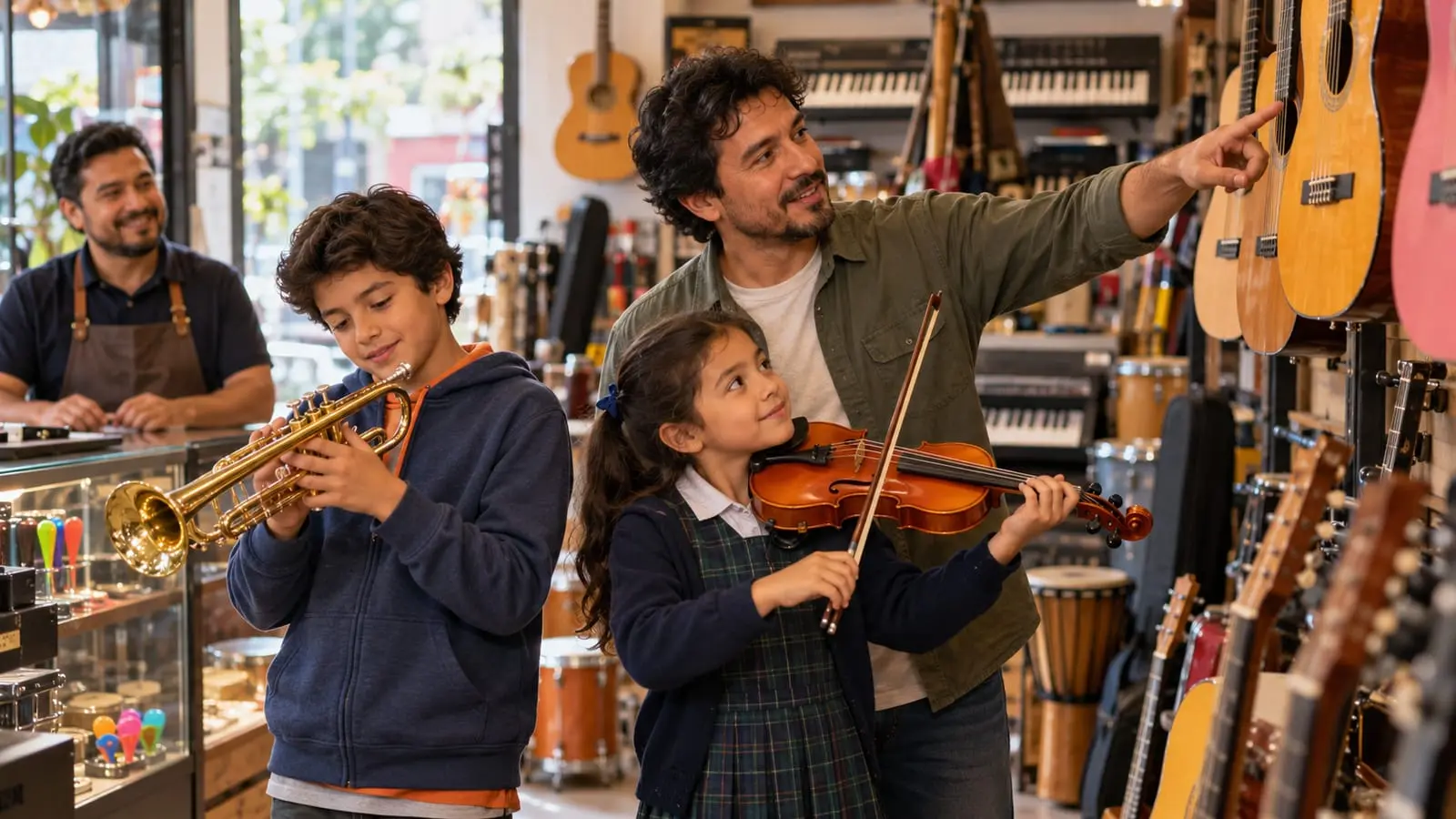
To choose your child's instrument, weigh four things together: age and size (what they can comfortably play today), musical tastes, personality and the practicalities at home (space, noise, transport). And let them try it before you buy: a few first lessons with a borrowed instrument tell you more than any guide.
There is no single “best” instrument for children in general. There is one that fits your child right now, and that choice is not forever.
In short
- Choose by considering age and size, musical tastes, personality and the practicalities at home together.
- Up to age 5, introductory music education offers the best foundation; from 6 to 8, piano, violin, small guitar and recorder work well; from 9, wind instruments, drums and bass become options too.
- Your child's interest matters more than the instrument's prestige or what their parent once wanted to play.
- Try before buying: lessons with a borrowed instrument and your teacher's advice on size and model.
- Changing instruments is normal, and what you learn carries over.
By age and size
The body sets the limits: an instrument that is too large or heavy leads to poor posture and frustration. As a general guide:
| Age | Comfortable options | Why |
|---|---|---|
| Ages 3 to 5 | Introductory music education and small percussion instruments; for some children, piano or violin with a playful approach. | They learn through play and movement; their hands are still small for most instruments. |
| Ages 6 to 8 | Piano, violin, cello, recorder, percussion and smaller-sized guitar. | There are versions to fit them, and the reading skills they learn at school help with sheet music. |
| Ages 9 to 12 | Saxophone, trumpet, clarinet, flute, trombone, drums, electric guitar and bass. | Their permanent teeth are usually coming in, and they have longer arms and greater lung capacity. |
| Ages 13 and up | Any instrument. | The body no longer limits the choice; tastes and goals matter more. |
For more detail on suggested starting ages for each instrument, see what age to start studying music.
By the music they enjoy
Ask what music your child likes and notice what they listen to, sing or dance to. It is the best clue:
| If they enjoy… | Instruments to consider |
|---|---|
| Rock and pop | Electric guitar, bass, drums, singing. |
| Film music and classical music | Piano, violin, cello, flute. |
| Salsa, cumbia and Caribbean music | Percussion, trumpet, saxophone, trombone. |
| Colombian Andean music | Tiple, bandola, guitar. |
| Sings all day | Singing, with piano or guitar for self-accompaniment. |
| Jazz | Saxophone, piano, double bass, drums. |
A useful exercise: watch videos of different instruments together, or go to a youth orchestra or band concert, and notice what catches your child's attention. Sometimes the choice appears on its own: “I want to play that.”
By personality and learning style
Treat these ideas as clues, not rules. Some shy children shine on drums, and some restless children love violin.
- If your child needs to move and has lots of energy, percussion and drums channel that drive.
- If your child is patient and detail-oriented, violin and piano reward careful work.
- If your child wants quick results, guitar lets them accompany songs within a few weeks, and piano also brings noticeable progress early on.
- If your child loves being in a group, wind instruments open the door to bands, and singing to choirs.
- If your child likes to “see” what they are doing, the piano keyboard reveals the logic of the notes at a glance.
- If your child is shy, start with individual lessons, then try ensembles as confidence grows.
Another point: some children enjoy melody more (singing or playing the lead), while others prefer rhythm or accompaniment. Noticing what draws them into the music they hear also helps you choose.
Space, noise and practicalities at home
The best instrument in theory is no use if your child cannot practice at home. Before deciding, think about:
- Noise: in an apartment, acoustic drums or a trumpet require agreed practice hours, a practice pad or a mute. A digital piano or electric guitar lets you use headphones.
- Space: a piano takes up a wall; a violin fits in a closet.
- Transport: taking a cello on a bus or TransMilenio is quite a challenge; with in-home lessons, the instrument does not have to leave the house.
- Climate: wooden instruments are sensitive to excessive heat, very dry air, and sudden changes in humidity; at home, keep them out of direct sunlight from windows.
- Budget: a recorder costs much less than a piano. Renting, borrowing or buying a used instrument in good condition are options, and your teacher can advise you.
Try before buying
- Hear the instrument live: at a concert, at school or with a relative who plays it.
- If possible, take a few first lessons with an instrument borrowed from a relative, the school or the teacher.
- Ask your teacher what size and type of instrument your child needs. Size is crucial for violin and guitar.
- Buy a suitable student instrument rather than a toy: toy instruments do not play in tune and end up causing frustration.
- If you buy used, ask your teacher to inspect it before you pay.
In the teacher directory, you can browse teachers by instrument; many families use the first lessons to confirm their choice before investing in the instrument they will keep.
Common mistakes when choosing
- Choosing what you wanted to play as a child.
- Choosing for prestige: no instrument is “more serious” than another.
- Buying a large instrument so it will last longer.
- Deciding only by the instrument's price without considering whether your child will enjoy it.
- Thinking the choice is forever.
Frequently asked questions
What is the easiest instrument for a child?
It depends on what you mean by easy. Piano and percussion give quick results because they produce a sound immediately; recorder is light and accessible; violin and wind instruments require more patience at first. For a child, the easiest is usually the instrument they enjoy, because they want to practice it.
Is it better to start with piano or guitar?
Both are good starting points. Piano makes the logic of the notes visible, and children can start a little earlier; guitar is portable and lets them accompany songs early on, but requires a little more finger strength. Choose according to your child's age and musical tastes.
What if my child wants an instrument I do not think is suitable?
Listen to why they want it and consult a teacher. If it is an instrument better saved for later, such as saxophone at age 6, they can start with one that prepares the way, such as recorder or piano, while keeping their goal in sight. If noise or space is the issue, adjustments are almost always possible.
Should my child learn recorder first?
It is not required. It is a good first wind instrument and prepares children for flute, clarinet or saxophone, but if your child already wants piano or violin and is old enough, they can start directly.
Sources
We checked the facts in this article against these sources on October 22, 2026.