
How to choose a music teacher: 10 questions to ask before you start
A good teacher has mastered their instrument, knows how to teach it and adapts the lesson to the person in front of them. These 10 questions help you tell whether yours does.
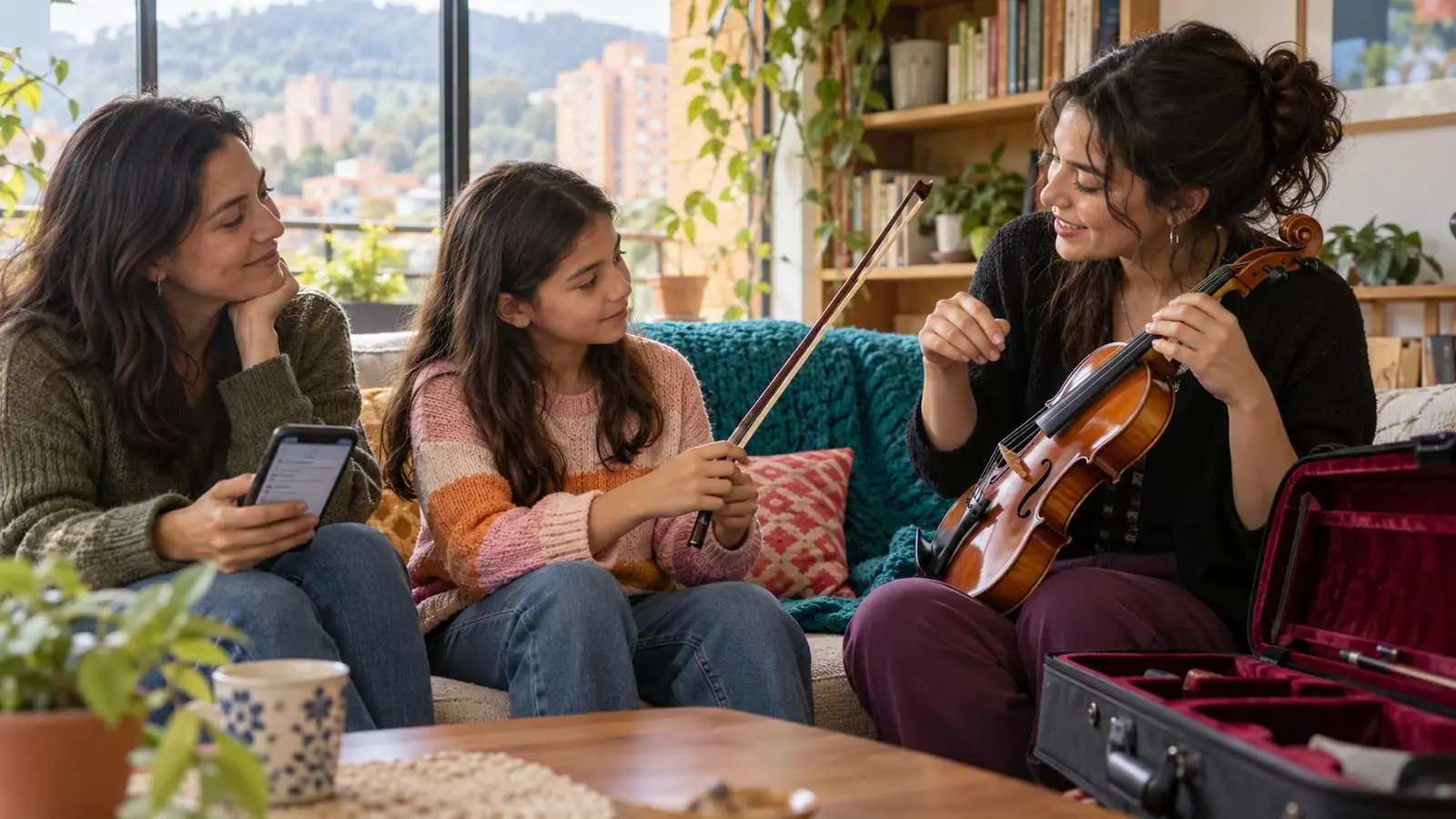
A good music teacher combines three things: mastery of their instrument, the ability to teach it, and lessons adapted to the person in front of them. A résumé alone won't tell you whether they have all three: ask how they teach, what they expect of you, and how they'll measure your progress.
Here are 10 specific questions to ask before you start, signs that you're on the right track, and warning signs worth paying attention to, whether the lessons are for you or your children.
In short
- The best teacher isn't always the best performer: look for someone who plays well and, above all, can explain clearly and adapt the lesson.
- Ask about their experience with students of your age and level, what a typical lesson looks like, and how they'll track your progress.
- A good first lesson leaves you clear about what you'll be working on and eager to come back.
- Warning signs: unstructured lessons, frequent lateness, little interest in your goals, or treatment that leaves you feeling afraid or ashamed.
- With children, watch whether the teacher connects with them and keeps the family informed about their progress.
What makes a good music teacher
Playing very well and teaching very well are different skills. A brilliant performer may struggle to explain what they do intuitively, while a teacher with a more modest performing career may be excellent at guiding beginners. Ideally, look for someone who brings together:
- Musical mastery: a thorough knowledge of their instrument, its repertoire, and the theory behind it.
- Teaching skills: the ability to break difficult tasks into small steps and explain them in different ways.
- Adaptability: adjusting the pace, exercises, and repertoire to your age, level, and goals.
- Warmth and patience: offering corrections without humiliation and making you feel safe to make mistakes.
- Structure: each lesson has a purpose and connects to the previous and next lessons.
10 questions to ask before you start
This is an honest conversation, not an interrogation. The answers tell you a lot about how each teacher works.
- What experience do you have with students of my age and level? Teaching a 5-year-old, a teenager, and an adult beginner are very different tasks.
- What is a typical lesson with you like? Look for a specific answer: warm-up, technique, repertoire, some theory or ear training.
- What materials or methods do you use? A good teacher can explain why they've chosen a book, method, or repertoire, and change it if it doesn't work for you.
- How do you adapt the lessons to what I want to achieve? Playing for enjoyment, singing in a choir, preparing an audition, and accompanying songs at gatherings are different goals.
- What musical styles do you teach? If you dream of playing boleros, rock, or Colombian music, it's worth knowing whether the teacher is familiar with that repertoire.
- How much should I practice between lessons? A realistic answer that fits your life is a good sign; an impossible demand is less encouraging.
- How will we know I'm making progress? This might involve goals for each stage, recordings, completed pieces, or short performances.
- Do you work on reading sheet music, ear training, or both? Both are valuable; what matters is that the balance makes sense for you.
- What do I need to get started? An instrument, the right size, accessories, and space. A good teacher guides you before you buy.
- If the lessons are for a child: how do you keep the family informed about their progress? Communicating with parents is part of supporting the student.
Signs you've made a good choice
- You leave each lesson knowing exactly what to practice during the week.
- The teacher listens before correcting and asks how you feel about what you're playing.
- Corrections are clear, kind, and focused on one or two things at a time.
- You notice that the repertoire reflects your tastes and goals.
- You can make mistakes without fear: an error becomes useful information, not a reason to feel ashamed.
- With children: your child arrives at lessons happily and tells you at home what they learned.
Warning signs: when to keep looking
- Lessons seem improvised, with no connection from one week to the next.
- They promise results on a fixed timeline, such as “in three months, you'll play like a professional.” Progress depends on many factors, and no one can guarantee it.
- They don't correct posture or take pain and tension seriously, even though these can lead to discomfort or injury.
- They use fear, ridicule, or comparisons to “motivate.”
- They frequently arrive late or cancel without giving enough notice.
- They show no interest in your tastes or what you want to achieve.
- With children: they lose patience easily or don't know how to adapt lessons to the child's age.
How to make the most of the first lesson
The first lesson is a chance for the teacher to get to know you and for you to see how they work. Here are some ways to make the most of it:
- Arrive with a clear goal, even a simple one: “I want to accompany songs on guitar” is an excellent starting point.
- Share your previous experience, even if it's limited or from many years ago.
- Bring one or two songs you'd like to play or sing someday.
- Ask the teacher how they envision the first few weeks of lessons.
- At the end, ask yourself: did I understand what I need to practice? Did I feel comfortable? Do I want to come back?
If you haven't decided on the format yet, we compare in-home and online lessons. And if the lessons are for a child, see what age to start each instrument.
If you're still torn between enrolling in a music school and finding a private teacher, music school or private teacher compares the options based on your priorities.
How we choose teachers at Gissi
At Gissi, we assess each teacher's personal qualities, musical experience, teaching skills, and approach to supporting students before bringing them onto the team. That's why we say our teachers are handpicked—and chosen by ear.
Still, the final choice is yours: you can browse profiles in the teacher directory, explore lessons by instrument, or learn more about us.
Frequently asked questions
Is a teacher with a university music degree better?
A solid education helps, but it doesn't guarantee that someone can teach. Look at both their musical training and their experience teaching people with a background similar to yours.
How many lessons should I take before deciding whether a teacher is right for me?
Two or three lessons are usually enough to know whether their teaching approach and communication suit you. Both of you may be a little nervous in the first lesson, so it's best not to base your decision on that one alone.
Is it wrong to change music teachers?
No. Goals change, and sometimes a student needs a different approach or a teacher who specializes in a particular style. Ideally, end things respectfully and tell the new teacher what you worked on before.
Can one teacher teach several instruments?
Yes, many musicians play more than one instrument well, especially related instruments. What matters is that they have real experience teaching the instrument you're interested in, not just playing it.
Sources
We checked the facts in this article against these sources on October 22, 2026.