
At what age should you start learning music?
There's no single right age to start. We explain what to expect at each stage, from early music education to adulthood, and the suggested starting age for each instrument.
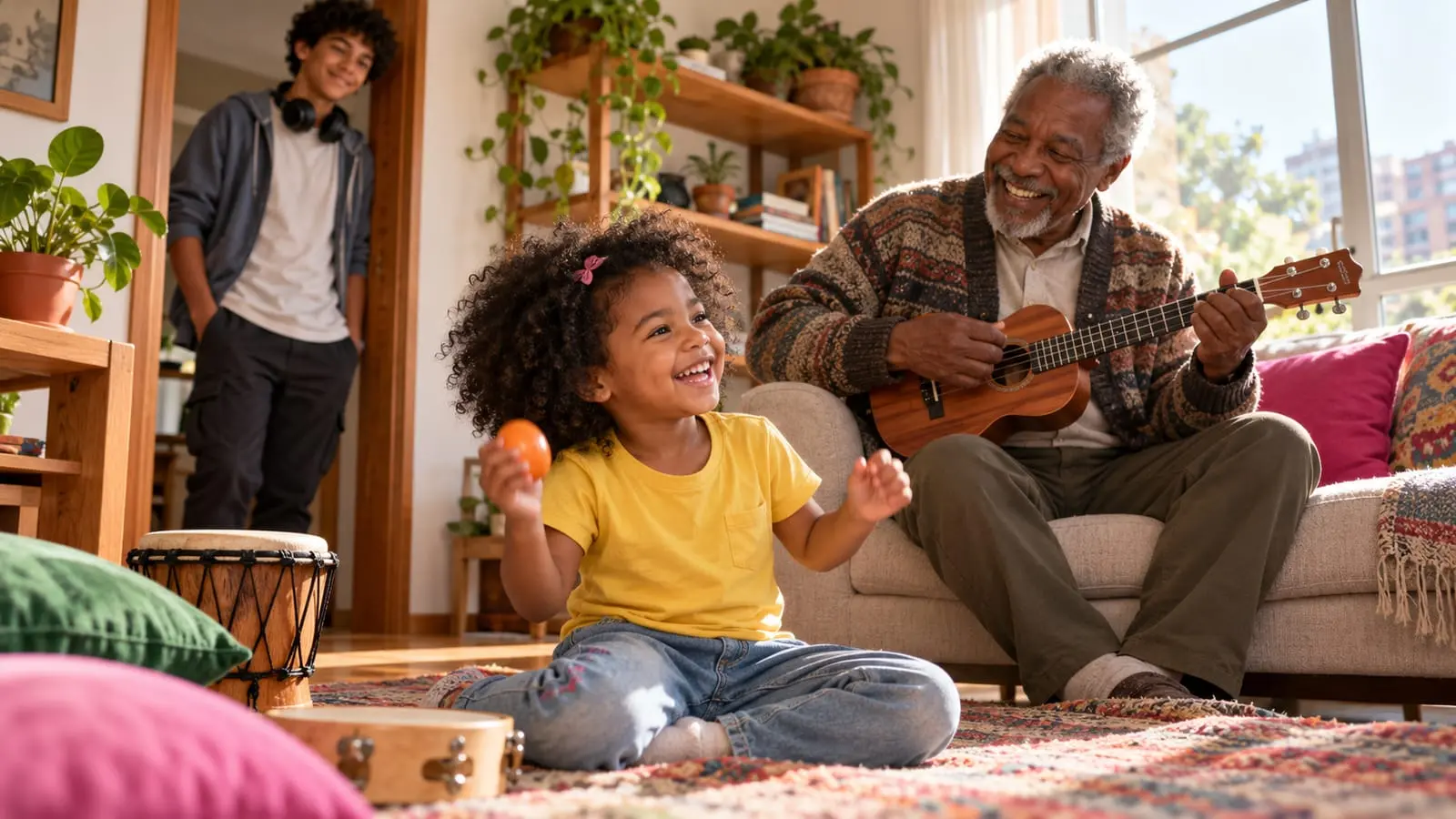
There is no single right age. Introductory music activities can develop listening and rhythm skills from age 3; most instruments can be started comfortably between ages 5 and 10, depending on their size and physical demands. For adults, the answer is simple: any time is a good time.
Three things matter more than age alone: being able to concentrate for a while, having a body that fits the instrument, and wanting to learn. This guide explains what to expect at each stage and the suggested starting ages for each instrument.
In short
- Between ages 3 and 5, introductory music activities are ideal: rhythm, singing, movement, and play, without the pressure of mastering an instrument.
- Children can often start piano, violin, cello, and percussion around age 5 or 6, and guitar around age 6 or 7, with an appropriately sized instrument.
- Wind instruments such as clarinet, saxophone, or trumpet are generally recommended starting at ages 8 to 10, when children have better breath control and, as many teachers prefer, permanent front teeth.
- It is never too late: adults learn with greater structure and understanding, and make real progress with consistent practice.
- Age is only a guide: the student's interest and attention, and a teacher who adapts lessons to their stage of development, matter more.
The short answer: there is no single right age
We can experience music from infancy: singing at home, dancing, and listening to songs together already count as music education. What changes with age is how we learn. At 4, children learn through play and movement; at 10, with more focus on technique; at 40, with greater awareness of what they are doing.
So before wondering whether this is “the right age,” consider these three factors:
- Attention: can your child concentrate on a guided activity for a while without getting frustrated?
- Physical fit: do your child's hands, arms, and breathing capacity suit the instrument, or is a smaller version available?
- Motivation: does your child want to learn, ask for the instrument, sing, and move to music? Enthusiasm sustains practice more than anything else.
What to expect at each stage
Ages 3 to 5: introductory music activities
At this age, the goal is to develop a sense of beat, listening skills, coordination, and enjoyment of music, rather than to play an instrument “well.” An introductory music lesson combines songs, rhythm games, movement, and small percussion instruments such as maracas, claves, and tambourines. Activities are short and varied, because attention spans are short too.
Some approaches, such as Suzuki, introduce violin or piano to very young children, always with strong family involvement and an emphasis on play and imitation. To learn more about this stage, read what introductory music education is.
Ages 6 to 8: a first instrument
This is a very good age to start an instrument. The reading and writing skills children develop at school help them connect with sheet music, and their fine motor skills allow them to work with their fingers. Piano, violin, cello, percussion, and recorder are common choices; a smaller guitar works well around age 6 or 7. Practice at home should still be short, with an adult's support.
Ages 9 to 12: consistency and new instruments
The options broaden at this stage. Greater breathing capacity, longer arms, and permanent teeth make wind instruments such as flute, clarinet, saxophone, trumpet, and trombone more comfortable. It is also a good time for electric guitar, bass, or more formal music theory. Children can now practice for longer and set concrete goals, such as preparing a piece for a recital.
Teenagers: personal style and motivation
In adolescence, music becomes part of identity: favorite bands, genres, and the desire to sound like someone emerge. Making the most of that motivation is key: work on repertoire they enjoy while maintaining good technique. If the goal is to apply to a university music program, it helps to start reading and theory well in advance. In singing, the changing voice needs careful guidance, without strain.
Adults: it is never too late
Adults who are starting out have real advantages: they understand what they are doing, organize their practice, and know why they want to learn. You can start any instrument, with no age limit. The biggest obstacle is often the fear of “having no talent” or being a beginner. A patient teacher, realistic goals, and a short, consistent routine can help you work through it.
Suggested starting ages by instrument
These ages are general guidelines. Every child is different, and many instruments come in smaller sizes that make an earlier start possible.
| Instrument | Suggested age | Why |
|---|---|---|
| Early music education | Ages 3 to 7 | Develops rhythm, listening, and movement through play, without demanding instrumental technique. |
| Piano | From age 5 or 6 | Each key sounds when pressed, and theory is visible on the keyboard; all you need is a bench at the right height and support for the feet. |
| Violin and viola | From age 5 or 6 | Fractional sizes are available for small hands; learning requires patience with intonation and good guidance on posture. |
| Cello | From age 5 or 6 | Smaller sizes are also available, and the seated playing position gives younger children stability. |
| Percussion | From age 5 or 6 | Rhythm comes naturally to children; they start with small instruments and move on to more complete setups. |
| Recorder | From age 6 | It is light and accessible, and develops coordination between fingers, breathing, and reading; it is a bridge to other wind instruments. |
| Acoustic guitar | From age 6 or 7 | Pressing the strings takes some finger strength; a smaller guitar with nylon strings makes it more comfortable. |
| Singing | Vocal play from an early age; more formal technique starting at ages 8 to 10, depending on the child | A child's voice is delicate: singing starts through play, and technique develops as the body matures. |
| Flute | From ages 8 to 10 | The arms must reach the keys, and breath control is needed; curved headjoints are available to shorten the instrument. |
| Trumpet and trombone | From ages 8 to 10 | The embouchure relies on the lips and teeth; trombone also requires long arms to reach the slide positions. |
| Clarinet and saxophone | From age 9 or 10 | They require greater breathing capacity, hands that can reach the keys, and ideally permanent front teeth. |
| Electric guitar and electric bass | From ages 8 to 10; bass a little later | Electric guitar has thin, comfortable strings; bass has a long neck and thick strings that are easier to handle with larger hands. |
Signs your child is ready for an instrument
Beyond age, there are clear signs that a child can move from introductory music activities to an instrument:
- They keep asking for a particular instrument, beyond a passing interest lasting a week.
- They can follow a song's beat by clapping or stepping without losing track.
- They can stay focused on a guided activity for a while.
- They are willing to repeat something several times to improve it.
- Their hands or body fit the instrument or a smaller version.
If you do not see these signs yet, that is fine: continuing with introductory music activities is time spent building the foundation that will make learning an instrument easier later.
How to get off to a good start at any age
- Choose based on interest, not prestige. If you are deciding between two options, this comparison of piano or guitar can help.
- Get an appropriately sized instrument before investing in one “for life.” Ask the teacher before buying.
- Find a teacher who knows how to teach people of that age. These questions to help you choose a music teacher can guide you.
- Set a short, consistent home practice routine suited to the student's age.
- Measure progress by enjoyment and consistency, as well as songs learned.
At Gissi, teachers adapt each lesson to the student's level, pace, and goals, whether they are a 4-year-old or an adult who has finally decided to start. Browse the teacher directory and choose based on the instrument that interests you.
Frequently asked questions
Can a baby take music lessons?
Before age 3, music at home is most valuable: sing to your child, dance together, and listen to varied music. Introductory music lessons with a teacher usually begin around age 3, when children can follow simple games.
Should children start with recorder before another instrument?
It is not a requirement, but it can be a useful bridge: it is light, helps coordinate fingers and breathing, and introduces music reading. If your child already knows they want piano or violin and is old enough, they can start directly.
Is my 12-year-old too old to start?
Not at all. At 12, you can start any instrument, and the ability to concentrate and understand often makes early progress quicker than it is for younger children.
Can adults learn music without knowing how to read sheet music?
Yes. Many adults start by playing by ear or using chords and chord symbols, then gradually add reading. A good teacher adjusts that balance to your goals.
Sources
We checked the facts in this article against these sources on October 22, 2026.
- NAfME: early childhood music education (music learning from before birth through age 8)
- The Canadian Encyclopedia: the Suzuki method (starting age and parents' role)
- Yamaha Music: fractional-size violins
- John Packer: musical instruments for children, a general guide (winds, teeth, and size)
- Thomann: guitar sizes for children by age and height
- KidsHealth: voice changes during adolescence