
Music school or private teacher? Which makes more sense
Music schools offer structure and ensembles; a private teacher offers attention and flexibility. We help you choose and tell you about a third option.
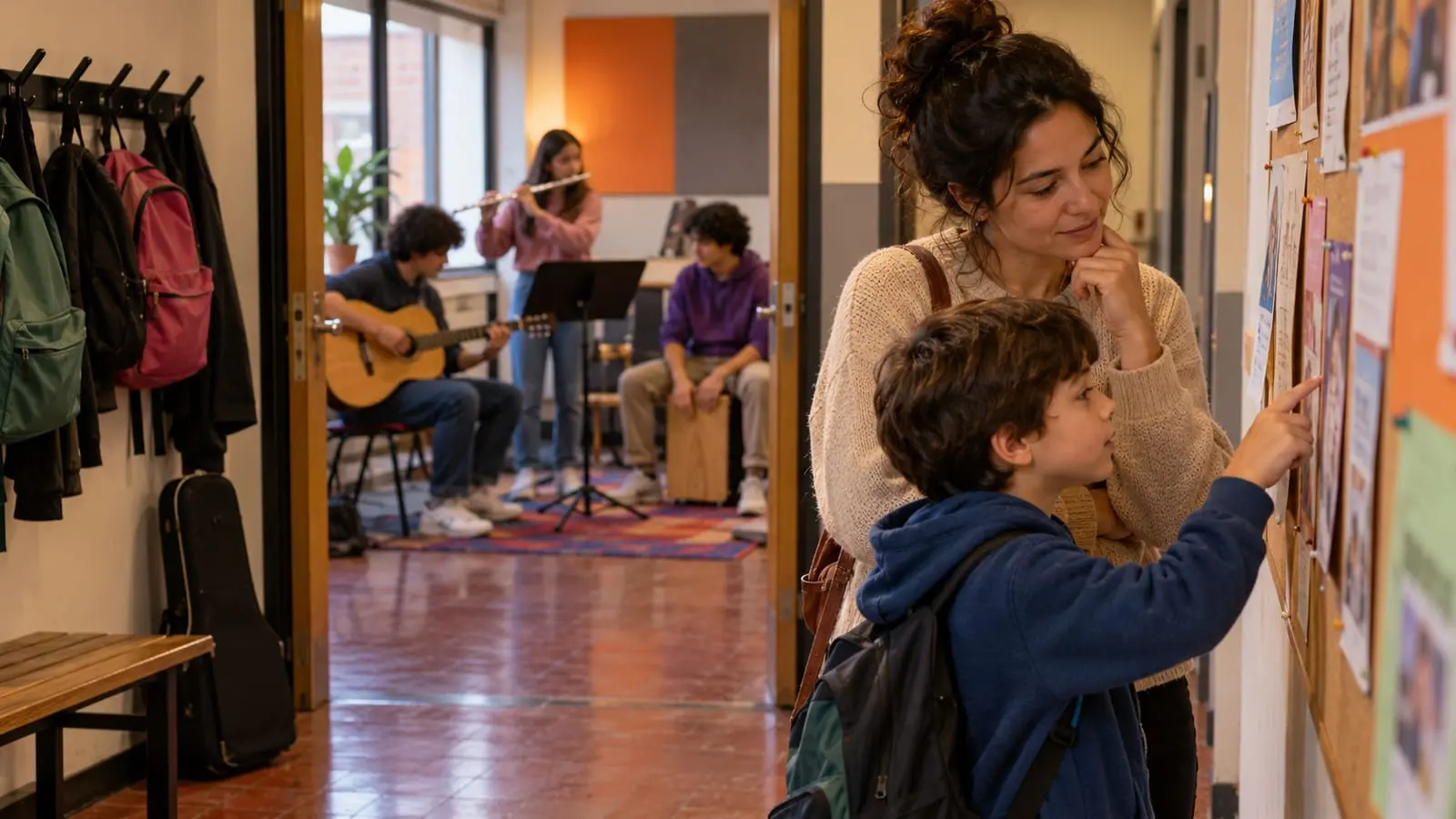
If you want ensembles, recitals, a program organized by level, and a setting with other students, a music school has a lot to offer. If you care most about progressing at your own pace, with flexible scheduling and no travel, a private teacher is often a better fit. Neither option is inherently better: it depends on who is learning and why.
There is a third option between the two: private lessons with teachers who have already been evaluated before they arrive at your home. Here we compare all three honestly, including what each one does not offer.
In short
- A music school offers structure, facilities, ensembles, and musical activities with other students; in return, you need to travel and follow a fixed schedule.
- A private teacher offers undivided attention, your own pace, and convenience, but the quality depends entirely on that person.
- The biggest risk with an independent teacher is that no one may have assessed their teaching before they start working with you.
- A network of vetted teachers combines the attention of private lessons with prior assessment of musical skills, teaching ability, and interpersonal qualities.
- You can combine them: private lessons for technique and a choir, band, or orchestra to play with others.
Music school, private teacher, or teacher network: key differences
| Aspect | Music school | Independent private teacher | A network of vetted teachers |
|---|---|---|---|
| Where lessons take place | At the music school's premises. | At your home, the teacher's home, or online. | At your home or online. |
| Who chose the teacher | The school, using its own criteria. | You, usually through a recommendation. | The network evaluated them first; you choose from the profiles. |
| Program | Usually has levels and a defined plan. | Depends on the teacher: it can be highly personalized or largely improvised. | Personalized plan with weekly follow-up. |
| Playing with others | Ensembles, bands, choirs, recitals. | Little or none, unless the teacher arranges it. | Private or small-group lessons; does not replace an ensemble. |
| Schedule | Fixed, according to the schedule. | Flexible, depending on the teacher. | Flexible, depending on each teacher's availability. |
| Travel | You travel to the school. | Depends on your arrangement. | No travel required. |
| If something is not working | You speak to the coordinator. | You resolve it directly with the teacher. | You have someone to talk to besides the teacher. |
When a music school makes sense
A good music school is much more than a building with classrooms. It is worth considering if you want:
- Playing with others regularly: children's orchestras, bands, choirs, or popular music ensembles.
- A structure organized by level, with clear goals and regular performances or recitals.
- Instruments you do not have at home, such as a drum kit or acoustic piano, to use at the school.
- Leaving home to focus: some children and teenagers benefit from having a dedicated place for music, away from screens and toys.
- A social environment with students their age who share the same interest.
Before enrolling, check how teachers are selected, whether the student will keep the same teacher or switch depending on availability, how many students are in each instrument lesson, and how long the actual round trip takes at that time of day.
When a private teacher makes sense
- You want to progress at your own pace, without waiting for the group to catch up or feeling pressured by it.
- You have a specific goal: an audition, repertoire for an event, a particular genre, or returning to an instrument after years away.
- Your schedule leaves no room for travel, which is common for adults and families with several children.
- You learn better without an audience, especially at first, when making mistakes in front of others can be intimidating.
The weakness is relying on one person. If the teacher lacks a method, cancels often, or does not know how to teach someone your age, there is no one else to notice. If they stop teaching, your search starts over. That is why it helps to ask the right questions before choosing a teacher.
The third option: a network of vetted teachers
Between the structure of a music school and the independence of a private teacher, there is a middle ground: private lessons, at home or online, with teachers who went through a selection process before their first lesson.
This is how Gissi works: each teacher is assessed for musical skills, teaching ability, and interpersonal qualities before starting. You choose from profiles in the teacher directory, with online or in-home lessons in Bogotá and the surrounding area.
What you gain
- The attention and flexibility of private lessons.
- Prior screening: you do not rely solely on a recommendation from someone you know.
- More profiles, instruments, and styles to compare before deciding.
- Weekly follow-up, with clear goals.
What it does not offer
- Premises to visit or rooms equipped with instruments for practice.
- The experience of playing in an orchestra or band every week; for that, it is worth joining an ensemble too.
To learn more about our approach, visit about us, where we explain how we work.
How to choose based on your priority
| If your priority is… | Usually works best |
|---|---|
| Playing in a group, orchestra, or band | Music school, or private lessons plus a separate ensemble. |
| Making fast progress in technique | Private lessons. |
| A young child just starting out | Introductory music activities in a small group or private lessons at home, depending on the child's temperament. |
| Preparing for university music admission | Private lessons focused on the instrument, theory, reading, and musical dictation. |
| Avoiding travel | Private teacher at home or online. |
| Knowing the teacher has been evaluated | A reputable music school or a network of vetted teachers. |
Whichever option you choose, the first lesson tells you a lot. Notice whether the teacher listens before correcting, assigns clear practice work, and leaves the student wanting to return.
You do not have to choose just one
Many students combine formats. Here are some combinations that work well:
- Private piano or guitar lessons for technique, and the school choir or band to play with others.
- Music school for ensemble playing and a private teacher to prepare demanding repertoire or an audition.
- Private lessons during the year and a music workshop or camp during school breaks.
If you prefer private lessons, the next step is deciding whether to take them at home or online, and whether individual or small-group lessons suit you better.
Frequently asked questions
Is a private teacher more expensive than a music school?
It depends on what each option includes and the format, length, and frequency of lessons. Compare what you receive in each case: individual time with the teacher, ensembles, travel, and follow-up. For specific private lesson options, message us on WhatsApp.
Is a music school better for children?
Not necessarily. Some children enjoy the group environment and the school's premises; others concentrate better at home with a teacher who adapts to their pace. If being with others motivates your child, a music school adds value; if they get distracted in groups, private lessons may work better.
How can I tell if a private teacher is good?
Observe the first lesson: do they listen before correcting, explain clearly, and leave you with a practice plan? Asking about their training and experience with students your age also helps.
Does a music school certificate help you get into a music degree program?
For admission to a music degree program, what counts is the entrance assessment, which usually includes an audition, theory, reading, and an interview. A certificate shows your background, but preparing specifically for the assessment makes the difference.
Sources
We checked the facts in this article against these sources on October 22, 2026.