
Music for babies: how to share music at home from 0 to 2
Before age 2, babies don't need methods or classes: your voice, play and daily routines are the best musical stimulation. Here's what to do and what to expect.
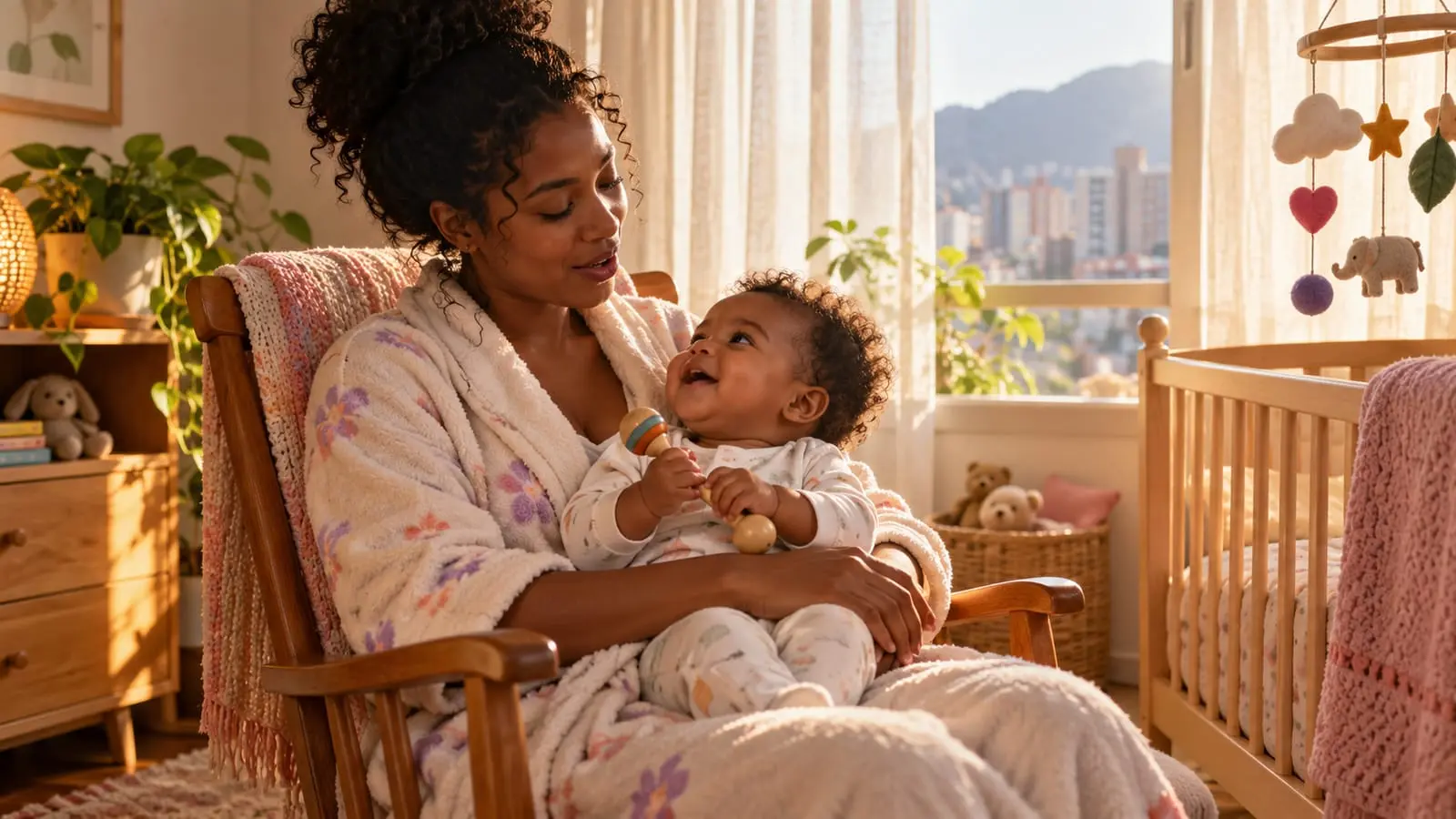
For babies aged 0 to 2, the best musical stimulation isn't in an app or a lesson: it's in your voice. Singing during diaper changes, rocking your baby to a song, and letting them tap a pot with a wooden spoon are, at this age, real music education.
The aim isn't to speed up development or make your baby “smarter,” but to make music part of the day and a chance to play and bond with Mom and Dad. Here are specific ideas by age, what you can reasonably expect, and when it makes sense to look for lessons.
In short
- Before age 2, music happens at home: singing, rocking, dancing with your baby in your arms, and playing with sounds.
- Your voice matters more than any recording, even if you don't sing in tune.
- Daily routines are the best opportunities for music: bath time, diaper changes, meals, and bedtime.
- Music isn't a formula for speeding up development; it's play, bonding, and shared enjoyment.
- Introductory music lessons usually start around age 3; before then, the most valuable experiences happen with family.
What musical stimulation for babies is (and isn't)
“Musical stimulation” sounds technical, but with a baby it means something very simple: offering everyday, affectionate experiences with sound, rhythm, and singing. Babies don't need to understand music to enjoy it; they experience it through their bodies, your voice, rocking, and play.
It's also worth being clear about what it isn't:
- It isn't a race. There is no number of songs or minutes your baby “must” listen to each day.
- It doesn't mean playing background music all the time. Silence and household sounds are also part of your baby's sound world.
- It isn't a promise of developmental gains. The idea that certain music makes babies smarter became very popular, but that isn't something anyone can promise. What you can expect is a baby who enjoys music, recognizes familiar songs, and shares a special moment with you.
What to do at each age
Every baby develops at their own pace, so use these stages as a guide, not a checklist of goals to meet.
| Age | What many babies do | What you can do |
|---|---|---|
| 0 to 6 months | Your voice calms or energizes them; they become still to listen and look for where a sound is coming from. | Sing softly close to your baby, rock them to a lullaby, and use a singsong voice when you talk throughout the day. |
| 6 to 12 months | They babble as if singing, tap objects, and sway while sitting when music plays. | Clapping games, rattles, pots and wooden spoons, and songs with gestures such as “Los pollitos dicen”. |
| 12 to 18 months | They bounce and move to music, imitate sounds, and ask you to repeat what they enjoy. | Dance together, play freeze games when the music stops, and offer a small drum or maracas. |
| 18 to 24 months | They fill in words in familiar songs, ask for their favorites, and march or jump to the beat. | Let your baby finish the last word of each phrase, make up songs using their name, and march around the house. |
Music in everyday routines
You don't need to set aside a special “music time.” Your existing routines are ideal because they happen every day, and your baby learns to anticipate them.
During diaper changes and dressing
A short song you always sing at that moment makes it more predictable and often calmer. You can sing the names of body parts as you dress your baby.
At bath time
Water invites sound play: splash to the beat of a song, sing the same phrase quickly and then slowly, or make sounds by tapping a small cup against the water.
At mealtimes and in the car
Songs with repetition and clapping work well while your baby waits for food or you're stuck in traffic. In the car, alternate recorded music with your own voice.
At bedtime
The same lullaby every night becomes a signal that it's time to rest. Sing it slowly in a gentle voice, gradually getting quieter until you finish almost in silence.
Your voice is your baby's first instrument
Many parents avoid singing because they think they're bad at it. Your baby doesn't mind: your voice is the sound they know best, and an out-of-tune song sung with love means much more to them than a perfect recording.
- Sing slowly, using short phrases so your baby can follow you and, later, imitate you.
- Repeat the same songs often. Babies love familiar things, and repetition is how they learn.
- If you don't know children's songs, sing whatever you do know: a bambuco your grandmother sang, a vallenato, a ballad, or a singing game such as “Arroz con leche”.
- Make things up: put your baby's name into a familiar tune or sing about what you're doing (“now we're washing our hands…”).
- Leave pauses. When the song stops and your baby babbles or moves, they're responding; give them time, then continue.
Listening to a variety of music helps too: children's songs, classical music, currulao, cumbia, salsa, or whatever you play at home. What matters is listening together, dancing, and responding to it, rather than leaving it playing in another room.
Volume, screens, and other precautions
- Keep the volume moderate: if you have to raise your voice to talk over the music, it's too loud for a baby.
- Avoid headphones for babies, and keep speakers some distance from the crib or stroller.
- Check electronic musical toys: some are very loud and are used very close to the ear. If possible, choose ones with adjustable volume.
- Choose live, shared music over videos. Singing, dancing, and playing with your baby matter more than putting them in front of a screen playing songs.
- Don't fill the whole day with sound: quiet moments help your baby notice sounds when they occur.
If you're thinking of giving your baby a first instrument, these musical gift ideas for children can help you choose something safe and age-appropriate.
When should you look for music lessons?
Before age 2, your baby doesn't need a lesson to experience music: everything they need is at home. Some families enjoy group music sessions for babies and parents, and these can be lovely experiences, but they aren't a requirement.
Introductory music lessons usually begin around age 3, when a child can follow simple games and instructions for a little while. These signs suggest that time is approaching:
- Your child requests specific songs and recognizes them from the first few notes.
- Your child moves to music intentionally: marching, jumping, or stopping when it stops.
- Your child imitates gestures and sounds in “do what I do” games.
- Your child enjoys short guided activities with another adult, not just Mom or Dad.
To find out what lessons are like at that age, read music lessons for children ages 3 to 5 and, for an overview of the whole stage, what early music education is.
Frequently asked questions
Is it good to play music to help a baby sleep?
It can help establish a routine, especially if it's always the same gentle song at a low volume. It works even better when you sing it. Avoid leaving loud music on all night; once your baby falls asleep, gradually lower the volume until you turn it off.
What kind of music is best for a baby?
There is no “right” genre. Variety and sharing the experience help most: children's songs, singing games, classical music, Colombian rhythms, or music you enjoy. Songs with simple melodies and plenty of repetition are especially easy to follow.
Do I need musical knowledge to introduce my baby to music?
No. Just sing, move with your baby, and play with sounds. It doesn't matter if you sing out of tune: your voice and attention are what your baby enjoys.
Is singing to a baby during pregnancy helpful?
Many families do it as a way to connect, and it's a lovely tradition. Enjoy it for what it is, without expecting specific effects. After birth, those same songs can become the first in your baby's family repertoire.
Sources
We checked the facts in this article against these sources on October 22, 2026.