
Music lessons for kids ages 6 to 8: the first instrument
Between ages 6 and 8, many children start their first formal instrument. We explain which options work, how reading comes in and how to organize practice.
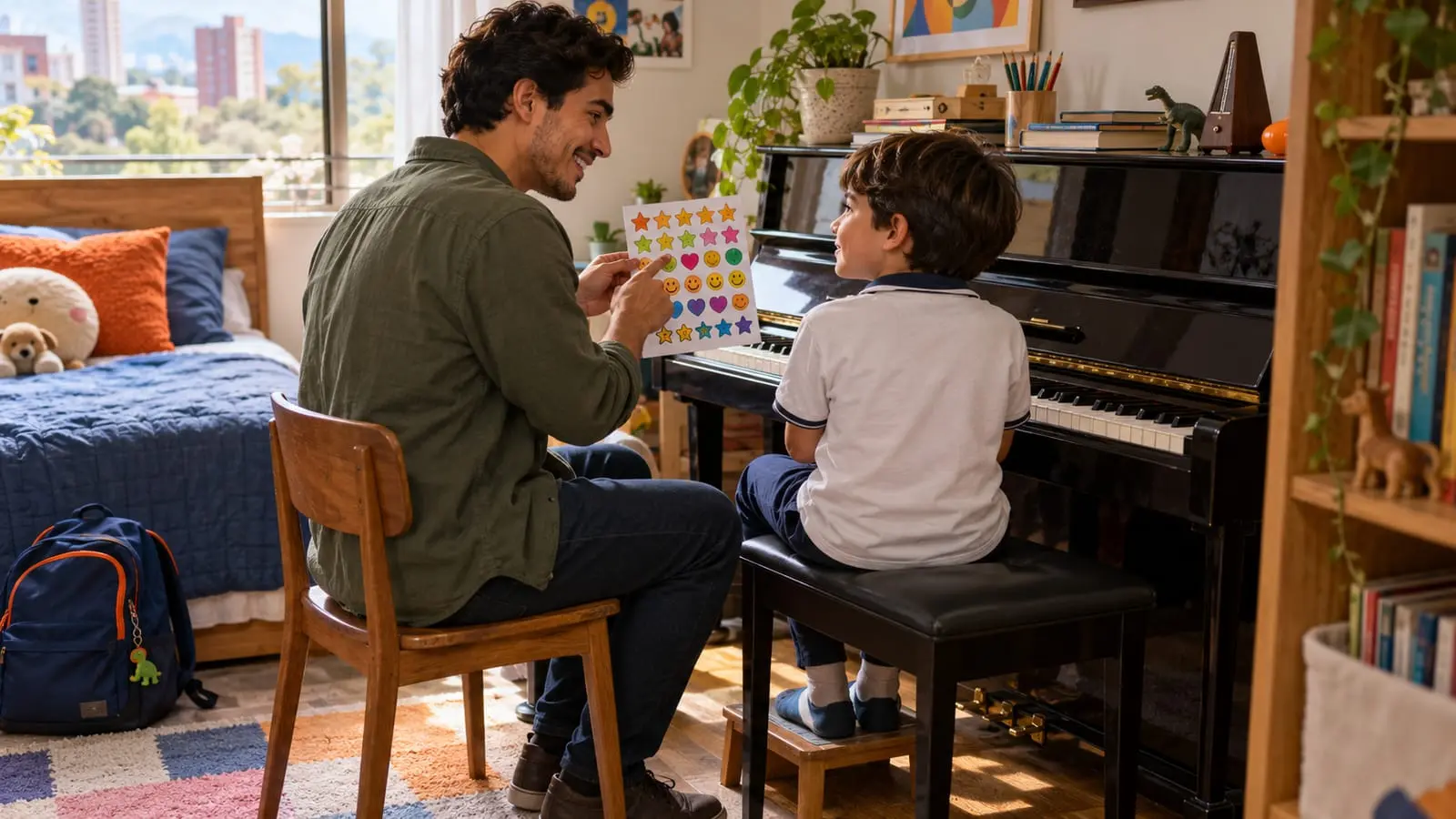
Ages 6 to 8 are a great time to begin formal instrument lessons. Children are learning to read and write at school, can manage a 30- to 45-minute lesson and have more precise finger control. Piano, violin, a smaller acoustic guitar and recorder are the most common choices.
The key at this stage is at home: short practice sessions of 10 to 15 minutes on most days, with an adult nearby at first. Here is how to choose an instrument, introduce music reading and organize that routine.
In short
- Between ages 6 and 8, children can get a good start on almost any instrument that fits their size: piano, violin, guitar, recorder, percussion or cello.
- Music reading usually starts with rhythm and a few notes; some approaches introduce it after playing by ear.
- Lessons last 30 to 45 minutes and include specific practice tasks for the week.
- Practicing for 10 to 15 minutes, five days a week, does more than one long session on the weekend.
- The instrument should fit your child now, rather than the size they will be in three years.
Why this is a good age for a first instrument
Several developments come together at this age to make learning an instrument easier:
- Reading at school: your child is decoding letters and words, and reading rhythms and notes is a similar process.
- Attention: your child can follow short explanations and focus on a task for several minutes.
- Fine motor skills: fingers move more independently, which is essential for piano, violin and guitar.
- Wanting to show what they can do: children love playing for the family, which is a powerful motivator.
A practical detail few people consider: around age 6, children start losing their front teeth. When playing the recorder, air may leak and the sound may change for a few weeks; this is normal and resolves when the new teeth come in.
Which instruments work well for ages 6 to 8
| Instrument | Why it works | Things to consider |
|---|---|---|
| Piano | Each key makes a sound when pressed, and the layout of the notes is visible; it is a great foundation for reading music. | You need a keyboard or digital piano with full-size keys at home. |
| Violin | Fractional sizes accommodate different heights, and it is easy to carry. | The first few months require patience with tone and intonation, and an adult to support practice. |
| Acoustic guitar | Children can soon accompany songs they already know. | With a smaller guitar (1/4 or 1/2 size, depending on the child’s height) and nylon strings; fingertips may be a little sore during the first few weeks. |
| Recorder | It is light, inexpensive and used in many schools; it brings together finger movement, breath and music reading. | Ask the school whether they use Baroque or German fingering before buying one. |
| Percussion | Rhythm comes naturally to children, and lessons are very active. | Acoustic drums are loud; in an apartment, a practice pad helps a lot. |
If you are still unsure, this guide to choosing an instrument for your child helps you weigh age, preferences and practical considerations at home.
When will my child start reading sheet music?
It depends on the instrument and the teacher's approach. There are two common paths, and both are valid:
- Reading from the start: many children's piano methods introduce the staff in the first few weeks, with large notes and just a few at a time.
- Playing by ear first: in Suzuki-based approaches, children learn pieces by listening and imitating, and reading comes once they can play with some ease.
Either way, at this age children usually begin with rhythm reading—quarter notes, eighth notes and rests, sometimes using syllables to count them—and add a few pitches. Do not expect your child to read an entire piece of sheet music in the first few months.
One sign to watch for: if your child memorizes everything and gets lost as soon as they have to read something new, mention it to the teacher. It is not a major concern, but it is best to balance playing by ear and reading early on.
What a lesson is like at ages 6, 7 or 8
An individual lesson usually lasts 30 minutes at age 6 and 45 minutes around age 8. A typical structure would be:
- A rhythm game or exercise to get started.
- Reviewing the week's practice: the teacher listens, celebrates progress and corrects one aspect at a time.
- A new technique: a hand position, a bow stroke or a chord.
- Working further on the current piece or song.
- Some music reading, using cards or a notebook.
- Ending with something the child enjoys and writing down the week's practice tasks.
At age 6, it helps to have an adult in the lesson, or at least there for the last few minutes, to learn what to practice. By around age 8, many children can explain their teacher's assignments themselves.
A short practice routine that works
At this age, aim for 10 to 15 minutes, five days a week. Here is a 12-minute example:
- Warm-up (2 minutes): a familiar song to warm up and settle into playing.
- Teacher's assignment (5 minutes): the new exercise or passage, played slowly a few times with focus.
- Piece (3 minutes): the current song, in full or in sections.
- Free time (2 minutes): anything the child wants, from inventing a melody to giving a mini concert for the family.
A few essentials: practice at the same time each day—for example, after an afternoon snack and before homework—keep the instrument visible and ready to play, and have an adult nearby for the first few months, gradually stepping back. Find more ideas in this routine for practicing music at home.
Common mistakes parents make at this stage
- Buying a large instrument “so it lasts longer.” A violin or guitar that is too big leads to poor posture and frustration.
- Demanding long practice sessions. Half an hour at age 6 often ends in tears; 10 focused minutes are worth more.
- Overloading the schedule: if music lessons come after school, swimming and English lessons, your child arrives with no energy left.
- Changing instruments every month. Give an instrument a few months before deciding it is not the right one.
- Comparing your child with siblings or cousins. Every child has their own pace.
- Missing lessons often. Consistent weekly lessons build progress.
Frequently asked questions
How much should a 7-year-old practice?
10 to 15 minutes, five days a week, is a realistic goal. If your child wants to play more on a particular day, great; what matters is that practice is frequent and has a clear purpose.
Are individual or group lessons better at this age?
Both work. Individual lessons let children progress at their own pace and receive close attention to technique; small groups motivate them and teach them to play with others. Many children start individually and later add an ensemble or school group.
Can my child learn two instruments at once?
They can, but at this age it usually works better to focus on one and wait until it has a solid foundation before adding a second. A common exception is recorder at school, which fits well alongside another instrument.
What should I do if my child does not want to read sheet music?
This is common, especially if your child plays well by ear. Talk to the teacher about combining reading with games, cards and pieces your child already knows: reading a piece is much easier when they already know how it sounds.
Sources
We checked the facts in this article against these sources on October 22, 2026.