
How much do music lessons cost? What affects the price
There's no single rate for music lessons. We explain what drives the price and how to compare offers that look different but aren't.
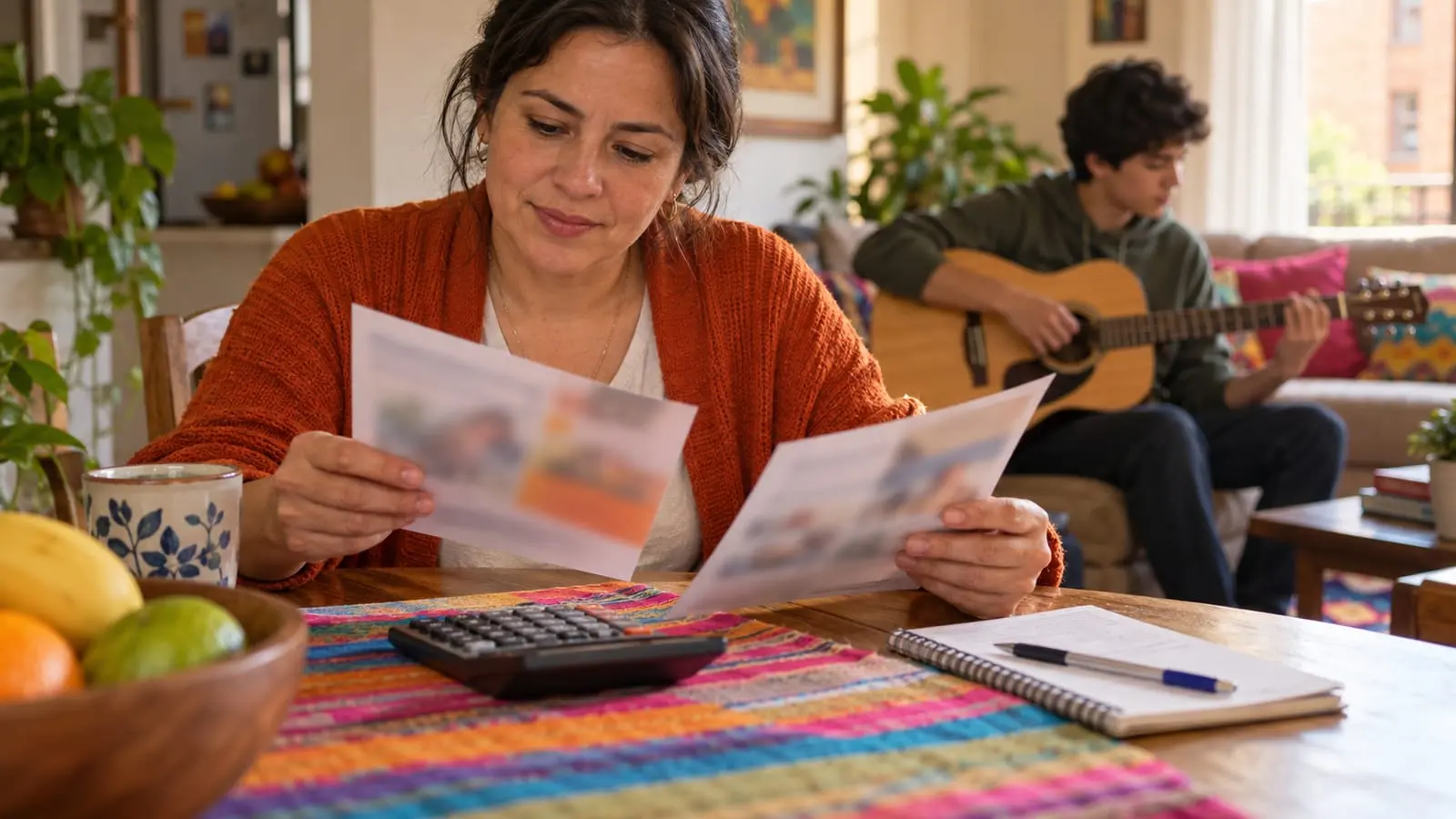
There isn't one standard price for a music lesson. It mainly depends on the format (online or at home, private or group), session length, weekly frequency, the teacher's background and experience, and travel for in-person lessons. That's why very different quotes may actually cover different services.
This guide explains how each factor affects the price and how to compare offers on equal terms. At Gissi, we don't publish a fixed rate because each plan is built around format, duration, and frequency. For options tailored to your situation, you can message us on WhatsApp.
In short
- Price mainly depends on format, duration, frequency, the teacher's background, and travel.
- Compare what each offer includes, as well as the price per lesson.
- In-home lessons usually cost more than online lessons because they include the teacher's travel time and transportation.
- A cheap lesson without structure or follow-up can prove costly if you develop bad habits or give up.
- Before starting, ask about cancellations, make-up lessons, and payment arrangements.
The factors that affect price
When you request a quote, these are the elements that go into the final price:
| Factor | Why the price changes | What to ask |
|---|---|---|
| Format | In-home lessons include travel; online lessons don't | Is the lesson online, at my home, or at a school location? |
| Private or group | Groups share the cost, but also the teacher's attention | How many students are in each lesson? |
| Duration | Longer lessons require more of the teacher's time | Exactly how long is each session? |
| Frequency | It changes the monthly cost and sometimes the price per lesson | Are there monthly plans or lesson packages? |
| Teacher's background | Training, professional experience, and specialization matter | What experience do you have with students like me? |
| Travel | Location and distance affect the teacher's time | Is there an extra charge for my neighborhood or municipality? |
| Goal | Entrance-exam preparation requires more planning than a lesson for enjoyment | Does the lesson include materials or specialized preparation? |
Online, at home, or at a school location
Format is often the biggest factor in a quote. For an in-home lesson, the teacher spends time getting to your home. In a city like Bogotá, that can be considerable depending on the area and time of day. If you live in a nearby municipality, travel becomes an even bigger factor.
Online music lessons remove that travel, so they usually offer the most flexibility in scheduling and cost. In return, you need a stable connection, a suitable space, and some basic equipment. Schools with physical locations include rent, classrooms, and the instruments they provide in their prices.
No format is best for everyone: young children and beginning violin students can benefit greatly from in-person lessons, while adults with busy schedules often gain more from online learning. We help you decide in in-home or online lessons.
Duration and frequency: how much lesson time you're buying
A longer lesson costs more, but the right length depends on age and level, rather than budget. Young children do better in short sessions; advanced students and those preparing for auditions need more time to work through repertoire, technique, and theory.
The same applies to frequency. One lesson a week is typical for steady progress; several lessons a week can speed things up, but only if you have time to practice between sessions. Paying for more lessons without practicing at home won't buy progress.
Many providers charge monthly or by lesson package rather than per individual session. When comparing, ask whether the package expires, what happens to unused lessons, and whether you can change your schedule.
Private or small-group lessons
In a small group, the price per person is usually lower because the teacher's time is shared. This works well for an introduction to music, siblings at the same level, or friends who want to form an ensemble. Private lessons, meanwhile, adapt entirely to your pace and allow more precise corrections to posture and technique.
If you're unsure, see our comparison of individual and group lessons: the decision depends on price as well as age, instrument, and goals.
The teacher's background and experience
A teacher with university training, performing experience, or a history of preparing students for entrance exams will usually charge differently from someone just starting to teach. Specialization matters too: there are fewer oboe, bassoon, and double bass teachers than guitar or piano teachers, which affects availability.
More experience doesn't always mean a better lesson for you. For a child starting out, patience and teaching skill matter more than a list of competition achievements. The key is finding a background that matches your goal; our questions for choosing a music teacher help you check. At our school, each teacher is assessed for musicianship, teaching ability, and interpersonal qualities before their first lesson. You can read their profiles in the teacher directory.
How to compare offers wisely
Place the offers side by side and check the same details in each:
| What to check | Why it matters |
|---|---|
| Actual lesson length | A cheaper offer may simply be shorter |
| Follow-up | A learning plan and weekly feedback make a difference to progress |
| Material | Sheet music, method books, or recordings may be included or charged separately |
| Cancellations and make-up lessons | Knowing what happens if you or the teacher cancels prevents misunderstandings |
| Payment arrangements | Paying per lesson, monthly, or by package changes your commitment |
| Changing teachers | If you don't click with the teacher, can you switch without starting over? |
| Transport | For in-home lessons, confirm whether it's already included |
Costs that aren't in the quote
- Buying or renting the instrument, and its size if it's for a growing child.
- Consumables: strings, reeds, rosin, drumheads, or drumsticks, depending on the instrument.
- Maintenance: piano tuning or adjustments by a luthier.
- For online lessons, headphones or a phone stand.
What to share when requesting a quote
The clearer you are, the more precise the answer will be. Have these details ready:
- The instrument and the learner's age.
- Current level: starting from scratch, some experience, or advanced.
- Your goal: enjoyment, playing in a band, or preparing for an entrance exam.
- Your preferred format and, for in-home lessons, your neighborhood or municipality.
- Your availability and how many lessons you want each week.
With that information, Gissi can suggest options for format, duration, and frequency via WhatsApp. If you're still exploring, see what our piano lessons are like and which other instruments are available.
Frequently asked questions
Why don't many teachers and schools publish their prices?
Because the price varies with format, duration, frequency, and location. A published rate without that context can confuse more than it helps, so quotes are usually tailored to each case.
Are online lessons cheaper than in-person lessons?
They usually are, because they don't include the teacher's travel. Still, compare duration, follow-up, and materials: a well-planned online lesson can be as productive as an in-person one.
Is it better to pay for a package or individual lessons?
A package or monthly plan usually supports consistency and sometimes lowers the price per lesson. An individual lesson gives you flexibility to try things out. Before paying for a package, confirm how long you have to use it and how make-up lessons work.
Do more expensive lessons produce better results?
No. Progress depends on a teacher who suits your age, level, and goals, and on practicing between lessons. A high price doesn't replace good teaching or follow-up.
Sources
We checked the facts in this article against these sources on October 22, 2026.