
What instrument should you learn after 60?
There's no single ideal instrument for everyone over 60. This comparison helps you choose based on your hands, your back, your hearing and the music you love.
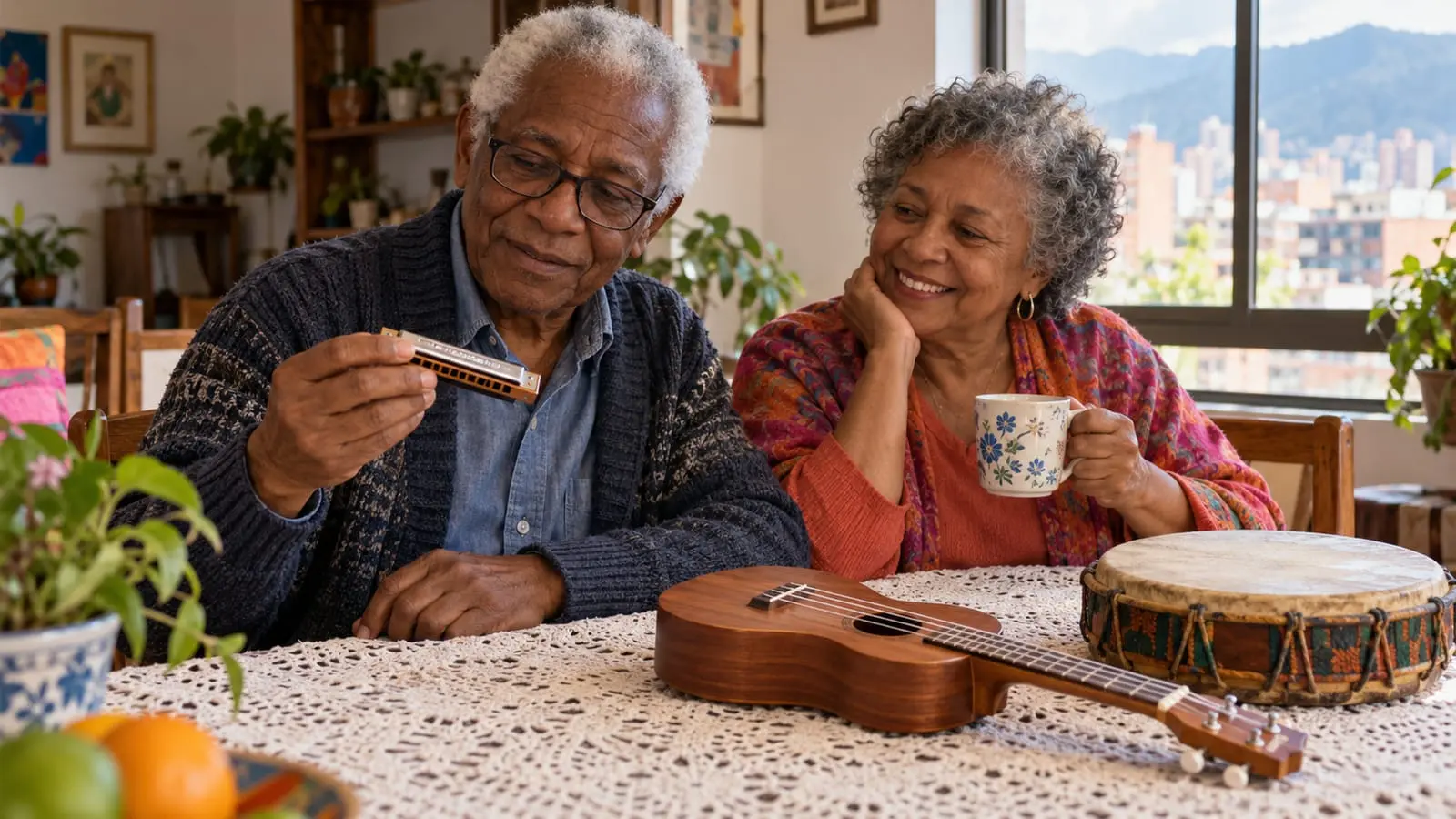
For most people starting after 60, piano (or a digital keyboard) and singing are the most comfortable options: you do not have to support any weight, they do not demand finger strength, and they give pleasing results early on. The recorder is light and simple. Nylon-string guitar and tiple are ideal if you love serenades or Colombian Andean music, though they ask more of your fingertips.
But the best choice depends on four things: the music you like, the condition of your hands, what your back can handle and how well you hear. Here we look at each in turn.
In short
- Let your taste lead: the instrument that excites you is the one you will practice.
- Piano and singing are the gentlest options for hands and back; the recorder is the lightest and easiest to carry.
- Nylon-string guitar and tiple are perfect for Colombian music, but require pressure from your fingers.
- If you have arthritis or another hand condition, consult your doctor before choosing and discuss your limitations with your teacher.
- Try before you buy: a lesson with a teacher tells you more than any chart.
Four questions before choosing
- What music moves you? Boleros, pasillos, classical music, ballads, Christmas carols, church music. If you can picture yourself playing something specific, you already have half the answer.
- How are your hands? Strength, flexibility, morning stiffness, any discomfort when pressing or spreading your fingers.
- What positions can you maintain? How long you can sit comfortably, whether your neck or shoulders bother you, and whether you can support weight.
- How well do you hear? Whether high sounds feel uncomfortable or are hard to hear, and whether you use hearing aids.
There is a fifth practical question: where you will play. In an apartment with nearby neighbors, a keyboard with headphones or singing at a moderate volume fits much better than trumpet or drums.
Comparing instruments for people over 60
| Instrument | Hands and fingers | Posture and back | Audition | Ideal if you enjoy |
|---|---|---|---|---|
| Piano or digital keyboard | Little strength: just press the key. Requires coordinating both hands. | Seated, with an adjustable bench. | Adjustable volume and headphones on a digital model. | Classical music, ballads, boleros, church music. |
| Singing | No demands on your hands. | Standing or seated, with upright posture. | You need to hear yourself and the accompaniment. | Boleros, tangos, religious music, choirs. |
| Recorder | Little strength, but you must cover the holes completely. | Light; can be played seated. | The soprano is high-pitched; the alto sounds lower and gentler. | Early music, popular songs, Christmas carols. |
| Nylon-string acoustic guitar | Moderate fingertip pressure and chord changes. | Seated, with a footstool or guitar support. | Midrange, comfortable for most people. | Serenades, boleros, ballads, Latin American music. |
| Tiple | More pressure: metal strings grouped in threes. | Seated; smaller body than a guitar. | Bright, high-pitched sound. | Bambucos, pasillos and Colombian Andean music. |
| Small percussion instruments | Striking and shaking; little precise finger work. | Seated, with light instruments. | You can also feel the beat through vibrations. | Cumbia, Caribbean music, playing in a group. |
| Violin | Fine precision and intonation without frets. | Demands on neck and shoulder; played with the arm raised. | Requires a good ear for pitch; high-pitched. | Classical music, tango, folk music. |
The chart is a general guide. Some people start violin at 70 with great enthusiasm, while others at 60 prefer singing because they do not want to carry anything. Your enthusiasm matters more than any box in a chart.
Piano or keyboard: the gentlest way to start
The piano has a major advantage for anyone starting later in life: pressing a key produces a sound, without having to adjust the pitch or apply force. The notes are visibly arranged from low to high, helping you understand music with your eyes as well as your ears.
A digital piano lets you lower the volume, use headphones and, on many models, adjust touch sensitivity so a light touch sounds good—useful if your fingers have limited strength. You do not need a grand piano: a good digital model and a bench at the right height are enough, with your forearms almost parallel to the floor.
Singing and recorder: when your hands need a break
If you have arthritis or stiffness in your hands, singing lets you make music without asking anything of them. Lessons cover breathing, posture, pitch accuracy and repertoire, and offer a direct route to joining a choir. Your voice changes with age, but you can care for it and train it at any age.
The recorder is light, inexpensive and easy to carry. It is known as a school instrument, but has a beautiful repertoire and sounds very good in a group. The soprano, the one used in schools, is small and high-pitched; the alto is larger with a lower, warmer sound, though it requires spreading your fingers a little more. Your teacher helps you decide which best suits your hands and your hearing.
Guitar and tiple: for those who grew up with serenades
If your family sang with guitar accompaniment, a nylon-string acoustic guitar is a natural choice: nylon strings are gentler on your fingers than metal ones, and the sound is warm. Your fingertips may feel tender during the first few days; that is normal and passes with short, frequent practice.
The tiple is at the heart of Colombian Andean music and is a joy for accompanying bambucos and pasillos. Its metal strings, arranged in courses of three, require more pressure than a guitar, so start with short sessions and an instrument properly set up by a luthier, with the strings low over the fingerboard.
Arthritis, back health and hearing: possible adjustments
For your hands
- Start with short sessions and split practice between two times of day.
- Gently move your fingers and wrists before playing, without straining.
- Ask a luthier for low-tension strings and low action on your guitar or tiple.
- On piano, choose fingerings that avoid large hand stretches.
For your back and neck
- Use a firm chair with a backrest and keep your feet well supported.
- Adjust the height of the bench, music stand or instrument stand so you do not have to lean over.
- Get up and change position from time to time.
For your hearing
- Choose instruments in the middle or lower register if high pitches bother you or are hard to distinguish.
- Use an on-screen tuner to check notes visually.
- If you use hearing aids, ask your audiologist about settings for listening to music.
And a rule for everyone: if something hurts, stop. Tiredness is okay; pain is not.
Try before you buy
- Take your first lessons with your teacher's instrument or a borrowed one, and ask what they notice about your hands and posture.
- If someone in your family has a guitar or keyboard stored away, use it while you decide.
- At the store, sit down, hold the instrument and play a few notes before paying.
- Consider starting with a simple keyboard or recorder and switching later if you discover another passion.
If your teacher comes to your home, they can see your practice space and help you make a more informed choice. To understand how lessons adapt to this stage of life, read learning music as an older adult: it is never too late.
Frequently asked questions
What is the easiest instrument for an older adult?
For most people, piano or digital keyboard: sound comes easily, you play seated, and the notes are visible. Singing is also very accessible because it makes no demands on your hands. Still, the easiest is the one you like, because that is the one you will practice.
Can I learn guitar if I have arthritis in my hands?
Many people with arthritis play, but it depends on the individual case. Consult your doctor first; if they give you the go-ahead, start with nylon strings, short sessions, a well-set-up guitar and simple chords. If pressing the strings bothers you, piano or singing may be better alternatives.
Is ukulele a good choice after 60?
It can be: it’s small and lightweight, with just four soft strings and simple chords. It has a high-pitched sound, so it’s worth trying one first if you have trouble hearing high notes.
Which instrument will not disturb the neighbors?
A digital piano with headphones is the quietest option. Singing at a moderate volume, recorder and nylon-string guitar are also fairly apartment-friendly if you agree on reasonable hours.
Is it too late to learn violin after 60?
No, but it is one of the more demanding instruments: you need to support it with your shoulder, raise your arm and play in tune without frets. If it excites you, go ahead, with patience and a teacher who takes care of your posture from day one.
Sources
We checked the facts in this article against these sources on October 22, 2026.
- Yamaha Music: nylon-string and steel-string guitars (tension and finger comfort)
- Yamaha Music: the recorder is an instrument, not a toy (sizes and repertoire)
- Vanguardia: the tiple, part of Colombian heritage (metal strings in triple courses)
- Radio Nacional de Colombia: the solo tiple (twelve strings in four courses)
- Yamaha Music: the difference between a digital keyboard and a digital piano
- World Health Organization: deafness and hearing loss