
Wind bands in Colombia: how to get started and which instrument to choose
Symphonic, marching or pelayera: the types of bands in Colombia, how to choose your instrument and what to prepare before your first rehearsal or entrance audition.
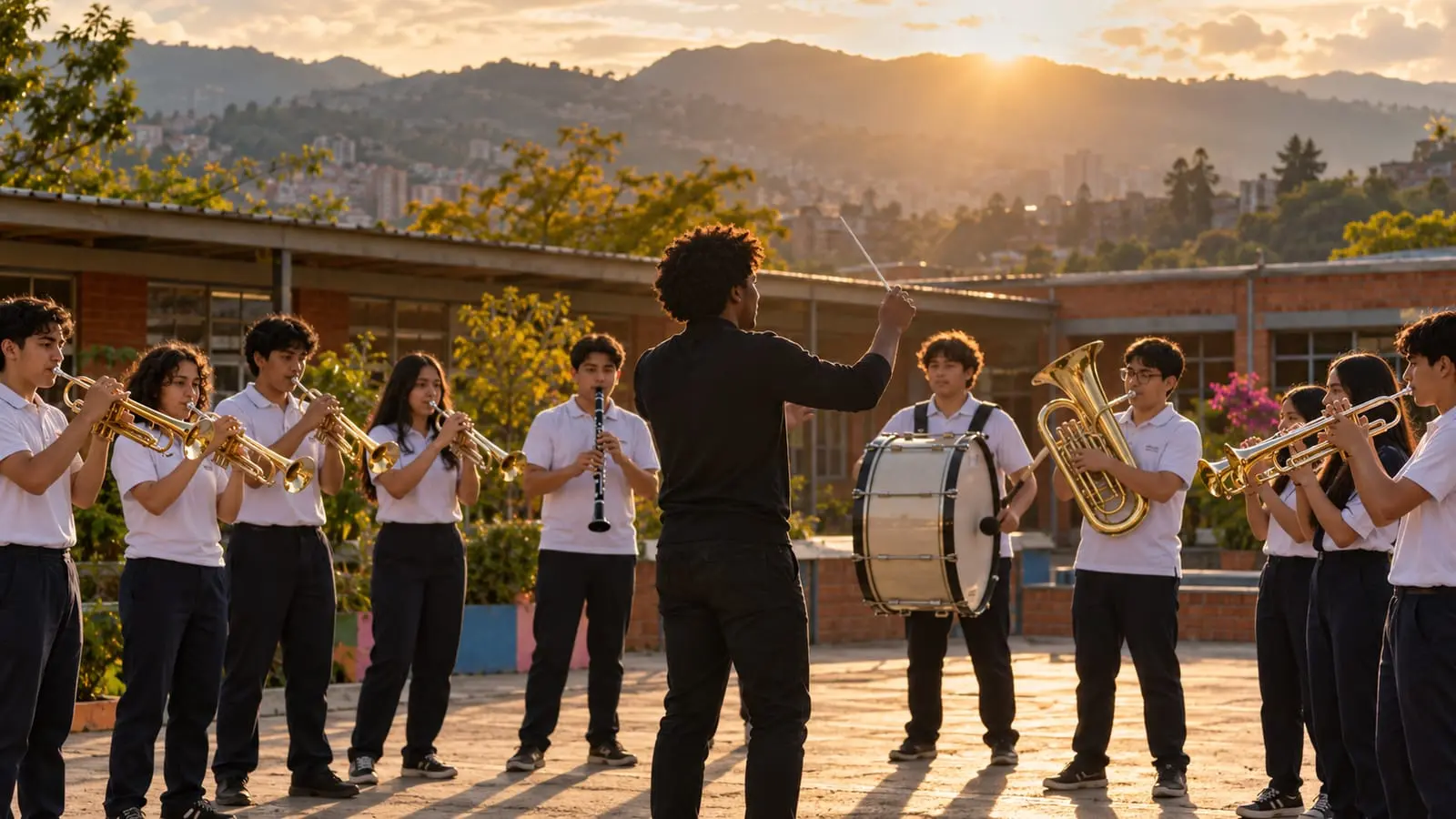
To join a wind band in Colombia, look for one at your school, local cultural center, or municipal music school. Choose an instrument based on the sound you like and what the band needs, and prepare the basics: reading simple rhythms, producing a steady tone, and keeping a beat with others.
Bands are one of the country's most vibrant musical traditions, playing in schools, towns, patron saint festivals, parades, and competitions. This guide helps you understand the different types of bands, choose an instrument, and get ready, whether you're 10 or 40.
In short
- Colombia has concert bands, school marching bands, traditional bands such as pelayeras and papayeras, and chirimías; each has different requirements.
- Choose your instrument based on the sound that excites you, your physical build, and what the band needs; the conductor usually helps you decide.
- Clarinet, saxophone, trumpet, trombone, and percussion are common starting points, and instruments with fewer applicants can help you find a place sooner.
- Reading simple rhythms, sustaining long tones, and playing in time with a metronome are the most useful skills when you join.
- Private lessons complement rehearsals: the band teaches you to play in a group, while your teacher corrects your embouchure and technique.
Types of bands in Colombia
| Type | Where you'll find it | What it plays | Instruments |
|---|---|---|---|
| Concert band or wind band | Schools, municipal music schools, universities | Arrangements of Colombian music, works for band, and popular music | Woodwinds, brass, and a full percussion section |
| Marching band or banda de paz | Schools, parades, and national holidays | Marches and parade arrangements | Bell lyres, snare drums, bass drums, cymbals, and brass; sometimes other wind instruments |
| Pelayera, sabanera, or papayera band | Festivals, carnivals, and celebrations | Porros, fandangos, and dance music | Clarinets, trumpets, trombones, euphonium, bass drum, snare drum, and cymbals |
| Chirimía | Chocó | Traditional music of the Pacific region | Clarinet, euphonium, snare drum, tambora, and cymbals |
Many municipal bands grow out of music schools run by the local government or cultural center. They often train members from scratch and sometimes lend instruments. Ask in your town or district: there are often more options than you expect. If you enjoy porros and fandangos, read about the instruments of Colombia's Caribbean music.
Which instrument should you choose for the band?
| Instrument | What it requires | Keep in mind |
|---|---|---|
| Flute | Breath control and patience when producing your first sound | Ideal if you enjoy high, nimble melodies. |
| Clarinet | Reed embouchure and agile fingering | Usually the largest section in a concert band, so there's room for several players. |
| Saxophone | A reed, a powerful sound, and versatility across styles | Moves easily from band music to jazz, salsa, or pop. |
| Trumpet | Lip vibration in the mouthpiece and endurance | A leading voice in marches and porros; requires rest between sessions. |
| Trombone | An ear for slide positions and enough arm reach | Usually reads bass clef; very young children cannot reach the longer slide positions. |
| Euphonium, French horn, or tuba | Plenty of air and a rounded tone | Usually attract fewer applicants, so you may find a place sooner. |
| Percussion | A steady beat, coordination, and rhythm reading | Includes snare drum, bass drum, cymbals, timpani, and mallet percussion. |
To decide, consider four questions:
- Which sound excites you? Listen to band recordings and notice which instrument you follow without realizing it.
- What are the physical requirements? For instruments with mouthpieces or reeds, it usually helps to have your permanent front teeth already; trombone requires sufficient arm length, and tenor saxophone needs larger hands. Your teacher or conductor can guide you.
- What does the band need? Ask the conductor: if the band needs euphoniums or French horns, choosing one may help you join sooner.
- Do you have access to the instrument? Buying, renting, or using an instrument from the institution makes a big difference.
If you're deciding between two instruments, these comparisons can help: trumpet or trombone and flute or clarinet.
How to prepare before joining
- Rhythm reading: clap and count quarter notes, eighth notes, and rests in 2/4, 3/4, and 4/4 time. These are the basics you'll use most at your first rehearsal.
- Your instrument’s clef: most instruments use treble clef; trombone and tuba usually use bass clef, and euphonium may use bass clef or treble clef, depending on the band.
- Long tones: hold a comfortable note for a count of eight or more, keeping the tone even without shaking or drifting out of tune at the end.
- A simple scale: many bands warm up with the concert B flat scale; ask about the fingering on your instrument.
- Playing in time: practice everything with the online metronome, starting slowly.
- Tuning: learn to adjust the mouthpiece, neck, or tuning slide with a tuner's help, and to hear whether you're sharp or flat compared with your section.
Transposing instruments: don't let them intimidate you
Clarinet and trumpet are in B flat, alto saxophone is in E flat, and French horn is in F: the note you read does not sound the same as that note on a piano. You don't need to do any calculations; band parts are already written for your instrument. Just learn the fingering for the notes you read, and let your teacher explain the rest when the time comes.
The audition: what bands usually ask for
Requirements vary widely. Many school bands welcome beginners without an audition, while advanced municipal bands and training ensembles for competitions do hold auditions. Most commonly, you'll be asked for:
- A simple scale on your instrument.
- A short piece or excerpt you can play comfortably.
- Sight-reading a simple exercise.
- Clapping rhythm exercises.
- Singing or playing back a short melody to assess your ear.
- A conversation about your availability for rehearsals and performances.
Choose something you can play cleanly: a simple piece played well says more than a difficult one full of stumbles. Arrive with your instrument clean and in tune. If you don't have one yet, ask whether the band lends instruments for the audition.
If you play trumpet and wonder when you'll be ready for a beginner band, read how long it takes to learn the trumpet.
You've joined the band: how to make the most of it
- Bring a pencil to every rehearsal and mark breaths, dynamics, and the conductor's instructions.
- Practice your part at home: rehearsals are for bringing the band together, not learning the notes.
- Listen to your section and tune to it, rather than relying only on your tuner.
- On brass instruments, alternate playing and resting; don't arrive at a performance with exhausted lips.
- For parades, memorize as much as you can and practice playing while walking.
- If you're close to percussion or brass, use musicians' earplugs: they lower the volume without distorting the sound.
- Clean your instrument after every rehearsal; saliva and moisture damage pads, valves, and corks.
Band rehearsals and private lessons: a combination that works
A conductor working with forty musicians can't correct everyone's embouchure. A teacher can spot habits early that could later take months to undo: puffing your cheeks, biting the reed, pressing the mouthpiece against your lips, or tensing your shoulders. At Gissi, teachers of trumpet, trombone, clarinet, saxophone, and percussion offer online or in-home lessons in Bogotá and can work with you on your band's repertoire.
Frequently asked questions
Do I need musical experience to join my school band?
Almost never. Many school bands teach beginners from scratch, including how to read music as they go. Arriving with some rhythm-reading skills and a basic tone helps you progress faster and enjoy your very first rehearsal.
At what age can you join a wind band?
Many children start in the later years of elementary school. Percussion, flute, and clarinet can suit children earlier; trombone, tuba, or tenor saxophone may need to wait until they grow a little. We discuss this stage further in music lessons for children ages 9 to 12.
Do I have to buy an instrument to join a band?
It depends on the band. Some lend instruments, especially large or expensive ones, and percussion instruments usually belong to the institution. If you're buying, ask your teacher to check the instrument first; an instrument in poor condition is frustrating for anyone.
Can I join a band as an adult?
Yes. Some community, university, and municipal bands welcome adults, and some offer beginner training. A few lessons beforehand can help you arrive with a steady tone and keep up with rehearsals without frustration.
Sources
We checked the facts in this article against these sources on October 22, 2026.
- Ministerio de Cultura: guide to organizing and running municipal music schools
- Universidad de Córdoba: pelayero-style wind bands and the euphonium in porro
- Semana: chirimía from Chocó and its instruments
- Grand Valley State University: transposing instruments chart
- Wikipedia: euphonium, reading bass clef or transposed treble clef
- NIOSH (CDC): hearing protection for musicians and uniform-attenuation earplugs