
Why learn trumpet or trombone? The energy of brass
The trumpet and trombone fill a band, a salsa orchestra or a big band with energy. What they train, where to play them in Colombia and what challenges they bring.
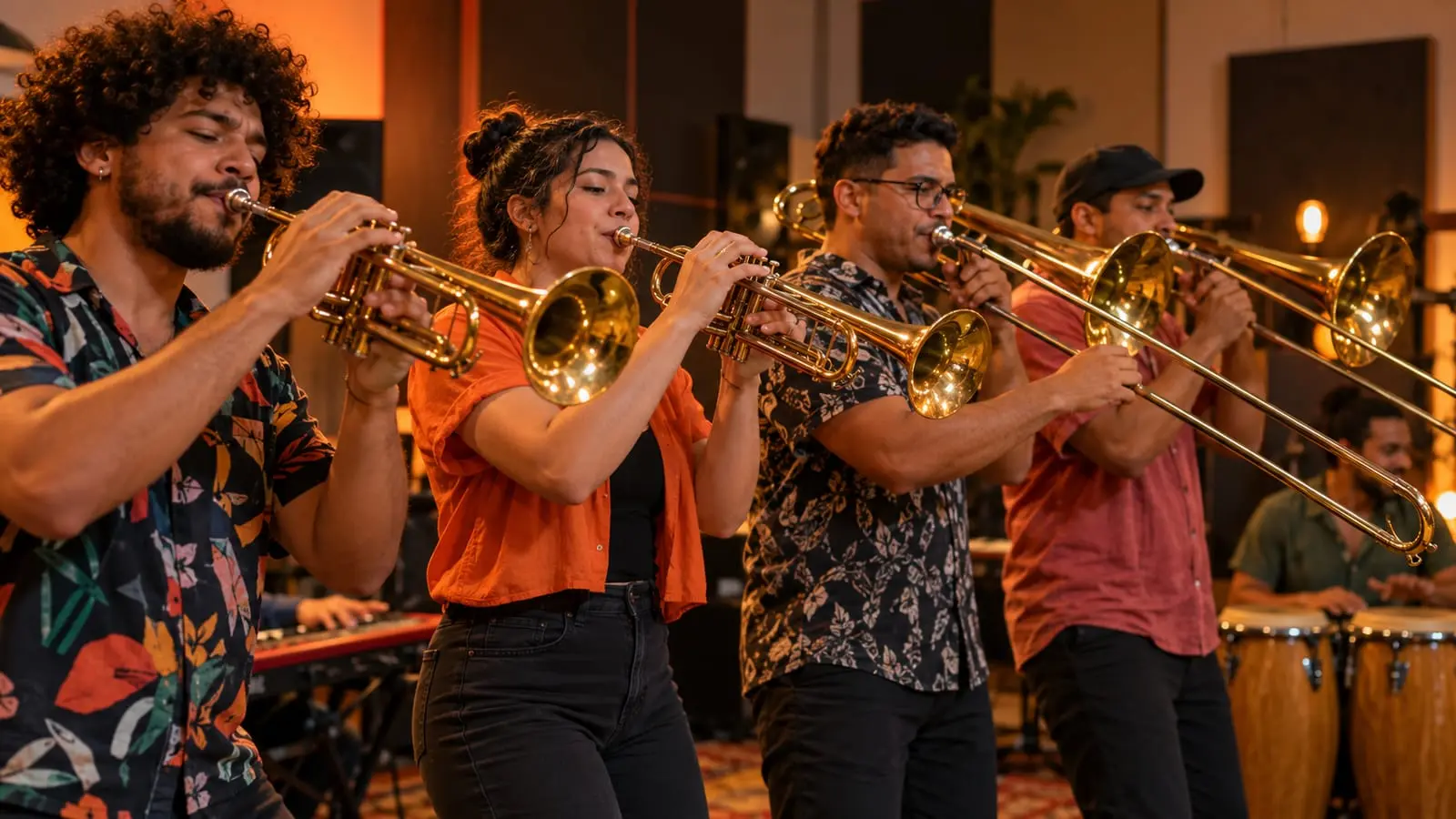
Because few instruments put you at the heart of group music-making so quickly. Trumpet and trombone are the backbone of wind bands, the sparkle of salsa bands, the power of big bands, and the most intense moments in a symphony orchestra. Playing them develops your ear, breath and lip control, and a distinctive kind of teamwork: playing in a brass section.
Both share the same basic principle: sound comes from your lips vibrating inside a mouthpiece. Here we explain what you gain from learning either instrument, where you can play them in Colombia, who they suit, and which challenges to know about before starting.
In short
- Trumpet and trombone produce sound through the vibration of your lips in the mouthpiece, developing a finely tuned inner ear.
- They have a place in wind bands, salsa and tropical music bands, big bands, symphony orchestras, brass quintets, and ska or fusion groups.
- Playing in a brass section teaches you to breathe, start notes, and end them together: you can hear the teamwork.
- Consistency matters more than long sessions: your lips need training and rest, just like a muscle.
- Real challenges: volume in an apartment, stamina at first, and patience with the high register.
What they share: lips, air, and listening
On trumpet and trombone, your lips do the job of a reed. They vibrate against the mouthpiece, and that vibration, amplified by the tubing, produces sound. The trumpet's valves and the trombone's slide change the length of the tubing, but you can produce several different notes in the same position by changing lip tension and air speed.
This has a major consequence: you need to hear the note in your mind before playing it. If you cannot imagine it, your lips do not know which of the possible notes to aim for. That is why brass playing develops your inner ear so much: the ability to sing mentally what you are about to play.
They also develop breath control—plenty of well-directed air without tension—facial muscle stamina, and precise tonguing.
Energy and teamwork: the brass section
A brass player rarely plays alone. In a salsa band, wind band, or big band, trumpets and trombones form a section that works like a single instrument. Learning to play this way requires:
- Breathing together. The section breathes in at the same time so the attack sounds as one.
- Matching attacks and releases. You agree on each note's length, accent, and ending. An untidy release is immediately noticeable.
- Following the lead player. The first trumpet or trombone sets the style, intensity, and phrasing; everyone else matches them.
- Blending. Nobody stands out unless it is their turn. You learn to hear your sound as part of everyone else's.
Then there is the energy. Few things feel like a brass mambo in salsa or the ending of a porro in a packed town square. If you enjoy lifting the whole group, brass instruments give you that feeling.
Where you can play trumpet or trombone in Colombia
Colombia's tradition of bands and dance music offers brass players plenty of opportunities. This table shows each instrument's typical role:
| Format | Trumpet | Trombone |
|---|---|---|
| Wind band (school, municipal, or symphonic) | Melodies, fanfares, and brilliant passages. | Harmony, countermelodies, and bass lines in the middle register. |
| Caribbean porro and fandango band | Melodies and energetic responses alongside the clarinets. | Harmony and responses; its low sound gives the band weight. |
| Salsa and tropical music band | Mambos, unison melodies, and sparkle in the choruses. | Some bands build their sound around two or more trombones. |
| Big band and jazz | Usually four or five, with solos and improvisation. | Usually four, with dense harmonies and solos. |
| Symphony orchestra | Fanfares, solos, and moments of peak intensity. | Chorales and climaxes; sometimes you wait many measures before coming in. |
| Brass quintet | Two trumpets carry much of the melody. | Low and middle voices alongside the horn and tuba. |
| Ska, reggae, and fusion | Short, rhythmic brass lines. | Countermelodies and riffs alongside trumpet and saxophone. |
For many children and teenagers, a school band or municipal music school is their first introduction to brass instruments. If that interests you, read wind bands in Colombia: how to get started.
What each offers, at a glance
You do not have to decide today, but it helps to know that each instrument develops slightly different skills:
- The trumpet refines high-register control, valve precision, and fast articulation. It often takes the melodic spotlight.
- The trombone trains your ear very directly because you find each note with the slide and adjust it by listening. It requires coordination between your arm, tongue, and airflow, and its warm sound supports the harmony.
We compare mouthpiece size, range, weight, and genres in detail in trumpet or trombone. Our trumpet lessons and trombone lessons pages cover suggested starting ages and what beginners work on.
Who are brass instruments a good fit for?
- Anyone who enjoys playing with others more than playing alone.
- Anyone who likes energetic music: salsa, porro, ska, jazz, and marches.
- Consistent learners who prefer a little practice almost every day to a lot now and then; your lips will thank you.
- Anyone comfortable being heard: a brass instrument does not hide, and that also helps you gradually build confidence.
- Children and teenagers who want to join a school or municipal band.
You do not need special lips or exceptional lung capacity. What makes the difference is breathing technique and the patience to develop your embouchure.
Real challenges to know before starting
- Volume. A trumpet or trombone in an apartment can be heard—loud and clear. A practice mute, reasonable practice hours, and spending part of your practice time on the mouthpiece alone help you get along with neighbors.
- Stamina. Your lips tire quickly at first. Many brass teachers repeat one rule: rest as much as you play. Pushing when your lips no longer respond only builds bad habits.
- Consistency is essential. A few days without playing affect your embouchure. Short daily sessions do more than an hour on the weekend; find ideas in how many hours to practice each day.
- Braces. You can play with braces, though they may feel uncomfortable at first; discuss it with your teacher and orthodontist.
- Arm reach on trombone. Children may need time before they can reach the farther slide positions; meanwhile, the teacher adapts the repertoire.
Frequently asked questions
Can you learn trumpet or trombone as an adult?
Yes. Many adults take up a brass instrument to play in a band or with friends. Embouchure develops the same way at any age: through short, frequent, well-guided practice. Having a concrete goal, such as a repertoire or a group to play with, helps most.
What is a euphonium, and is it similar to the trombone?
It is a valved brass instrument with a range similar to the tenor trombone and a rounder sound, common in Colombian bands and chirimía ensembles. Trombone players can switch to euphonium relatively easily because the mouthpiece and range are similar.
Do I need to read sheet music to play salsa?
In many salsa bands, brass players use written arrangements, so reading is very useful. Still, the style—the accents, releases, and feel of the mambos—is learned through plenty of listening and playing with others.
Sources
We checked the facts in this article against these sources on October 22, 2026.
- Wikipedia: trumpet (lip vibration, piston valves, tuning, and temperature)
- Philharmonia Orchestra: the trumpet (valves, range, and mutes)
- Philharmonia Orchestra: the trombone (slide, tenor and bass trombones, history)
- Cancillería de Colombia: traditional instrumentation of the chirimía chocoana (with euphonium)