
Trumpet or trombone? Which to start with
Both are played by buzzing your lips, but one uses valves and the other a slide. We compare mouthpiece, range, genres and how to switch from one to the other.
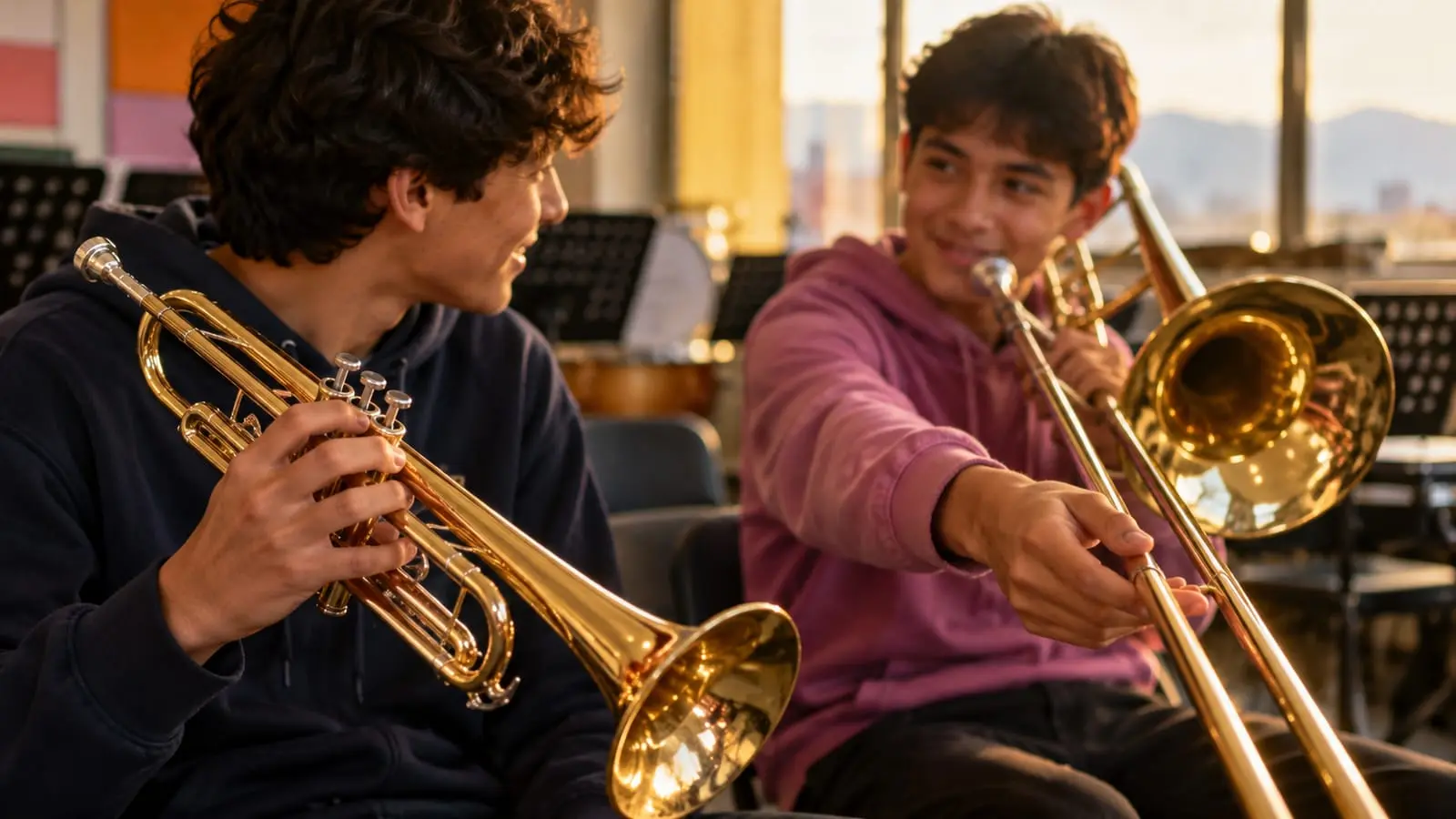
It depends on the sound you like and the role you want in the band. If you're drawn to a bright sound that cuts through, lead melodies, and the high notes of salsa, jazz, or porro bands, choose trumpet. If you prefer a warm, thick sound, like the idea of finding notes with a slide, and picture yourself in the section of a salsa orchestra, big band, or concert band, choose trombone.
Both share the basic brass technique: sound begins with the lips vibrating inside a mouthpiece. But the mouthpiece size and the difference between valves and a slide make the first few months feel quite different.
In short
- The trumpet's small mouthpiece requires firm, precise lips; the trombone's larger mouthpiece needs more air and a more relaxed embouchure.
- The trumpet changes notes with three valves; the trombone uses a slide with seven unmarked positions, located by ear.
- The trombone sounds lower than the trumpet, around an octave below, and is read in bass clef; the trumpet is read in treble clef.
- Children usually start trumpet around age 7 or 8, once their permanent front teeth have come in; trombone comes a little later, when their arm can reach the farther slide positions.
- Switching from trumpet to trombone is common; in the other direction, the smaller mouthpiece takes more adjustment.
Trumpet vs. trombone: the comparison table
| Aspect | Trumpet | Trombone |
|---|---|---|
| Brass mouthpiece | Small: firm, precise lips. | Large: more relaxed embouchure, greater air volume. |
| Mechanism | Three valves; each combination produces several notes depending on the lips. | Slide with seven unmarked positions, located through listening and arm muscle memory. |
| Register | High: the soprano of the brass family. | Tenor and baritone: lower than the trumpet, around an octave below. |
| Reading | Treble clef; transposing instrument in B flat. | Bass clef, at concert pitch; also C clef at advanced levels. |
| Sound | Bright and penetrating. | Rounded and thick; can be very soft or very powerful, with its distinctive glissando. |
| Size and weight | Compact and light; small case. | Long; the slide needs space in front, and the case is longer. |
| Stamina when starting out | Lips tire quickly: short, frequent sessions. | A little more lip stamina, but requires plenty of air. |
| Genres | Salsa, son, jazz, wind bands, tropical music, orchestral music. | Salsa, ska, big band jazz, wind bands, orchestral music. |
| Suggested starting age | Around age 7 or 8, once the permanent front teeth have come in. | A little later than trumpet, when the arm can reach sixth and seventh positions (shorter trombones are available for children). |
Mouthpiece and lips: where the challenge lies
On trumpet, the small mouthpiece concentrates the work in a small area of the lips. That gives precision and brightness, but it's tiring: in the first few weeks, you'll feel it after fifteen or twenty uninterrupted minutes. It's tempting to press the mouthpiece into your lips to reach high notes, and that's exactly what your teacher will correct, because it holds back your progress.
On trombone, the mouthpiece is wider and deeper, and the lips vibrate more freely. The challenge is air: filling a large instrument with a rounded sound takes deep, steady breathing.
People often say thicker lips suit larger mouthpieces, and some teachers consider lip and tooth shape before making a recommendation. That's a guideline, not a rule: almost anyone can adapt to either instrument.
Valves or slide: two ways to find a note
On trumpet, each valve combination produces a series of notes; which one sounds depends on lip tension and air speed. Without pressing any valve, you can play written C, G, C, E, and G, moving upward using only your embouchure. That's why listening matters so much: you need to know which note you're aiming for before playing it.
The trombone has no valves: the slide lengthens or shortens the tubing through seven positions, none of them marked. At first, you use visual references such as the bell; over time, your arm and ear find them naturally. This freedom allows glissando, but it also means you have to tune every note. That's why age matters: a short arm can't reach the farther positions.
Range, sound, and the music you'll play
In Colombian wind bands, trumpets often carry bright melodies in porro and fandango, while trombones and euphoniums reinforce the harmony and countermelodies. In salsa, both sections take center stage: trumpet mambos and the thick sound of trombone orchestras. If you want to join a municipal or school band, read about wind bands in Colombia.
In a symphony orchestra, trumpet has fanfares and highly exposed solos; trombone brings a solemn sound to the big moments. In big band jazz, each has its own section and soloists.
If you're not sure yet whether brass is for you, read why learn trumpet or trombone: what they train and where you can play in Colombia.
Choose trumpet if… / choose trombone if…
Choose trumpet if…
- You're drawn to bright high notes and lead melodies.
- You like salsa mambos, jazz, or fanfares.
- You want a compact instrument that's easy to carry.
- It is for a young child who cannot yet reach the slide positions.
Choose trombone if…
- You prefer a low, warm, full-bodied sound.
- You like the idea of finding notes with the slide and tuning by ear.
- You like trombone-led salsa, ska, or big band jazz.
- A large mouthpiece feels more comfortable to you.
See what you'll work on in trumpet lessons and trombone lessons. For buying advice, read how to choose your first trumpet.
Switching between them, and other related brass instruments
- From trumpet to trombone: a common switch. Your embouchure relaxes with the larger mouthpiece; the slide and bass clef are the new elements.
- From trombone to trumpet: more adjustment is needed, because the small mouthpiece calls for firmer lips and the high register takes patience to develop.
- The euphonium is an interesting bridge: it has valves like the trumpet and a range similar to the trombone. It's very common in Colombian bands.
In any switch, your breathing, ear training, and lip vibration carry over. Practicing long tones in tune with the tuner is a good habit on both instruments, especially trombone, where you determine the placement of each note.
Frequently asked questions
Which is easier, trumpet or trombone?
For many beginners, trombone is a little more forgiving at first thanks to its large mouthpiece, but tuning with the slide takes a good ear. Trumpet has valves, but the lips tire quickly and high notes take time.
Can an 8-year-old play trombone?
It depends on their height and arm length. If they can't reach the farther positions, the teacher can work in the closer positions or recommend starting on trumpet and switching to trombone later.
What is a trombone glissando?
It's a continuous slide from one note to another, moving the slide without interrupting the sound. It's one of the instrument's most recognizable effects and is possible only because of the slide.
How long should a beginner trumpet player practice each day?
At first, keep sessions short, around fifteen or twenty minutes, with breaks to rest your lips. Short, regular practice is better than one long session.
Sources
We checked the facts in this article against these sources on October 22, 2026.
- Thomann: trumpet, trombone, or euphonium—which instrument is right for you (age, teeth, slide)
- Wikipedia: trumpet (valves, B-flat tuning, harmonic series, and range)
- Wikipedia: trombone (seven slide positions, glissando, and tuning)
- Yamaha Hub: if your child wants to play brass (mouthpiece and ear training on the trombone)