
How long does it take to learn the trumpet?
The first notes come within weeks, but endurance and the high register take years to build. This is what a trumpet player's real path looks like.
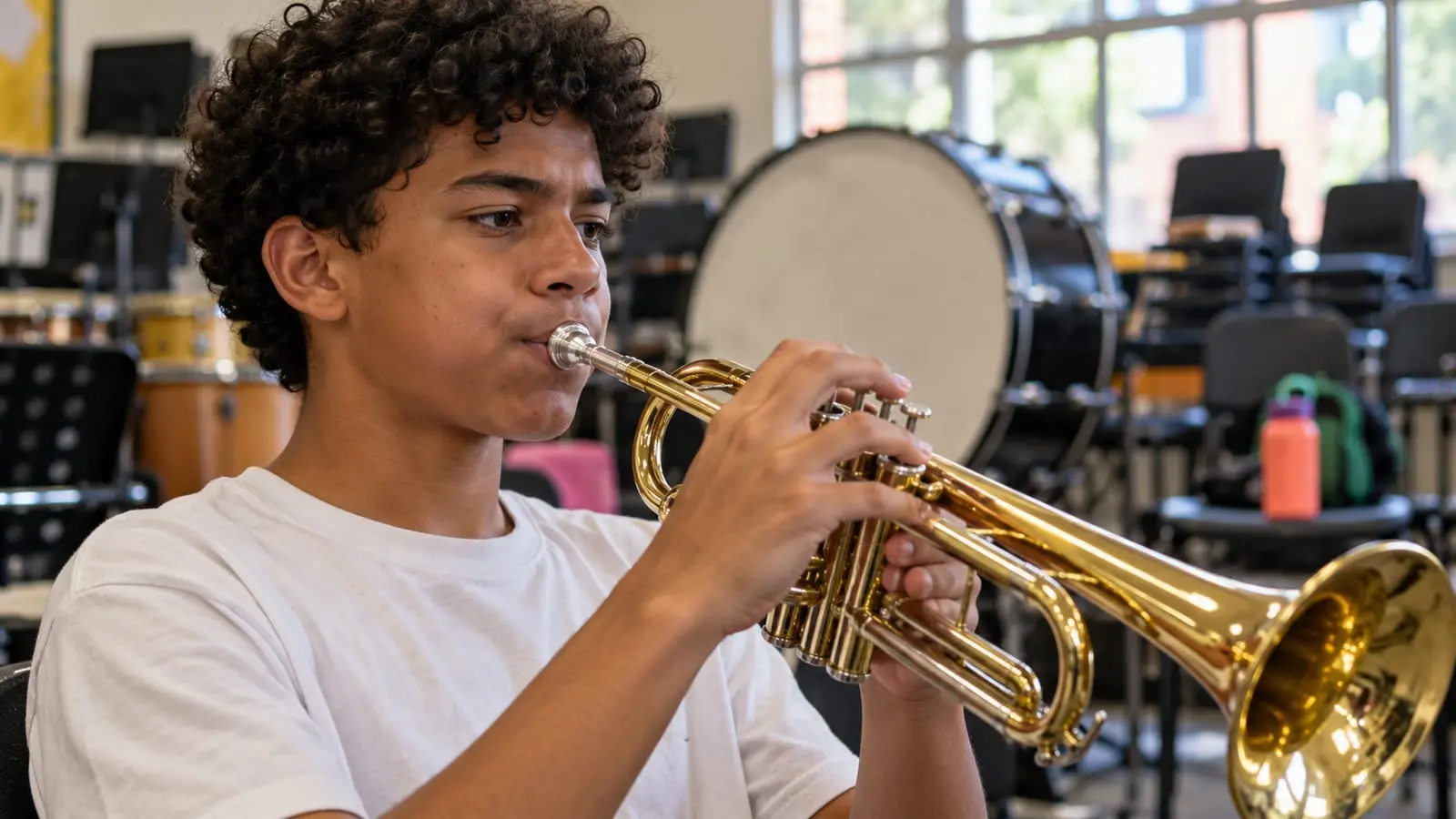
With a weekly lesson and practice almost every day, your first trumpet notes come within a few weeks, and most students play simple one-octave melodies in 3 to 6 months. Building the endurance to play in a band usually takes 1 to 2 years, and developing a reliable upper register with intermediate repertoire takes 2 to 4 years or more.
These are approximate timelines. The trumpet has a distinctive feature: your lips are the vibrating muscles, and they need training like any other muscle. That is why consistency matters more than hours, and pushing too hard to progress quickly usually sets you back.
In short
- With regular practice, simple one-octave melodies generally come within 3 to 6 months.
- Lip endurance develops through short, frequent sessions: almost every day, with plenty of breaks.
- High notes come from fast air and a firm embouchure, not from pressing the mouthpiece against your lips.
- Many students can join a school or beginner band between their first and second year.
- Going several days in a row without playing the trumpet often causes your lips to lose conditioning; consistency is key.
Trumpet milestones and approximate timelines
| Stage | What you achieve | Approximate time with regular practice |
|---|---|---|
| First sound | Make your lips vibrate in the mouthpiece and play your first notes in the middle and low registers. | 1 to 4 weeks |
| Basic range | A one-octave C major scale, simple melodies, tonguing and reading in treble clef. | 3 to 6 months |
| Endurance and flexibility | Play for 20 to 30 minutes without your lips giving out, slur between harmonics and reach notes at the top of the staff. | 6 to 18 months |
| Playing in a band | Follow a band part, count rests, tune with others and play at different volumes. | 1 to 2 years |
| Upper register and intermediate skills | Controlled notes above the staff, double tonguing, intermediate solos and fluent reading. | 2 to 4 years |
| Advanced | Extended range, concert repertoire and first trumpet in an orchestra, big band or salsa band. | 5 years or more of serious study |
The ranges are broad because every embouchure is different: the shape of your lips, teeth, and jaw affects how quickly the instrument responds. Comparing yourself with another trumpet player in your band isn't very useful; comparing yourself with your recordings from three months ago is. As an outside reference, ABRSM, which offers exams for trumpet and other brass instruments, estimates that preparing for a Grade 1 exam takes about 60 hours in total (lessons plus independent practice), and a Grade 8 exam about 320; these are averages that vary from person to person.
Embouchure: your lips need training too
On trumpet, sound begins with your lips buzzing inside the mouthpiece. The first few months focus on developing a stable embouchure: firm corners, a relaxed center that can vibrate and the mouthpiece resting with only the minimum pressure needed.
- Practice for a couple of minutes with the mouthpiece alone: it makes you produce the vibration with your air rather than relying on the instrument.
- Rest as much as you play: play a phrase, lower the trumpet for a few seconds and start again.
- Start each session with soft long tones in the middle register, never with your highest notes.
- If your lips feel numb or hurt, stop for the day; continuing like that only reinforces tension.
Endurance and the upper register: why you cannot force them
Almost every trumpeter is tempted to press the mouthpiece against their lips to reach higher notes. It works for a few minutes, then the sound dies away because compressed lips can no longer vibrate. That pressure also leaves you tired for the rest of the week.
Your upper register develops gradually through a combination of fast, well-supported air, firm embouchure corners and flexibility exercises: slurring up and down between notes with the same valve combination, without moving your fingers. A typical daily practice routine looks like this:
- Gentle warm-up: mouthpiece alone and long tones in the middle register.
- Slow lip slurs, going no higher than you can play cleanly.
- Scales and articulation exercises with a metronome.
- Repertoire or band parts, in short sections with breaks.
- A few soft low notes to relax your lips at the end.
Playing in a band: when you are ready
In Colombia, bands are one of the best training grounds for a trumpeter: school bands, municipal bands, papayeras and groups playing porro and fandango. Few things develop reading, pulse and intonation as quickly as playing with others.
As a rough guide, you are ready for a beginner band when you can read comfortably in treble clef, count long rests without getting lost and make it through a rehearsal without your lips giving out halfway. Remember that the most common trumpet is in B flat, so band parts are already written for it. If this path interests you, read our guide to wind bands in Colombia.
What helps and hinders your progress
| Factor | Speeds up progress | Slows progress |
|---|---|---|
| Frequency | Short sessions almost every day. | Playing only on weekends: your lips can lose conditioning between sessions. |
| Pressure | Light mouthpiece contact, fast air. | Pressing the mouthpiece to reach high notes. |
| Instrument | Smooth-moving valves and greased slides. | Sticking valves or a dented mouthpiece. |
| Group | Playing in a band or with other musicians. | Always practicing alone without a tuning reference. |
| Guidance | A teacher who checks your embouchure every week. | Copying videos with no one to correct excessive pressure. |
The condition of your instrument matters more than you might think: sticking valves interrupt the flow of any passage. We explain basic maintenance in how to clean a trumpet.
Age, braces and neighbors
Children commonly start around age 8 or 9, when their permanent front teeth are usually in place, because the embouchure relies on them for support. Adults can start at any age; they often progress quickly in reading and understanding music, and need the same patience with their lips as any beginner.
You can play with braces, but it can be uncomfortable at first, and you should reduce mouthpiece pressure even further. Lip protectors for braces are available; discuss them with your teacher and orthodontist. If you live in an apartment, a practice mute greatly reduces the volume so you can practice without disturbing others, though it does not fully replace playing with an open sound.
In trumpet lessons, your teacher adapts the routine to your age, embouchure and goals, whether you want to play in your school band or prepare to study music.
Frequently asked questions
Is it normal for my lips to hurt when playing trumpet?
Mild fatigue at the end of practice is normal at first. Severe pain, cuts or numbness that does not go away indicate too much pressure or sessions that are too long. Rest and review your technique with your teacher before continuing.
How long does it take to reach high C?
It varies enormously. Some students can play it with control around their second or third year; others take longer. What matters is reaching it with a good tone and without excessive pressure, because a forced high note is no use in a real rehearsal.
Can you learn trumpet on your own?
You can learn fingerings and songs, but embouchure and pressure problems are hard to spot on your own and very difficult to correct once established. A few lessons at the beginning can save you years of habits that later limit your range.
Which is easier at first, trumpet or trombone?
The trombone's larger mouthpiece often makes producing a first sound easier, while trumpet requires more precision from your lips. On the other hand, trombone requires learning slide positions by ear. We explain in trumpet or trombone.
Sources
We checked the facts in this article against these sources on October 22, 2026.