
Music lessons for kids ages 9 to 12: more options and independence
Between ages 9 and 12, new options open up: wind instruments, drums, electric guitar and bands. We explain what changes and how to support them without hovering.
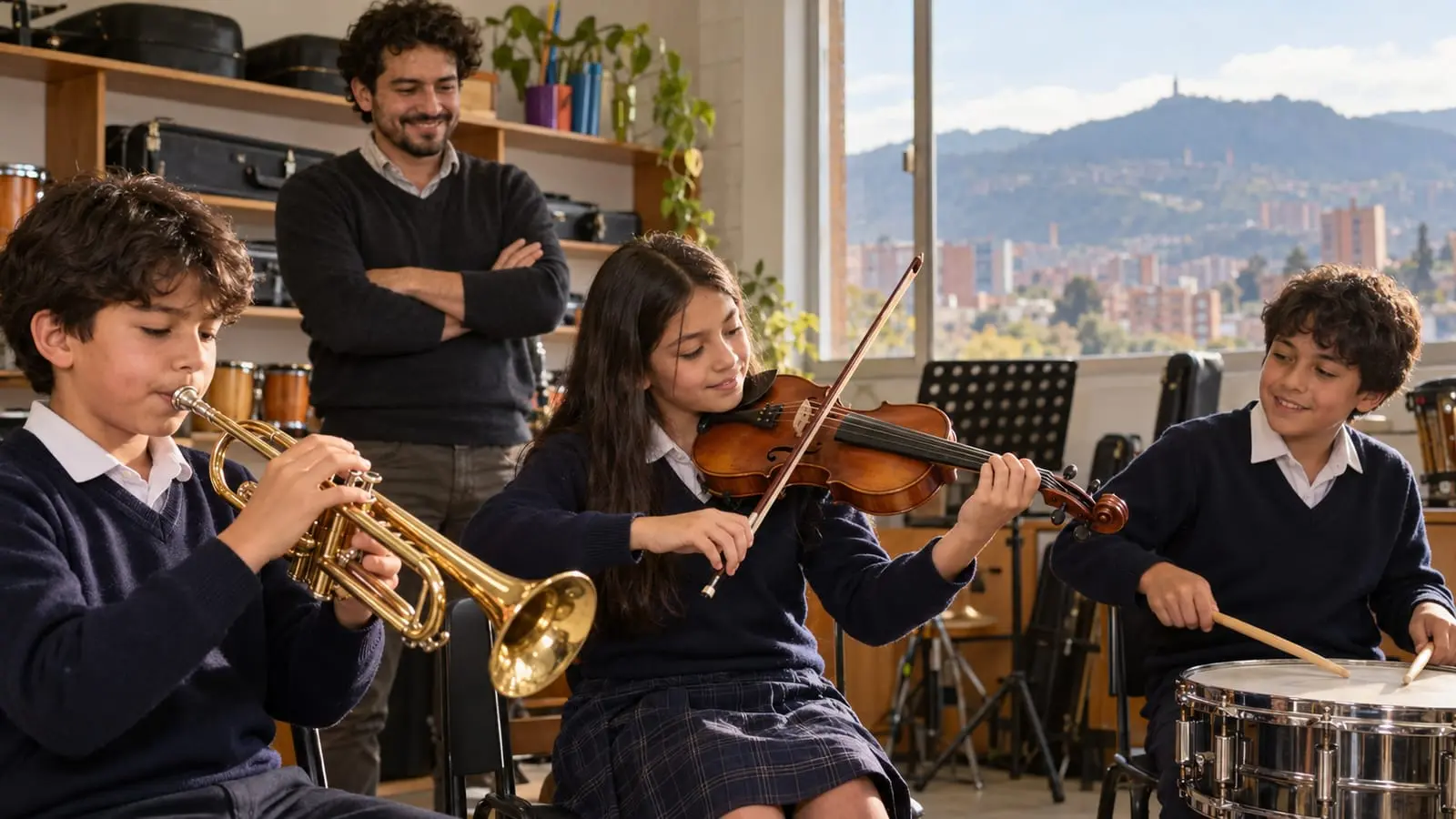
Between ages 9 and 12, the choice of instruments expands. With permanent front teeth, greater breath capacity and longer arms, wind instruments such as saxophone, trumpet, clarinet and trombone become more comfortable to play, while drums, electric guitar and bass start to spark children's interest. This is also the age of school bands and first ensembles.
The other big change is independence: your child can now organize some of their practice, set goals and speak directly with the teacher. Your role shifts from sitting beside them to supporting them from a little farther away.
In short
- Between ages 9 and 12, wind instruments, drums, electric guitar and bass become comfortable options.
- School and municipal bands are highly motivating; private lessons build the technique there isn't time to work on in rehearsals.
- Lessons usually last 45 to 60 minutes, with about 20 to 25 minutes of practice at home.
- Your child can organize practice with a notebook, metronome and recordings; you supervise without hovering.
- Many children consider quitting at this age: clear goals and repertoire they enjoy help keep them interested.
What changes at this age
Children ages 9 to 12 are at a new stage physically and mentally, and music lessons make the most of it:
- Physical development: permanent teeth, stronger hands, longer arms and better breath control. This opens the door to instruments that used to be uncomfortable.
- Understanding: your child can grasp why a chord or scale works, rather than just how to play it. Theory moves beyond games and starts to make sense.
- Goals: your child can aim to prepare a piece for a performance, join the band or learn a song they like.
- Social life: your child wants to play with others, and friends' opinions start to have a strong influence on their choices.
Instruments that become comfortable to play now
| Instrument | What it requires | Where it's played |
|---|---|---|
| Alto saxophone | Hands that can reach the keys and enough strength to support it with the strap. | Bands, jazz, salsa, pop and tropical music. |
| Trumpet | Permanent front teeth and consistent work on embouchure. | Wind bands, salsa, orchestras and jazz. |
| Clarinet and flute | Breath control and hands that can cover the holes and reach the keys. | Bands, orchestras and Colombian music. |
| Trombone | An arm long enough to reach the farther slide positions. | Bands, salsa, orchestras and jazz. |
| Drums and percussion | Hand-foot coordination and a plan for managing noise at home. | Rock and pop bands, Latin and Caribbean music. |
| Electric guitar and bass | An instrument that fits your child's hands and a small amplifier. | Bands with friends, rock, pop and funk. |
If your child already plays another instrument, they aren't starting from scratch: their rhythm, reading skills and trained ear carry over. Take a look at our saxophone, trumpet or percussion lessons to get an idea of what to expect.
School bands and wind bands
Many schools and municipalities in Colombia have wind bands, marching bands or music groups that welcome children this age. These are valuable experiences: children learn to play with others, follow a conductor and feel part of something.
Band rehearsals and private lessons complement each other. In rehearsal, the conductor works with the whole group on entrances, tuning and dynamics. There is rarely time to correct each child's embouchure, posture or reading in detail. That's where the private teacher comes in.
- Ask the conductor which instruments the band needs. Less popular choices often have more openings and more opportunities to play.
- Find out whether the school lends the instrument or you need to buy one, and ask the teacher to check it.
- Bring the band's sheet music to private lessons: it makes excellent practice material.
If your child wants to join a band, this guide to wind bands in Colombia explains how to prepare.
From hands-on support to supervision: independent practice
At this age, the goal is for your child to learn to practice independently. That doesn't happen overnight; it takes practical tools:
- A practice notebook to record the teacher's assignments, time spent practicing and what was difficult.
- The metronome to practice slowly and gradually increase the speed.
- Recording themselves on a phone once a week and listening back with the teacher.
- One goal per month: a piece, a scale or a song for the band.
And you? You take on a supervisory role: ask what your child is working on, listen to a mini concert now and then, make sure practice happens (20 to 25 minutes on most days is a good goal), and stay in touch with the teacher. It’s best to let go of correcting every note: that’s now your child’s and the teacher’s job.
What a lesson looks like at this age
Lessons usually last 45 to 60 minutes and include more technique and theory than before. A good lesson for a 10- or 11-year-old combines exercises (scales, drum rudiments, long tones on wind instruments), reading, repertoire and some music the child has chosen.
That last point matters. At this age, musical tastes take shape, and repertoire can range from a bambuco or cumbia to a current hit or the soundtrack of a favorite video game. A teacher who negotiates repertoire (“one you choose, one I suggest”) is much more likely to keep your child interested.
Once they reach their teens, that negotiation is still key; music lessons for teenagers explains how to keep motivation up.
What to watch for at this stage
- The schedule. Between school, homework and sports, there may be no time left for music practice. Fewer activities, done well, are better.
- Noise at home. Drums and trumpet in an apartment require agreements: practice times, a drum practice pad and a trumpet practice mute.
- Hearing. When playing drums or rehearsing with a band, it’s a good idea to wear earplugs or hearing protectors.
- Wanting to quit. Many children want to stop at this age; if that happens, read what to do if your child wants to quit their instrument before deciding.
Frequently asked questions
Is 10 too late to start music lessons?
No. It's an excellent age: your child learns quickly, can practice more independently and has access to almost every instrument. Many musicians started at this age or later.
Which instrument is a good choice for joining the school band?
One the band needs and your child likes. Ask the conductor: there are often openings for clarinet, trombone, euphonium or percussion. If your child already plays recorder, flute, clarinet or saxophone are natural next steps.
Can you learn drums while living in an apartment?
Yes, with a few adjustments: a practice pad for hand technique, practice times agreed with neighbors and, if your budget allows, an electronic drum kit with headphones. An acoustic kit can be reserved for lessons or a rehearsal space.
Can my 11-year-old practice independently?
Yes, and it's good for them, provided there is a structure: clear assignments from the teacher, a practice notebook and a set time each day. Your role is to check that practice happens and show interest in what your child is learning.
Sources
We checked the facts in this article against these sources on October 22, 2026.
- Ministerio de Cultura de Colombia: National Music Plan for Coexistence
- Toronto Arts Academy: helping your child practice music (minutes by age)
- British Organisation of Bands (BOS): tips for wind players with braces
- HealthyChildren.org (American Academy of Pediatrics): when children start losing their baby teeth
- World Health Organization: deafness and hearing loss (safe listening)