
Learning piano as an adult: goals, time and repertoire
Starting piano as an adult has advantages children don't have. We help you set realistic goals, organize your time and choose pieces that make you want to sit down and play.
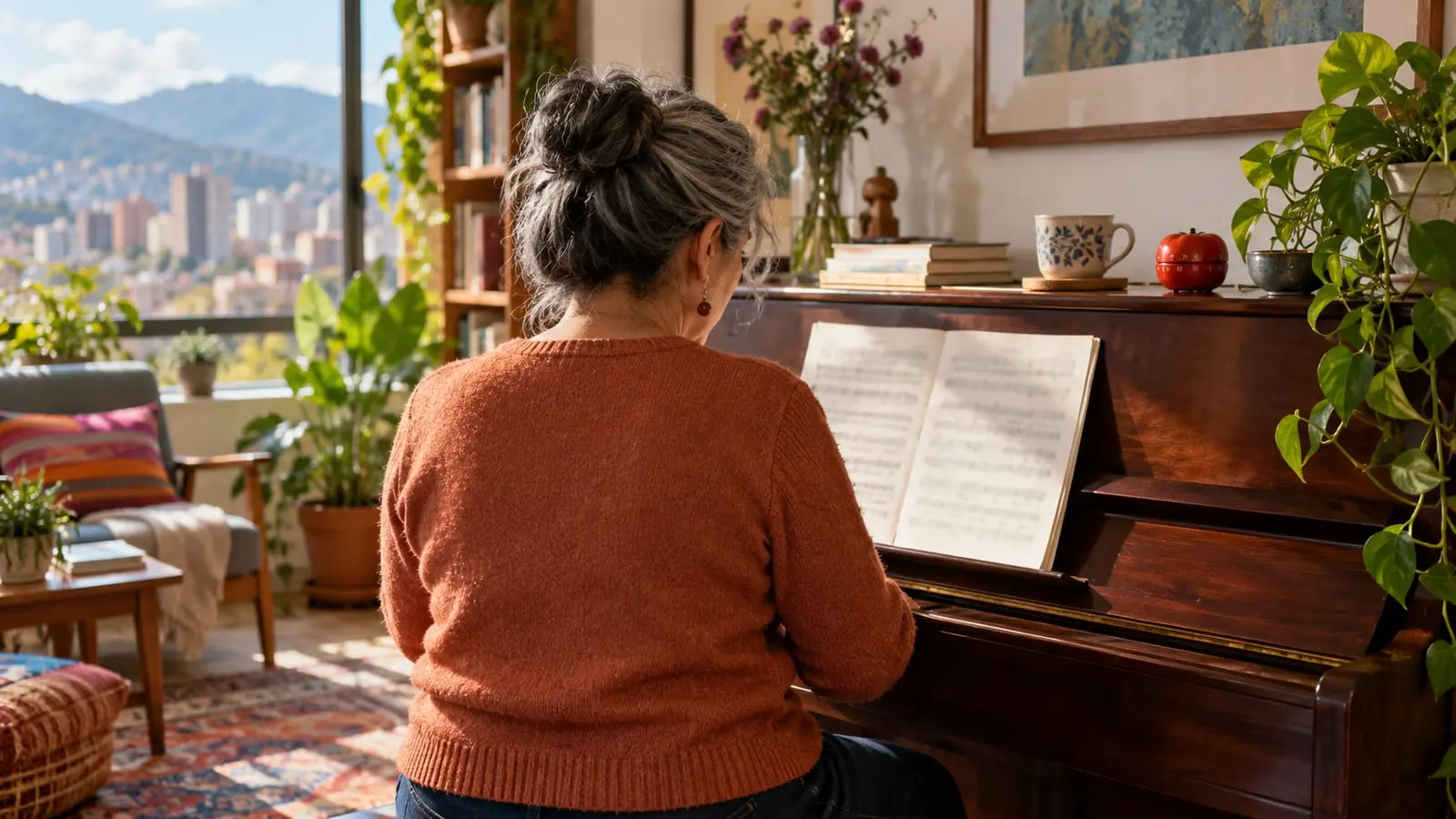
Yes, you can learn piano as an adult and make real progress. Adults understand theory faster, organize their practice, and know what they want to play; what you need is a clear goal, 15 to 30 minutes of practice most days, and repertoire you enjoy.
This guide is for anyone starting from scratch or returning to piano after years away. We explain your advantages, realistic goals, how to fit practice into your week, and which pieces tend to motivate adults.
In short
- As an adult, you learn with greater understanding: you grasp chords, scales, and structure rather than simply repeating.
- Set your goal from the start: accompanying songs, reading classical sheet music, and playing by ear require different paths.
- 15 to 30 minutes most days gets you further than one long session on the weekend.
- An 88-key weighted digital piano is enough to start and lets you practice with headphones.
- Choose repertoire that excites you: one piece you love is worth more than ten exercises that feel pointless.
Your advantages as an adult piano learner
People often assume children learn piano better. In fact, they learn differently. Adults have strengths of their own:
- Understanding: you grasp why a chord sounds happy or sad, how a scale is built, and how a piece is structured. That helps you read and memorize faster.
- Personal motivation: no one makes you attend lessons; you are there because you want to be.
- Musical judgment: you know what music you like and can choose your own path.
- Organization: you can plan your practice, keep a record, and track your progress.
The most common disadvantage is in your mindset rather than your fingers: adults tend to be highly self-critical and get frustrated when they do not sound like the recording. Accepting that you will play slowly and make mistakes for a while is part of the process, not a sign that you are unsuited to it.
Realistic goals: what you want to play
Before your first lesson, think about what you picture yourself doing at the piano. Each goal calls for a different approach; explaining yours clearly helps your teacher create a plan tailored to you:
| Goal | What it involves | Where to start |
|---|---|---|
| Accompanying songs | Playing chords with the left hand and the melody or rhythm with the right. | Basic chords, letter-based chord symbols, and accompaniment patterns. |
| Playing classical pieces | Reading treble and bass clefs and coordinating both hands precisely. | Music reading, short pieces, and finger technique. |
| Playing by ear and improvising | Recognizing chords, scales, and chord progressions without sheet music. | Scales, common chord progressions, and ear training. |
| A special piece with a deadline | Preparing a particular piece for a wedding, birthday, or gathering. | A version adapted to your level, practiced section by section. |
You do not have to choose just one: many adults combine reading music and playing chords. What matters is having a goal that excites you. For an idea of the stages ahead, read how long it takes to learn piano.
How much time you need each week
Many adults make good progress with 15 to 30 minutes of practice five or six days a week, in addition to their lesson. The secret is frequency rather than duration: your fingers retain what you repeat regularly.
- Keep the piano ready: key cover open, bench in place, and sheet music on the stand. If you have to set everything up, you will not practice.
- Link practice to something you already do: before breakfast, when you get home from work, or after lunch.
- Split practice on busy days: ten minutes in the morning and ten at night work too.
- Use a metronome from the start: slow and steady beats fast and uneven. You can use our online metronome.
- Practice with headphones if you have a digital piano and your schedule makes noise an issue for neighbors.
Busy weeks will happen. During those weeks, playing something you already know for five minutes keeps the habit alive until life settles down.
Repertoire that motivates adults
Playing music you enjoy is what most helps an adult stick with piano. Here are pieces and styles teachers often use, usually in versions adapted to your level:
Approachable classics
- The “Minueto en sol” (Minuet in G) from the Ana Magdalena Bach notebook, attributed to Christian Petzold.
- A simplified version of Beethoven's Para Elisa.
- Satie's Gymnopédie n.º 1, a slow piece that is rewarding for developing your tone.
- Pieces from Schumann's or Chaikovski's albums for the young, once you can read music comfortably.
Songs and popular music
- Ballads and pop songs you can accompany with four chords.
- Boleros and music you grew up hearing at home, in simple arrangements.
- Colombian pasillos and bambucos adapted for piano.
- Film themes and contemporary piano music, which beginners often love.
Tell your teacher what you listen to day to day. Part of their job is to find or write a version you can play now, rather than years from now.
What piano you need to get started
You do not need an acoustic piano. A digital piano with 88 weighted keys, touch sensitivity, and a sustain pedal is enough for the first few years and offers advantages in an apartment: volume control, headphones, and no tuning. An unweighted 61-key keyboard works for your first steps with chords, but you will soon outgrow it if you want to play classical pieces.
The bench matters just as much. At the right height, your forearms are nearly parallel to the floor and your shoulders relaxed; a dining chair that is too low often causes tension. We explain this in detail in how to choose your first piano or keyboard.
Common mistakes adult beginners make
- Trying to play the entire piece on day one instead of working in short sections.
- Skipping technique because it seems boring, then getting stuck on passages you cannot play.
- Learning only from light-up keyboard videos, without developing music reading or understanding.
- Playing with raised shoulders, dropped wrists, or flat fingers.
- Comparing yourself with pianists on social media who have been playing for decades.
- Giving up piano at your first plateau, just before a breakthrough.
Posture deserves special attention because habits formed in the first few months tend to stick. Read about proper hand position at the piano and ask your teacher to correct yours from the start.
Frequently asked questions
Is it too late to learn piano at 40 or 50?
No. You can learn piano at any age. You may not be preparing for a career as a concert pianist, but you can still enjoy classical repertoire, accompany songs, or play by ear. Regular practice makes the difference.
Can I learn piano using only apps?
Apps can support your practice and motivation, but they do not correct your posture, tone, or bad habits. Ideally, combine them with a teacher who gives you a plan and corrects problems early.
Can I learn piano through online lessons?
Yes. Online piano lessons work well if the camera shows your hands and the keyboard from the side or above. For many adults, this is the easiest way to fit a lesson into the week.
Do I have to learn to read sheet music?
It depends on your goal. For classical pieces, yes; to accompany songs, you can start with chord symbols. Learning to read music opens many doors, and adults often find it easier than they expect.
Sources
We checked the facts in this article against these sources on October 22, 2026.