
Benefits of learning an instrument for older adults
Reading, coordinating, remembering, socializing and having a goal every week: this is what music can offer after 60, and what you shouldn't expect from it.
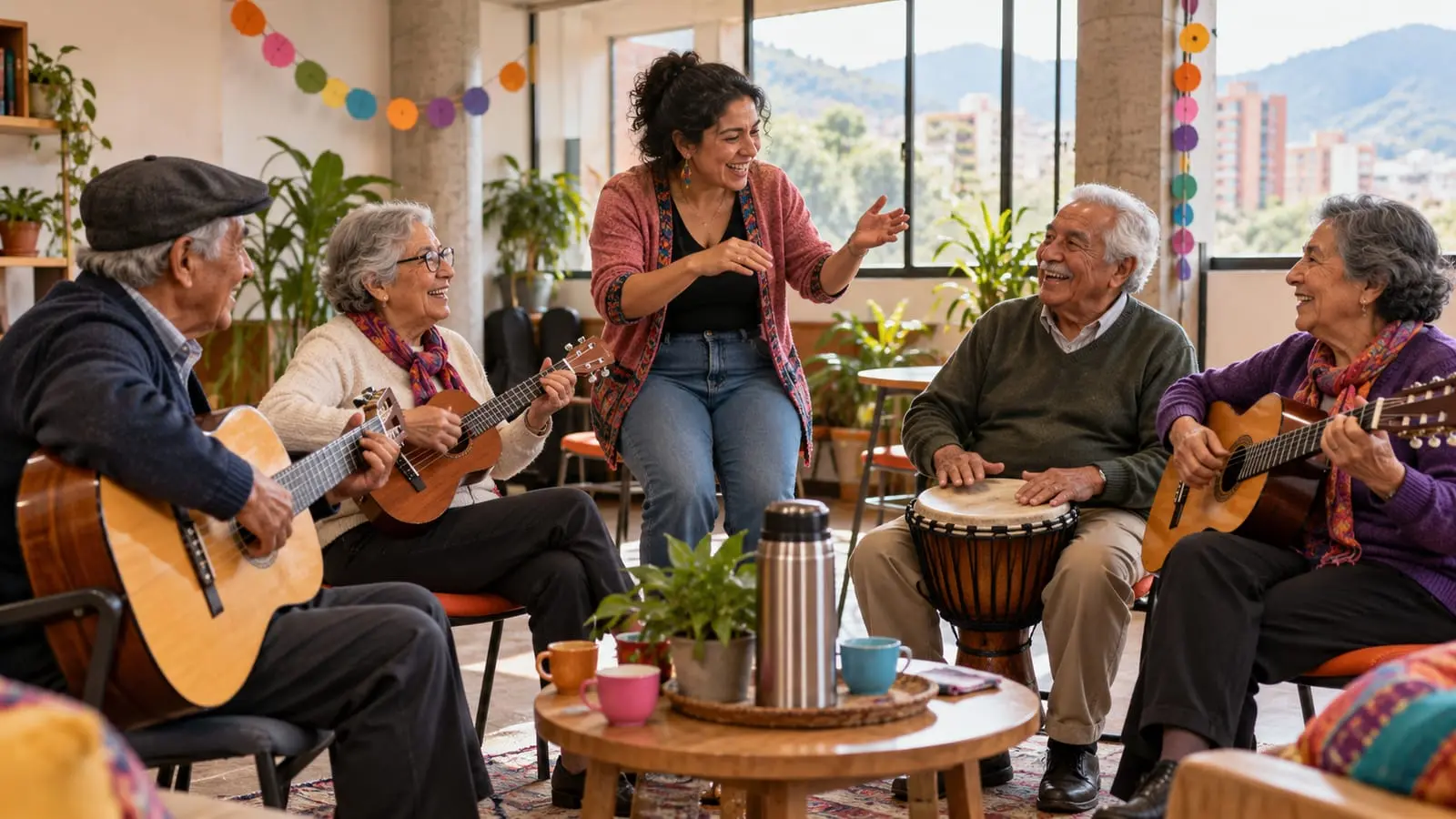
Learning an instrument after 60 offers concrete benefits: a new and varied mental challenge, purposeful hand movement and breathing, companionship, a meaningful routine, and above all, enjoyment. It isn't medicine or a formula against aging, but it is one of the most well-rounded and satisfying activities you can start at any age.
We explain each benefit with examples from real lessons, along with what music doesn't promise, so you or your family can decide with realistic expectations.
In short
- Playing or singing combines reading, listening, memory, and coordination: it's a new and varied mental challenge.
- Lessons and rehearsals bring people together: with a teacher, family, a choir, or a group.
- A weekly lesson and a specific goal give your days structure and purpose, especially after retirement.
- The most immediate benefit is enjoyment: reconnecting with the music you've known all your life and being able to play it.
- Learning music isn't a treatment and doesn't replace medical care or music therapy.
A new challenge for your mind
When you play a simple song, you're doing several things at once: looking at sheet music or chord symbols, remembering where each finger goes, keeping the beat, listening to how it sounds, and anticipating what comes next. For someone who has spent years doing familiar tasks, it's a chance to learn something from scratch again.
The mental effort involved
- Sustained attention: for a few minutes, all your concentration is on the sound.
- Memory: remembering a melody, a chord sequence, or song lyrics.
- Reading new symbols: notes, rhythmic values, or chord symbols.
- Coordination: hands doing different things on piano, or voice and breathing working together in singing.
It's not about competing or doing it quickly. The value lies in having something new to understand each week, and in realizing with satisfaction that you can now do what seemed impossible a month ago.
Putting hands, breathing, and posture to work
Each instrument calls for different movement. Piano develops finger independence; guitar works on left-hand pressure and position changes; singing and recorder work on controlled breathing and upright posture. Practicing a few minutes most days keeps these movements active in an enjoyable way, with a musical goal rather than as an isolated exercise.
Music isn't physical therapy, though. If you have arthritis, an injury, or a respiratory condition, consult your doctor or physical therapist first, and tell your teacher about your limits so they can choose comfortable exercises and positions.
Purpose and routine after retirement
Many people experience retirement as a relief, only to find after a few months that their days lack structure. An activity with personal goals helps organize the week:
- A regular lesson on your calendar.
- A daily practice session that becomes a habit, like a walk or your morning coffee.
- Visible goals: finish learning a song, play it all the way through without stopping, prepare it for a birthday.
- Achievements you can share: a recording for children who live far away or a performance in your living room.
A teacher's weekly guidance keeps those goals from fading: there's always a clear next step and someone to celebrate when you reach it.
Enjoyment, memories, and expression
The most immediate benefit is also the simplest: playing or singing the music that has been with you all your life feels good. A pasillo you heard in your parents' home, boleros from your courting days, Christmas carols from novenas. Learning to play them is a way to reconnect.
Music also gives you room to express what words sometimes can't: nostalgia, joy, affection for someone who is no longer here. Many older adults find in singing or piano a part of the day that's theirs alone.
What music can offer and what it doesn't promise
An honest discussion of benefits also means saying what not to expect. This table helps set realistic expectations:
| Area | What you can expect | What it doesn't promise |
|---|---|---|
| Mind | A new, varied, and enjoyable challenge each week. | Preventing or curing conditions such as Alzheimer's disease or dementia. |
| Body | Using your hands, breathing, and posture toward an enjoyable goal. | Replacing physical therapy or medical treatment. |
| Mood | Time for concentration, enjoyment, and satisfaction. | Treating depression or anxiety. |
| Social life | Time with your teacher, family, and other music enthusiasts. | Solving loneliness on its own without seeking companionship. |
| Learning | Real progress with consistent practice. | Results within a fixed time or without practice. |
Frequently asked questions
Does playing an instrument prevent Alzheimer's disease?
We can't make that claim. Learning music is stimulating and enjoyable, but it isn't a proven way to prevent or treat disease. If you're concerned about memory, consult a doctor; music can be a helpful addition to daily life.
Which instrument offers the most benefits for an older adult?
The one they enjoy and can play comfortably. An instrument you like is one you'll practice, and practice is what brings the benefits. Explore the options in which instrument to learn after 60.
Does singing in a choir offer the same benefits as lessons?
They complement each other. A choir adds social connection and the experience of making music as a group; individual lessons provide technique, personal attention, and repertoire suited to you. Many people combine both.
How much practice does it take to notice a benefit?
There's no magic number. Consistency is what works: short sessions most days instead of occasional long ones. Enjoyment and the satisfaction of progressing can be felt from the first few weeks.
What if my dad says he has no ear for music?
Almost everyone can learn to sing or play in tune and keep a rhythm with practice and good guidance. Willingness and patience matter more than talent. To encourage him, read why it's never too late to learn music in later life.
Sources
We checked the facts in this article against these sources on October 22, 2026.
- World Health Organization: dementia (no cure; how to reduce the risk)
- Universidad de Sheffield: learning piano in later life and its relationship to cognition (12-month study)
- American Music Therapy Association: what music therapy is
- NHS: learning new things and mental well-being
- Alcaldía de Bogotá: free music workshops at Crea centers (including older adults)