
Learning music as a senior: it's never too late
Taking up an instrument or singing after 60 is possible and very enjoyable. Here's what to expect and how lessons adapt to your pace, your hands, your eyesight and your hearing.
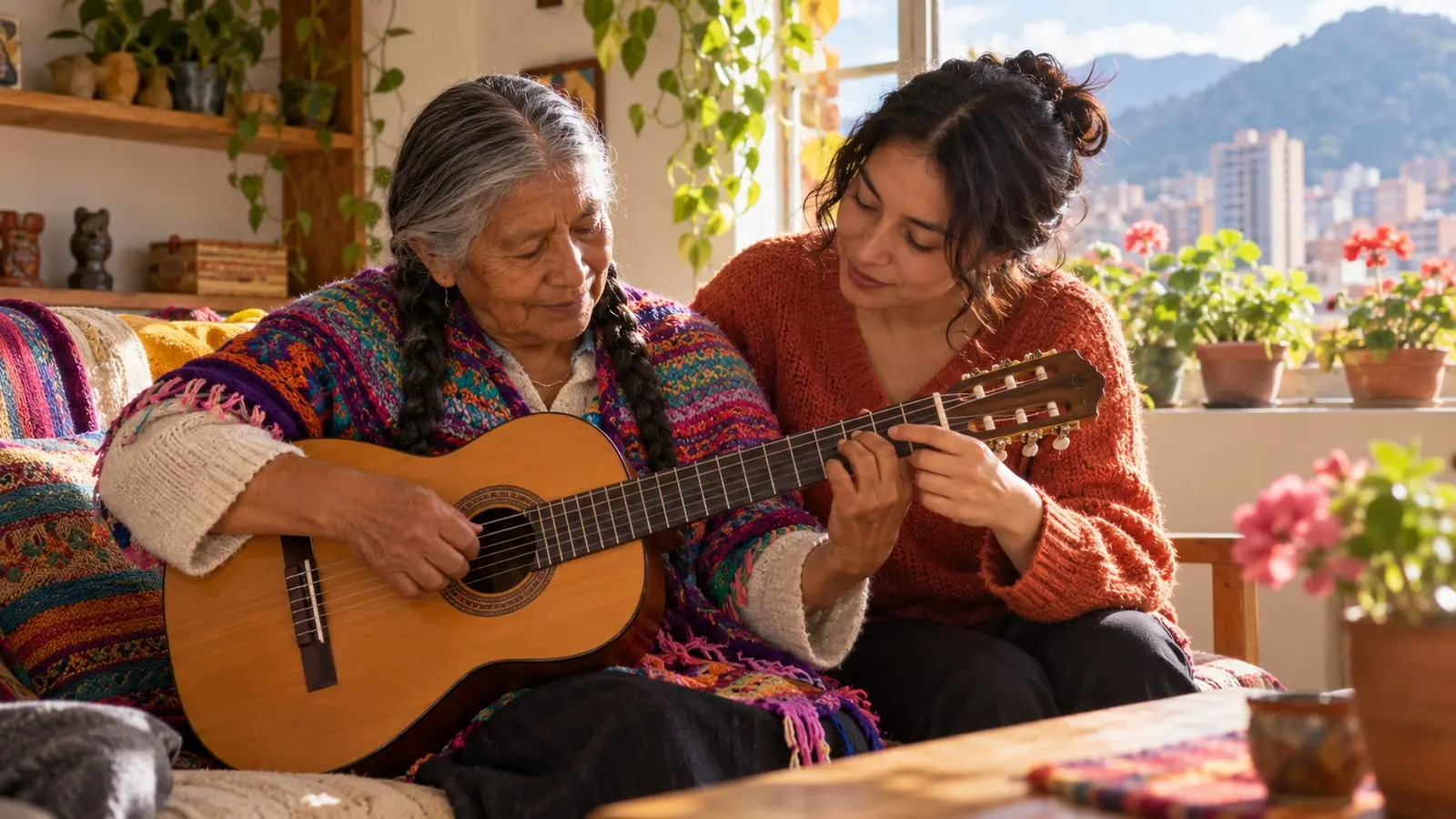
Yes: it is never too late to learn music. Older adults can start from scratch on piano, singing, guitar, or another instrument and truly enjoy it. What changes is not the ability to learn, but the way lessons are taught: an unhurried pace, personal goals, and adjustments for your hands, back, vision, and hearing.
This guide is for grandparents, retirees, and older adults who have wanted to learn for years, and for the children and grandchildren who want to encourage them. We explain what to expect in the first few months, what adaptations to ask for, and how in-home or online lessons can save you the trip.
In short
- You can start at any age: you do not need to read music or have played before.
- You set the pace: a good teacher adjusts the speed, repertoire, and length of each lesson.
- Large-print sheet music, a chair with good back support, frequent breaks, and a teacher who faces you when speaking make a big difference.
- In-home lessons avoid travel, cold weather, and traffic jams; online lessons work well with initial help from a family member.
- If you have a health condition affecting your hands, back, or hearing, consult your doctor before starting and tell your teacher.
Why many older adults decide to start
There is almost always a story behind it. The piano in your childhood home that no one let you play. The guitar your dad used for serenades. The boleros, pasillos, and tangos you know by heart and now want to sing well. Or simply new free time after retirement, calling for something of your own.
Others start because of their grandchildren: they want to accompany them, understand what they learn at school, or have a song to share in December. All are good reasons. If you wonder what you can gain from it, we explore the benefits of learning an instrument later in life.
One idea worth leaving behind is “I am too old for that.” Older adults are often attentive, consistent students with a deep connection to the music they have heard throughout their lives. That musical memory is a valuable starting point: your ear often knows how a song should sound before your hands can play it.
What to expect in your first lessons and months
Learning to play at 65 or 80 is more like learning a language than taking an exam: you make a little progress each week, and one day you realize you can hold a conversation. A typical path looks like this:
- First lessons: get to know your instrument, find a comfortable posture, produce a clean sound, and play or sing a very short melody.
- First weeks: a simple, familiar song, sometimes just the melody or with minimal accompaniment. This is the most exciting stage.
- First months: play more confidently, use both hands together on piano or switch between two or three guitar chords, and, if you want, start reading simple sheet music or chord symbols.
- Later on: build your own repertoire of songs you enjoy, to play with family or simply for the pleasure of it.
There is no rush and no grading. Some days your hands may feel less responsive, or you may struggle to remember the previous lesson, and that is fine: that is why your teacher reviews at the start of each session. Consistency matters more than speed.
Adaptations a good teacher makes for you
A lesson for an older adult is more than a slowed-down children's lesson. It is designed for your body, your tastes, and your way of learning. These are the most common adjustments:
| Aspect | What may be difficult | How the lesson is adapted |
|---|---|---|
| Learning pace | Too much new information in a short time. | One goal per lesson, a review at the start, and short assignments for the week. |
| Hands and fingers | Stiffness, reduced strength, or discomfort when pressing. | Gentle warm-ups, breaks, comfortable fingering, nylon strings, or light-action keys. |
| Back and posture | Fatigue from sitting or standing for long periods. | A firm chair with back support, a bench at the right height, support for the instrument, and changes of position. |
| Eyesight | Small notes and poor lighting. | Large-print sheet music and text, chord symbols instead of staff notation, good lighting, and a tablet with zoom. |
| Audition | Understanding explanations or distinguishing notes close in pitch. | The teacher faces you and speaks slowly, demonstrates on the instrument, and uses a visual tuner. |
| Memory | Remembering what you learned from one week to the next. | A lesson notebook, written instructions from the teacher, and short recordings on your phone. |
If you wear hearing aids, ask your audiologist whether they have a music mode or program: some devices offer settings for this. An on-screen tuner also lets you see whether a note is in tune without relying solely on your hearing.
In-home lessons: music comes to you
For many older adults, the hardest part is getting to the lesson: Bogotá's cold mornings, afternoon downpours, traffic jams, stairs, or having to rely on someone for a ride. With in-home lessons in Bogotá and the surrounding area, the teacher comes to you, removing those obstacles.
- You play your own instrument, in your chair and with your lighting, right where you will practice during the week.
- You can choose morning or midafternoon times, when you have more energy.
- A family member can join the first lesson, meet the teacher, and feel reassured.
- If you like, two people in the household can take lessons together, such as a couple or a grandmother and her grandson.
At Gissi, every teacher is evaluated for musical ability, teaching skills and personal qualities before their first lesson—something that matters a lot when someone will be entering your parents’ or grandparents’ home. To learn how a visit works, read what to expect from an in-home music lesson.
Online lessons with a little help from family
If you live outside Bogotá or prefer not to have visitors, online lessons are a great option. Technology can feel intimidating at first, but a little preparation makes it routine. Here is how a child or grandchild can best help:
- Install the video-call app and save the lesson link somewhere easy to find.
- Place the tablet or phone on a stable stand, charged or plugged in, with the camera showing your hands and instrument.
- Make a test call a few days beforehand to check the sound, volume, and lighting.
- Join the first one or two lessons, then let the grandparent connect independently.
- Write down the steps for connecting on paper in large print.
With that setup, many older adults end up connecting independently without difficulty, and online lessons give them access to teachers in any city.
How to take the first step
- Choose by preference, not difficulty. If you love boleros, guitar or singing makes sense; if you have always dreamed of piano, start there. If you are unsure, compare options in which instrument to learn after 60.
- Do not buy anything expensive yet. In your first lessons, the teacher can help you choose a suitable instrument and size.
- Explain what you need. If you have arthritis, back pain, or difficulties with vision or hearing, tell your teacher from the start: you are providing information that helps them plan, not being a nuisance.
- Set your own goal. Play a song for a birthday, sing in the parish choir, or simply enjoy some music each day.
- Find the right teacher. Browse the teacher directory or send a WhatsApp message explaining what you would like to learn.
Frequently asked questions
Do I need to read sheet music before starting?
No. Many older adults start by playing by ear, using chord symbols, or reading very simple sheet music. If you want to read music, the teacher introduces it gradually using large-print notes; if not, you can still progress with other tools.
How long should a lesson for an older adult last?
It depends on your energy and concentration. Some people enjoy a longer lesson with breaks; others prefer shorter sessions. The aim is to finish eager for more rather than exhausted. Talk to your teacher about adjusting the length and frequency.
My mom is over 80. Is it too late?
There is no age limit. Goals and adaptations change: she might start with singing or piano rather than an instrument that requires a lot of strength, and take lessons at home to avoid travel. Her desire to learn matters most.
Can I learn music if I have hearing loss?
Yes. Choose an instrument whose range you can hear comfortably, ask your teacher to face you when speaking, and use visual tuners for support. If you wear hearing aids, ask your audiologist how to adjust them for music.
Are individual or group lessons better for an older adult?
Private lessons let you learn at your own pace and adapt everything to your needs. A small group, perhaps with your partner or a friend, adds companionship and motivation. Many people start individually and later join a choir or a group.
Sources
We checked the facts in this article against these sources on October 22, 2026.