
Benefits of learning guitar: why it's worth it
The guitar is the instrument of get-togethers, serenades and your own songs. Here's what it gives you, where to play it and what challenges to expect.
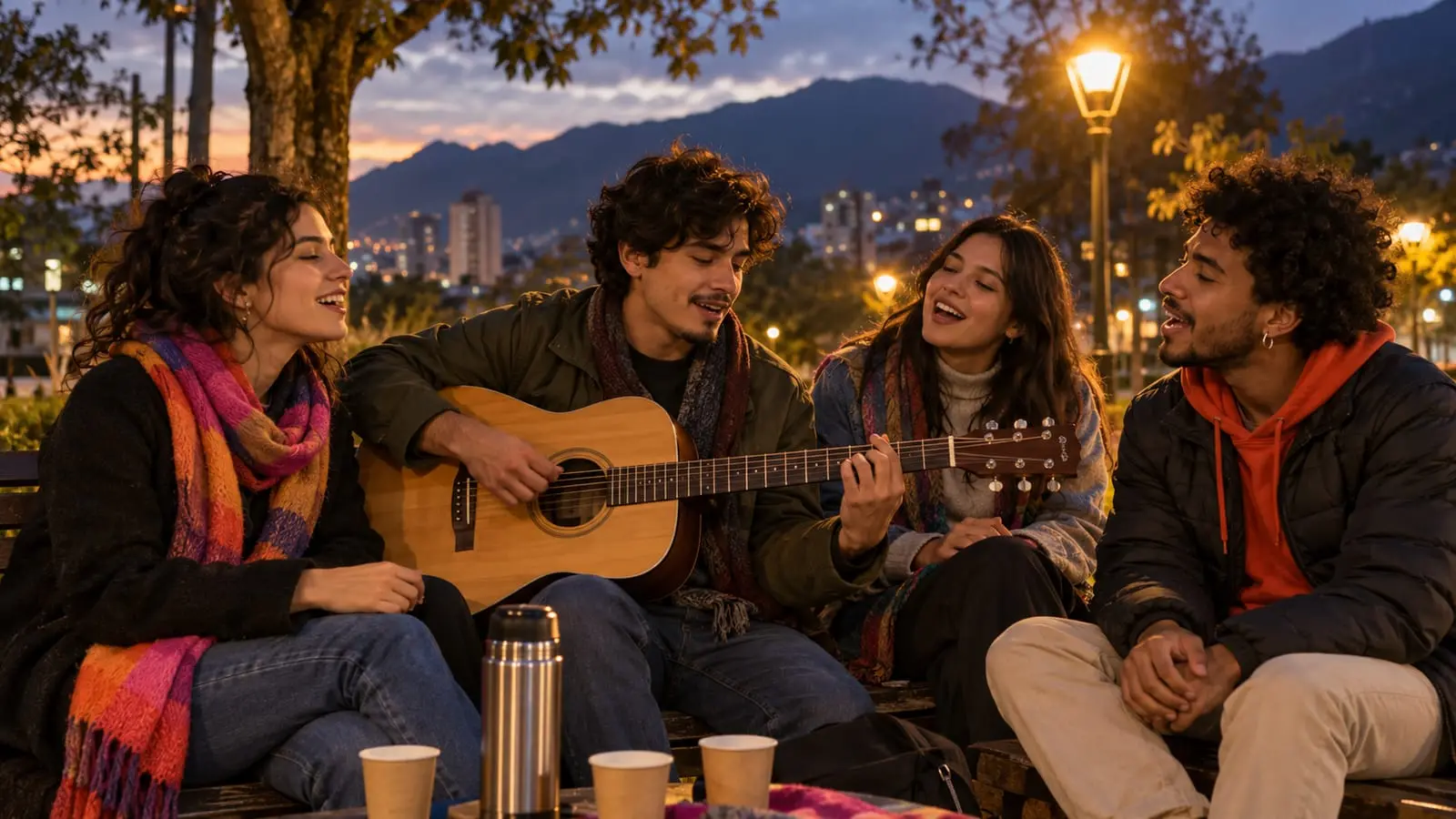
Learning guitar is worthwhile above all because you can put it to use so quickly: with four or five chords and steady strumming, you can already accompany entire songs, your own or someone else's. You can also take it anywhere, connect with other people, and play almost any genre, from bambuco to rock.
Here's a realistic look at those benefits: what guitar offers, where it's played in Colombia, who it tends to suit, and what can be challenging at first.
In short
- Guitar becomes useful quickly: just a few chords let you accompany entire songs.
- It's portable and doesn't need an outlet, so you can play at home, on a trip, or at a gathering.
- It's a social instrument, played in worship groups, serenades, estudiantinas, school bands, and among friends.
- It suits many genres: bambuco, pasillo, bolero, rock, pop, trova, and classical music.
- Its real challenges are sore fingertips at first, barre chords, and getting stuck playing the same three chords.
Take it anywhere
Few things are as practical as an instrument that fits in a soft case and goes on your back. Your guitar can come along to a country house, an end-of-year outing, your grandmother's house, or the park, with no outlet or amplifier needed.
That changes how you practice: you are not tied to a room or a schedule. Leave it visible on its stand and play for ten minutes while lunch cooks. Easy access is one of its greatest practical benefits, because the instrument close at hand gets played more. Protect it from sudden climate changes when traveling from Bogotá to warmer areas.
Accompany songs within the first few weeks
Guitar is, above all, an accompanying instrument. On other instruments, you may spend a good while on exercises before playing a recognizable song; here, the path is short:
- Learn three or four open chords, such as G, C, D, and E minor.
- Practice switching between them without stopping the rhythm.
- Add a simple four-beat strumming pattern.
- Play along with the original recording or sing while you play.
That formula covers plenty of pop, rock, ballads, and popular songs. To start there, explore basic guitar chords. The valuable part is that accompaniment makes you listen: to the voice, the beat, and the song's changes.
It works for almost any genre
With the same guitar, changing your right-hand approach and repertoire lets you move from one style to another. Here's what that versatility looks like:
| Genre | What the guitar does | What you learn |
|---|---|---|
| Bambuco and pasillo | Provides bass lines and chords alongside tiple and bandola. | Triple meters and the distinctive accents of each style. |
| Bolero and ballads | Plays arpeggios or gentle strumming behind the voice. | Dynamics, seventh chords, and sensitive accompaniment. |
| Rock and pop | Riffs, barre chords, and strumming with a pick. | Rhythmic energy and playing in a band. |
| Acoustic versions of Caribbean music | Accented strumming and bass lines that support cumbias and paseos. | Rhythmic precision and the feel of Colombia's coastal music. |
| Classical and fingerstyle | Plays melody, bass, and harmony at once with the fingers. | Finger independence and music reading. |
| Trova and singer-songwriter music | Supports singers performing their own songs. | Harmony for composing and arranging. |
If another direction appeals to you later, guitar opens the door to electric guitar, bass, or tiple. If you enjoy Andean music, compare the two in guitar or tiple.
Who does guitar tend to suit?
- Anyone who wants to sing and accompany themselves at the same time.
- Anyone who enjoys playing in groups and at gatherings more than on a formal stage.
- Anyone who wants to compose: guitar is a great sketchbook for ideas.
- Teenagers who want to play the music they listen to with their friends.
- Adults looking for an instrument that fits in an apartment with limited space.
If you're still deciding between this and another instrument, piano or guitar as your first instrument compares them side by side.
The beginner challenges few people mention
- Your fingertips hurt during the first few weeks. That's normal while calluses form; short sessions and a properly set-up guitar help a lot.
- Barre chords. F and other barre chords are the first big hurdle for almost every guitarist. Technique and patience get you through, rather than force.
- Getting stuck on the same three chords. Because guitar brings quick results, it's easy to get comfortable. Learning new rhythms, arpeggios, and some music reading helps you move forward.
- Learning only from videos. They're useful for inspiration, but posture and right-hand habits are hard to spot without someone watching you play.
- Always tune first. An out-of-tune guitar discourages anyone; use the guitar tuner before every practice session.
A teacher helps with exactly these challenges: showing you how to position your hand for barre chords, suggesting songs that take you beyond your comfort zone, and making sure your posture doesn't cause problems. To see how lessons work, explore acoustic guitar lessons.
Frequently asked questions
Is learning guitar difficult if I know nothing about music?
No more than other instruments. At first, the challenges are physical: pressing the strings properly and changing chords in time. Theory and reading are introduced gradually, as you need them to play the music you enjoy.
Classical, acoustic, or electric guitar: which offers more benefits?
They essentially train the same skills: coordination between your hands, rhythm, and harmony. What changes is the style. The classical guitar, with nylon strings, is usually gentler on your fingers and widely used in Latin American music; the steel-string acoustic shines in pop and folk; the electric guitar, in rock and blues. Choose based on the music that moves you.
Does learning guitar help you sing better?
Indirectly, yes: accompanying yourself makes you sing in tune with the harmony and keep the beat as you sing. But it doesn't replace vocal technique; if you want to improve your voice, combine it with singing lessons.
Can I learn guitar if I'm left-handed?
Yes. Some left-handed players use a standard guitar without difficulty, while others prefer a left-handed guitar or reversed strings. Ideally, try both orientations in your first lessons and decide with your teacher before buying.
Sources
We checked the facts in this article against these sources on October 22, 2026.
- Martin Guitar: a beginner's guide to overcoming frustrations (sore fingertips, chords)
- Taylor Guitars: five tips for caring for your guitar (humidity and case)
- Taylor Guitars: how to travel with your guitar (humidity, climate changes, and heat)
- Universidad Industrial de Santander: thesis on Colombian Andean music (bambuco, pasillo, tiple, bandola, and guitar)