
Does learning an instrument help you manage stress?
Many adults find in music a break that no screen gives them. We explain why that happens, how to practice so you can switch off and when to seek professional help.
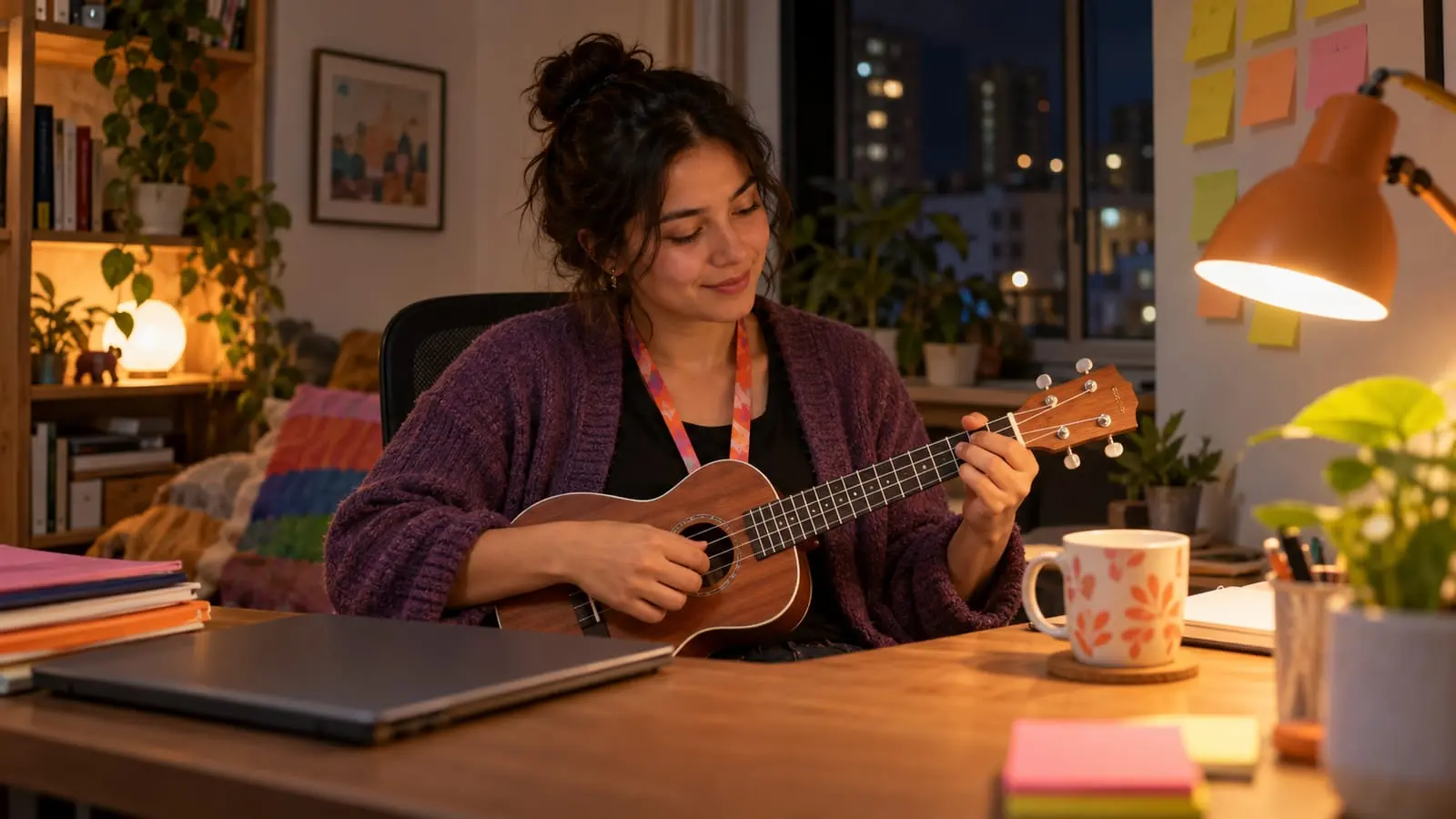
For many people, yes. Playing an instrument or singing takes so much attention that worries fade into the background for a while; it also helps regulate your breathing and gives you a sense of accomplishment. It is not a treatment for stress or anxiety, but it can be a valuable daily break as part of a more balanced life.
Here, we explain why practice can feel like a break, how to plan a session for unwinding, how to keep music from becoming another demand, and when to seek professional help.
In short
- Playing or singing takes your full attention, which is why many people experience it as a mental break.
- Listening to music can be relaxing; making music also engages your hands, breathing, and concentration.
- A session for unwinding differs from one for making progress: put your phone away, play slowly, and choose something you enjoy.
- If practice becomes another source of pressure, adjust your goals with your teacher.
- Music does not replace medical or psychological care; if stress affects your sleep, work, or mood, consult a professional.
Why playing feels like a break
It is hard to think about an unanswered email while trying to land three fingers on a chord at once. Playing an instrument engages your eyes, ears, hands, and memory simultaneously, leaving little room for mental noise.
- Focus on the present: music happens in real time; if your attention wanders, it shows immediately.
- Slower breathing: singing or playing a wind instrument requires you to manage your breath; on piano or guitar, slow phrases invite you to breathe along with them.
- A challenge that fits you: difficult enough to hold your attention and achievable enough to enjoy.
- A sense of accomplishment: by the end of the session, something specific went better than yesterday.
Many adults who play describe this experience: they sit down “for a little while” and, when they check the clock, half an hour has passed. That does not make music a therapy, but it explains why so many people turn to it at the end of the day.
Listening to music or making music
Both are worthwhile, but they are different:
| Aspect | Listening to music | Playing or singing |
|---|---|---|
| Effort | Low; you can do it while doing something else. | Requires dedication and time set aside just for it. |
| Attention | Can remain in the background. | Requires full concentration. |
| Body | Passive, or active if you dance. | Actively engages your hands, breathing, and posture. |
| Afterward | Changes your mood in the moment. | Also leaves you with a sense of having learned something. |
| When it helps | In the car, while working, or before bed. | As a daily ritual to unwind. |
You do not have to choose: listening carefully to what you are learning is part of practice too.
A practice session designed to help you unwind
A session for making progress, like the one we describe in how to practice music at home, has technical goals. A session for unwinding has a different aim: to be present and enjoy yourself. Here is a simple 15 to 20 minute structure:
- Leave your phone in another room or put it in airplane mode. This is the hardest and most important step.
- Take three slow breaths before playing, feeling your feet on the floor and keeping your shoulders relaxed.
- Make long sounds: sustained piano notes with the pedal, slow guitar arpeggios, or long sung notes. Listen to how each sound begins and fades.
- Play a piece you already know, calmly, without aiming for perfection.
- Finish with five minutes of free exploration: improvise on a scale, hum a melody, or repeat a chord you like.
Alternate days: spend some working on your teacher's assignments and others playing just for enjoyment. Both kinds of session contribute.
When practice becomes another source of stress
Adults who set high standards for themselves often fall into a trap: turning music into another performance target. Some signs are:
- You feel guilty on days you do not practice.
- You get upset with yourself whenever you make a mistake.
- You only play what you find difficult, never what you enjoy.
- You compare yourself with musicians on social media or with other students.
- Deadlines cause you more distress than motivation.
If this sounds familiar, talk to your teacher. A good teacher will adjust the plan: gentler goals, repertoire you enjoy, and days without assignments. Laughing at a mistake, playing something badly on purpose, or spending a whole day improvising is part of learning too.
Which instrument to choose for unwinding
Any instrument works if you enjoy it. Still, each offers a different experience:
- Piano: harmonies and the pedal create an enveloping sound; it is ideal for improvising with a few chords and practicing with headphones at night. Learn about our piano lessons.
- Acoustic guitar: you can play on the couch, on the balcony, or on an outing, and slow arpeggios feel almost meditative. Learn about our acoustic guitar lessons.
- Singing: works directly on breathing and posture, and lets you give your voice an outlet, something many adults have not done in years. Explore our singing lessons.
- Percussion: drums and cajón let you release energy and connect with the beat.
If you have never played and worry that learning will add to your stress, start with small goals and a patient teacher. Your first achievements will come soon, and it is never too late to start.
Music does not replace professional help
Learning an instrument is an activity many people enjoy as a break, but it is not a treatment. Music lessons are also different from music therapy, a professional discipline with therapeutic goals.
That said, having a space of your own, a weekly appointment with someone who teaches you, and time each day to do something with your hands can be helpful, alongside habits such as rest, exercise, and time with loved ones.
Frequently asked questions
Does playing an instrument reduce anxiety?
Many people say they feel calmer after playing, but learning music is not a treatment for anxiety. If anxiety is frequent or intense, consult a health professional; music can be an enjoyable complement.
How much time should I play each day to unwind?
15 to 20 minutes is enough for a session to serve as a break. What matters is having time without interruptions or screens.
Will learning from scratch make me more stressed?
It can happen if you demand too much of yourself. That is why it helps to start with small goals, repertoire you enjoy, and a teacher who understands that your main aim is enjoyment.
Do online lessons work well at night, after work?
Yes. For many people, this is the easiest way to take a lesson without adding travel to a long day. Just make sure your space is quiet, and give yourself a few minutes between your last meeting and your lesson.
Sources
We checked the facts in this article against these sources on October 22, 2026.