
How long does it take to learn to play the tiple?
Your first tiple chords come within weeks; accompanying a bambuco with the right accent and picking out melodies takes longer. These are the real stages.
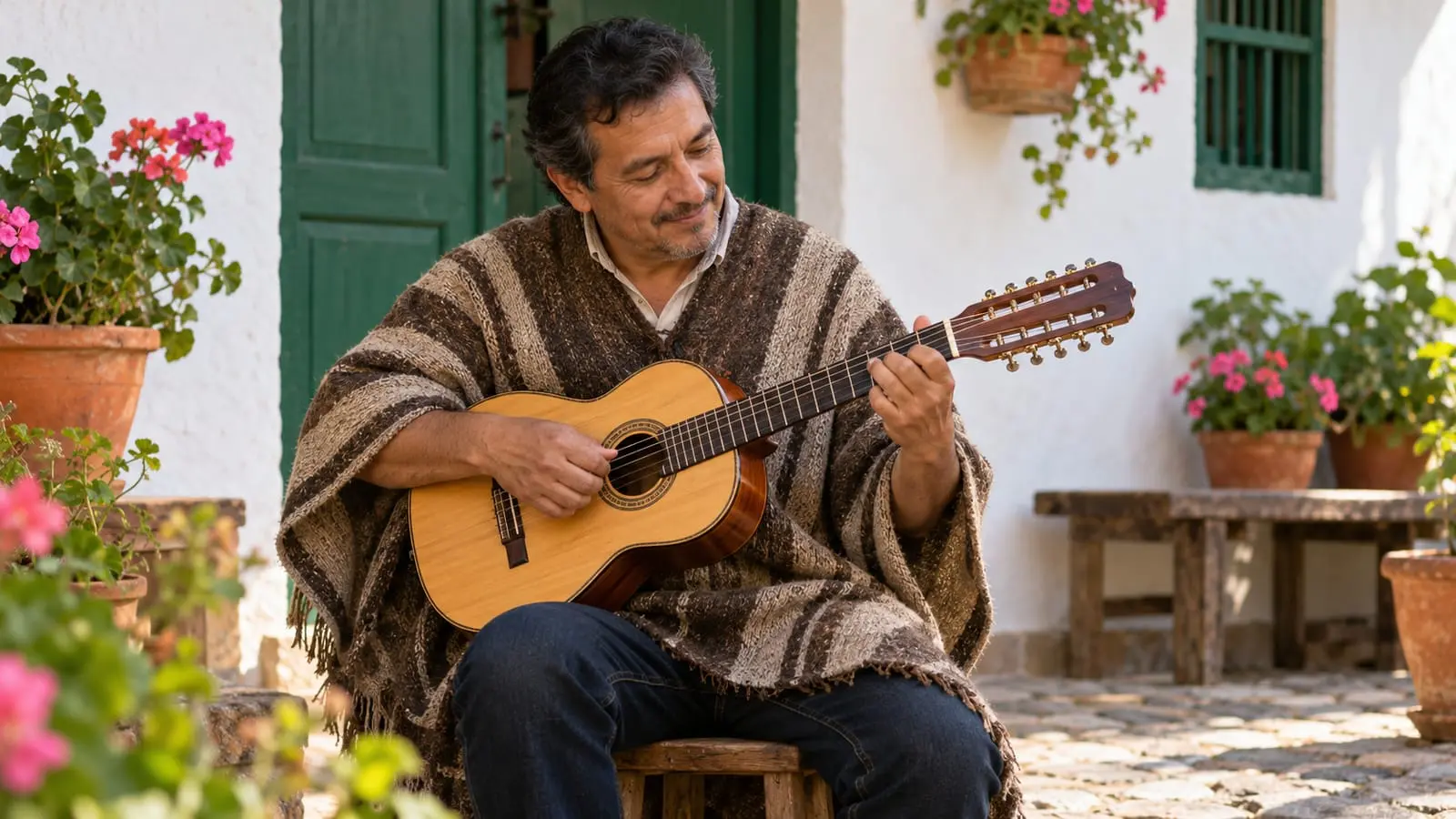
With a weekly lesson and practice almost every day, you can play your first chords with a simple strumming pattern in 1 to 3 months, and accompany complete bambucos and pasillos with their distinctive Colombian accents in 6 to 12 months. Picking melodies and arrangements, known as melodic tiple playing, usually takes 2 to 4 years.
These are approximate timelines. If you already play guitar, the path is much shorter because the tiple shares the tuning of the guitar's first four strings. Right-hand work takes nearly as long, though: Andean strumming patterns are learned by listening and playing, not just reading.
In short
- With regular practice, your first chords and a basic strumming pattern generally come between the first and third month.
- Accompanying complete bambucos and pasillos with the right accents usually takes 6 to 12 months.
- Melodic tiple playing, where you pick out the melody, is a separate skill that develops over about 2 to 4 years.
- The grouped metal strings need more pressure than a nylon-string guitar: your fingertips toughen up in a few weeks.
- If you come from guitar, the chord shapes are similar; the pressure, muting and Andean rhythms are what is new.
Tiple milestones and approximate timelines
| Stage | What you achieve | Approximate time with regular practice |
|---|---|---|
| First chords | Tune with a tuner, play three or four chords in comfortable keys and strum slowly. | 2 to 6 weeks |
| Basic Andean strumming patterns | A pasillo pattern and a bambuco pattern with their accents and muted strokes, changing chords on time. | 2 to 6 months |
| Accompanying songs | Complete simple bambucos and pasillos, accompany a singer and play in minor keys. | 6 to 12 months |
| More rhythms and positions | Guabina, torbellino and danza; chords higher up the neck and playing in a trio or estudiantina ensemble. | 1 to 2 years |
| Melodic tiple playing | Pick melodies and simple arrangements, combining melody and accompaniment. | 2 to 4 years |
| Soloist | Solo tiple repertoire and arrangements using advanced right-hand technique. | 4 years or more of serious study |
Many students feel that the second stage takes longer than expected. That's normal: learning the chords is quick, but making a bambuco flow with the right accents takes listening and plenty of slow repetition. The times in the table come from classroom experience, not a formal standard: the tiple has no graded exam system like ABRSM's, which estimates about 60 hours of total preparation for a Grade 1 exam on other instruments and about 320 for Grade 8, also as averages.
The first few months: fingers, metal strings and chords
The tiple has 12 metal strings grouped into four courses of three. When you fret a course, you press down three strings at once, which takes more strength than a nylon-string guitar. Tender fingertips are normal in the first few weeks; short, frequent practice sessions build calluses, and the discomfort passes.
- Start with 10 to 15 minutes at a time, and rest when your fingertips start to burn.
- Press close to the fret, not halfway between frets: you need less force and the chord sounds cleaner.
- Check that all three strings in each course sound; buzzing usually means a finger is not placed properly.
- Ask your teacher or a luthier to check the string height: very high action on a tiple can double the effort required.
Tuning is part of learning, too. In three of the courses, the middle string is tuned an octave below the outer strings, and tuning all 12 strings takes time at first. A chromatic tuner helps a lot; we walk you through the process in how to tune the tiple.
Andean strumming: the challenge beyond chords
This is the heart of the tiple. A pasillo and a bambuco may use the same chord, but the right hand changes everything: where the accent falls, when the palm mutes the sound and how downstrokes and upstrokes are distributed.
Pasillo
It is counted in three and is often the first Andean rhythm students learn because the pulse is easy to feel. The challenge is keeping the accents steady as the song speeds up.
Bambuco
It plays with a feeling of three and six at the same time, which can be confusing at first. Many students play it stiffly for months before the accents settle in. Listening to plenty of bambuco played by trios and estudiantina ensembles helps this stage along more than any written exercise.
Practice each strumming pattern very slowly with a metronome, and only speed up when the muted strokes consistently fall in the right place. To understand the rhythmic foundations of each genre, read Colombian rhythms: bambuco, pasillo and cumbia.
From accompaniment to melody: two different skills
| Aspect | Accompaniment tiple | Melodic tiple playing |
|---|---|---|
| Right hand | Strumming, muting and accents. | Picking with a pick or fingers, one note at a time. |
| Left hand | Chords and well-timed chord changes. | Scales, higher positions and melodic fingerings. |
| Reading | Chord symbols and song structure. | Sheet music or tablature for the melody. |
| Approximate time | 6 to 12 months to accompany confidently. | 2 to 4 years for simple arrangements. |
Picking melodies on the tiple has its own challenge: you need to strike all three strings of a course evenly so they sound like a single bright note. That is why most teachers establish accompaniment skills first, then introduce melody playing with tunes the student already knows by ear.
If you already play guitar: how much time you save
Quite a bit in the left hand. The tiple is tuned like the first four strings of the guitar, so many chord shapes transfer almost directly. An experienced guitarist can progress much faster, sometimes accompanying simple pasillos within a few weeks.
What you still need to learn: getting used to the pressure of grouped metal strings and a shorter neck, and above all learning Andean strumming patterns, which are unlike pop guitar patterns. If you are still choosing between the two, our guitar or tiple comparison may help.
What helps and hinders your progress on the tiple
- Helps: listening to Colombian Andean music every day, because your ear learns the accents before your hand does.
- Helps: playing with others, even just a guitarist playing bass notes while you strum.
- Helps: a well-set-up tiple with strings in good condition at a comfortable height.
- Hinders: practicing fast strumming patterns before you can play them cleanly at a slow tempo.
- Hinders: learning only from tablature without listening to recordings of the actual rhythm.
- Hinders: an instrument that plays out of tune at the higher frets; it seems like an ear problem, but it needs a setup.
In tiple lessons, your teacher guides you through the transition from chords to rhythm, where many students get stuck when learning on their own.
Frequently asked questions
Will my fingers hurt when learning tiple?
A little at first. Metal strings in groups of three press harder on your fingertips than nylon guitar strings. With short, frequent sessions, calluses usually form within a few weeks and the discomfort goes away.
Do I need to read sheet music to play tiple?
For accompaniment, chord symbols and a good ear are enough. Sheet music becomes useful when you want to pick melodies, play arrangements or join an estudiantina ensemble that uses written parts.
At what age can you start learning tiple?
Around age 8 is a rough guide, when the fingers have enough strength to press metal strings. For younger children, nylon-string guitar or introductory music activities provide good preparation. Adults can start at any age.
Is it better to learn guitar before tiple?
It is not necessary. You can start directly on tiple if Andean music appeals to you. Learning guitar first gives you a head start with chords, but you still learn tiple strumming patterns from scratch.
Sources
We checked the facts in this article against these sources on October 22, 2026.
- Ministerio de Cultura (Plan Nacional de Música): Entre cuerdas de tiple booklet, teacher's guide
- Radio Nacional de Colombia (RTVC): the emergence of the tiple as a solo instrument in Colombia
- Wikipedia: Colombian tiple (12 strings in four courses, tuning, and scale length)
- ABRSM: estimated preparation hours by grade (general reference for other instruments)