
Why learn the tiple or bandola? Andean music from the inside
The tiple and the bandola are the heart of the Colombian Andean trio. We tell you what each one brings, where they're played and which one suits you best.
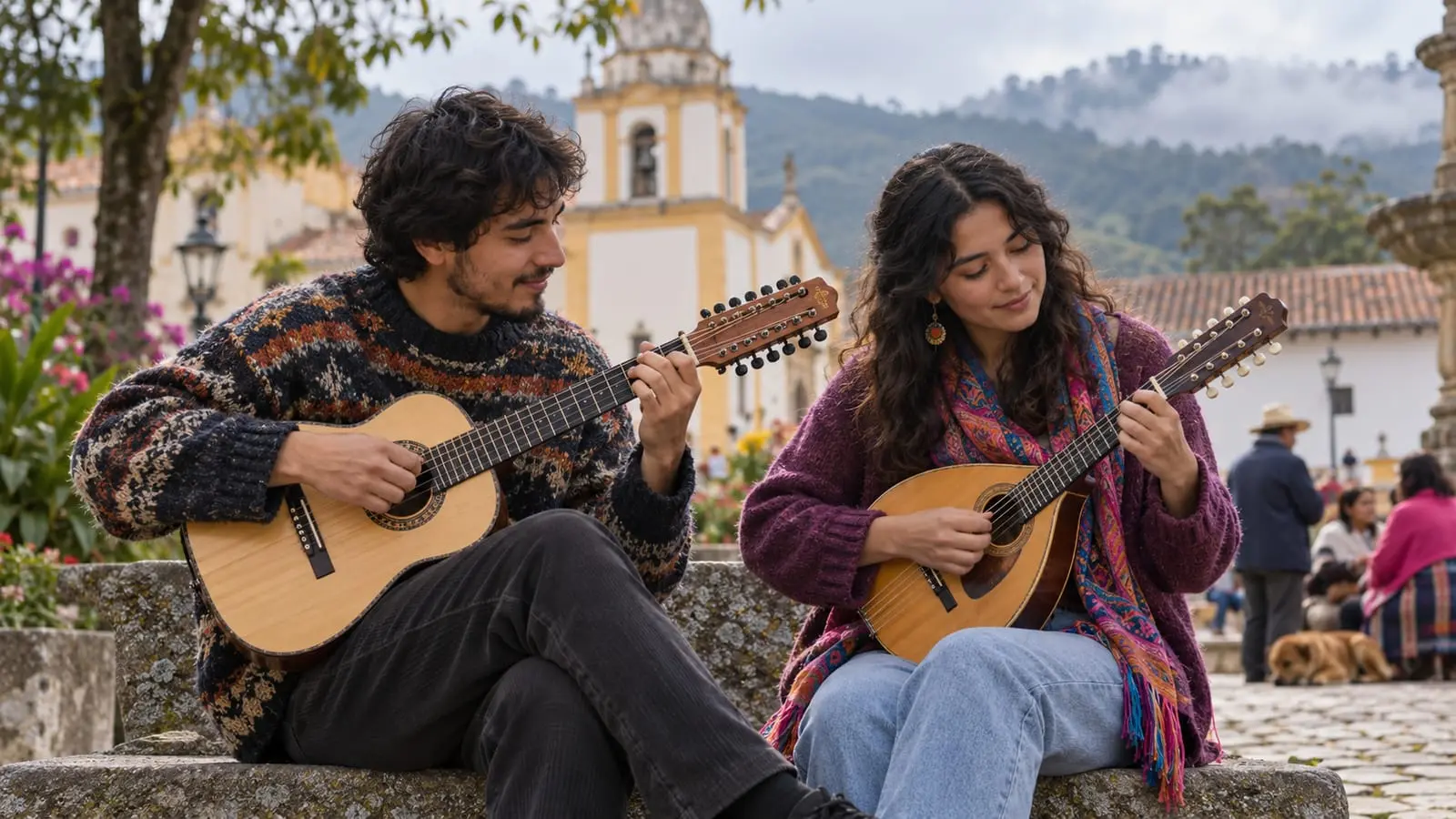
Because they offer an experience no other instrument quite matches: getting to know Colombian Andean music—bambuco, pasillo, guabina, and torbellino—by playing the instruments it was written for. The tiple provides the rhythmic and harmonic foundation; the bandola sings the melody with its tremolo. Together with the guitar, they form the Andean trio, one of the country's most beloved ensembles.
They also invite you to play with others: hardly anyone learns tiple or bandola just to stay alone in their room. Here we explain what each contributes, where they are played, how to choose between them, and what challenges to expect.
In short
- The tiple provides rhythm and harmony; the bandola plays the melody with a pick and tremolo. Together with the guitar, they form the Colombian Andean trio.
- Learning them introduces you to a repertoire and a way of feeling rhythm unique to Colombia, passed from musician to musician.
- They open the door to trios, estudiantina ensembles, musical gatherings, competitions, and festivals such as Mono Núñez.
- If you already play guitar, the tiple will feel familiar; the bandola requires learning picking technique from the ground up.
- The challenges: metal strings grouped in courses, which demand more from your fingers, and tuning that takes patience.
Music you already know by ear
Many Colombians grow up hearing pasillos and bambucos at their grandparents' home, school events, or family celebrations, but few go on to play them. Learning tiple or bandola changes that relationship: Andean music stops feeling distant, and you start understanding how it works from the inside.
That understanding is very practical. Bambuco plays with accents that can feel like groups of three and two at the same time, which is why there is still debate over writing it in 3/4 or 6/8. Pasillo, in triple meter, changes character completely depending on whether it is slow and sung or fast and instrumental. Guabina and torbellino each have their own sway. You truly understand all this when you play it. To explore these styles before picking up an instrument, read Colombian rhythms: bambuco, pasillo, and cumbia explained.
Much of this repertoire is learned from other musicians at gatherings and rehearsals, and playing it keeps it alive. It is no museum piece: composers are still writing new works for these instruments.
Tiple and bandola: each instrument's role in the trio
Each instrument in the Andean trio has a clear role. Understanding those roles helps you decide where to start:
| Aspect | Tiple | Andean bandola |
|---|---|---|
| Role in the trio | Rhythm and harmony: the foundation beneath the melody. It can also pick out melodies as a solo instrument. | Lead melody, ornaments, and countermelodies. |
| Strings | Twelve metal strings in four courses of three. | Metal strings grouped in courses, in a higher register. |
| Right hand | Finger strumming and muted strokes that give each rhythm its feel. | Pick: alternate picking and tremolo to sustain notes. |
| Usual notation | Mostly chord symbols; sheet music when playing melodies. | Mostly sheet music, because it carries the melody in trio and estudiantina arrangements. |
| If you already play guitar | A natural transition: it shares the tuning of the first four strings. | Your left-hand skills help, but picking technique is new. |
| A good fit if… | You enjoy accompanying, singing along, and feeling the rhythm in your hand. | You enjoy leading the melody and refining your tone. |
The guitar completes the trio with bass lines played on the low strings, known as bordones, and lower-register harmony. If you are deciding between guitar and tiple, guitar or tiple compares the two paths.
Where they are played: trios, estudiantinas, gatherings, and festivals
- Trios and duos. The most intimate setting: bandola, tiple, and guitar, or tiple and guitar accompanying voices. It is easy to put together with two friends or your family.
- Estudiantinas. Larger ensembles with several bandolas, tiples, and guitars, sometimes joined by flute, double bass, or percussion. Many schools, universities, and cultural centers have their own.
- Musical gatherings and serenades. Informal get-togethers where people play, sing, and learn by ear. They are a school in their own right.
- Competitions and festivals. Andean music has a strong tradition of gatherings and competitions across different regions. Festival Mono Núñez, in Ginebra (Valle del Cauca), is a landmark for many performers in the genre, and other events focus on bambuco, pasillo, or Andean music in general.
- Fusion and new projects. Groups bringing tiple and bandola into jazz, rock, or singer-songwriter music.
You do not need to compete to enjoy this music, but hearing other groups live can be very inspiring. And with estudiantinas common in Bogotá and other Andean cities, finding people to play with is often easier than it seems.
What each instrument develops
With the tiple
- A precise sense of rhythm: the tiple sustains the feel of bambuco or pasillo, and if it loses its footing, so does the trio.
- Practical harmony: you learn to connect chords and accompany singing in different keys.
- Finger strength and stamina, because each course has three strings that must be pressed down together.
With the bandola
- Fine right-hand control: tremolo needs to be even and relaxed for the melody to sound continuous, almost sung.
- Phrasing: you decide where the melody breathes, which notes to ornament, and how to shape each phrase.
- Coordination between both hands in fast passages, which are very common in instrumental pasillos.
Both instruments develop something Andean music demands: listening to the other two members of the trio. Nobody plays at full volume all the time; musical dialogue is the rule.
Who might enjoy learning tiple or bandola?
- Anyone who already plays guitar and wants a second instrument with its own identity.
- Anyone who grew up hearing this music and wants to play it with family or at gatherings.
- Adults and older adults looking for a meaningful musical project and a group to share it with.
- Musicians from other genres who want to understand Colombian rhythms for composing or fusion projects.
For a broader view before you decide, our beginner's guide to Colombian Andean music gives an overview of the ensembles and repertoire.
Real challenges and how to handle them
- Sore fingers at first. Metal strings grouped in courses require more pressure than a nylon-string guitar. Short sessions and a properly set-up instrument with comfortable string height make a difference.
- Tuning takes time. There are many strings, some tuned in octaves, and temperature changes can put them out of tune—for example, when traveling from Bogotá to warmer lowland areas. A chromatic tuner and patience are part of the routine.
- Instrument quality varies widely. Many tiples and bandolas are handmade, with large differences between instruments. A teacher can help you inspect one before buying it or set up one you inherited.
- Less online material than for guitar. And rhythms are best learned by watching and listening to someone who plays them; a teacher who knows the repertoire makes a big difference here.
- Tremolo does not develop overnight. At first it sounds uneven or tense; build it slowly, with a metronome and a relaxed wrist.
Frequently asked questions
Which is easier, tiple or bandola?
Neither is inherently easy or difficult. Tiple often lets you accompany simple songs sooner, especially if you already play guitar; bandola requires picking technique from the start, but lets you play recognizable melodies very early. Choose the role that appeals to you.
Can I learn both instruments?
Yes, and many Andean musicians play both. Usually, you start with one, establish a solid foundation, then add the other; the rhythmic understanding you gain on the first transfers directly to the second.
Can you play tiple without reading sheet music?
Yes. Much tiple accompaniment is learned through chord symbols and by ear. Sheet music becomes important if you want to play melodies or join an estudiantina with written arrangements, and you can learn it alongside the instrument.
How is the tiple tuned?
Its four courses use the notes of the guitar's first four strings (E, B, G, D), with some strings tuned an octave apart. We explain it step by step in how to tune the tiple.
Sources
We checked the facts in this article against these sources on October 22, 2026.
- Universidad de Antioquia (Encuentros): music for Colombian Andean string trio (bandola, tiple, and guitar)
- Wikipedia: tiple (four courses of three strings, tuning, and history)
- Transactions of the ISMIR: sesquialtera in Colombian bambuco (3/4 and 6/8 time signatures)
- Radio Nacional de Colombia: Festival Mono Núñez, Colombian Andean music in Ginebra, Valle del Cauca
- Vanguardia: the tiple, part of Colombia’s heritage