
Colombian Andean music: a beginner's guide to playing it
Bandola, tiple or guitar: choose your role in the trio, learn the pasillo first and listen a lot. A practical guide to start playing Colombian Andean music.
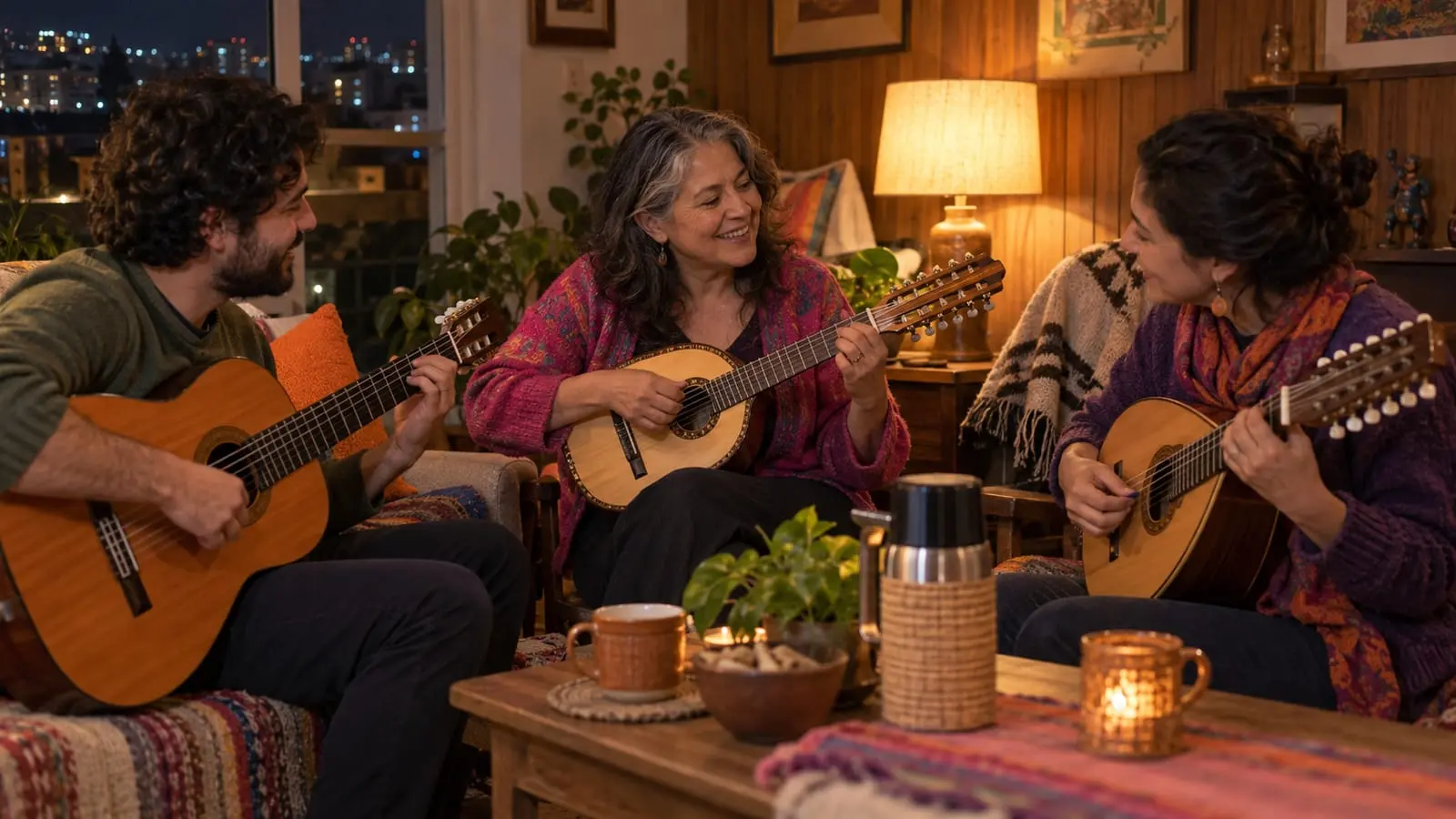
To start playing Colombian Andean music, choose your role in the traditional trio (melody on the bandola, strumming and harmony on the tiple, or bass lines on the guitar), learn a pasillo or danza first, and leave bambuco until you can keep a steady beat. Listen to plenty of trios and estudiantinas as you practice: you learn the style with your ears as much as with your fingers.
This guide explains how the trio works, which rhythms to learn first, how to build a practice plan, and which mistakes to avoid, whether you already play guitar or are starting from scratch.
In short
- Colombian Andean music comes from the mountainous regions of central Colombia, and its signature ensemble is the bandola, tiple, and guitar trio.
- In the trio, the bandola carries the melody, the tiple provides harmony and rhythm, and the guitar plays the bass lines.
- The essential styles are pasillo, bambuco, danza, guabina, and torbellino; pasillo and danza are good starting points.
- If you already play guitar, the tiple is a natural next step: its tuning is related to the guitar's first four strings.
- This is ensemble music: playing with others early on helps you learn the style faster.
What is Colombian Andean music?
It is the traditional music of the mountainous regions of central Colombia, including Antioquia, the Eje Cafetero, Cundinamarca, Boyacá, Santander, Tolima, and Huila. It blends European influences, such as plucked strings and the waltz, with Indigenous and African roots, and is known for its triple-meter styles, lyricism, and metallic string sound.
You hear it at serenades, family gatherings, festivals, and competitions, and in the estudiantinas of many schools and universities. Its most common ensembles are:
- Andean trio or traditional trio: bandola, tiple, and guitar, the best-known ensemble.
- Vocal duo: two voices accompanied by guitar and tiple, closely associated with sung bambucos and pasillos.
- Estudiantina: a larger ensemble with several bandolas, tiples, and guitars, sometimes with other instruments.
- Carranga ensemble: found in Boyacá and Santander, with tiple, requinto, guitar, and guacharaca, and a festive, rural character.
The Andean trio: who does what
Choosing an instrument really means choosing a role in the ensemble. Think less about which one seems easiest and more about which part of the music moves you when you listen.
| Instrument | Role in the trio | Key technique | It's for you if… |
|---|---|---|---|
| Andean bandola | Melody, ornaments, and variations | Picking, tremolo, and string crossing | You enjoy playing the lead and like a bright sound. |
| Tiple | Harmony and rhythm; sometimes picked melodies | Muted strumming and chords played across courses of strings | You enjoy accompanying others and bringing out each style's character. |
| Guitar | Bass lines that move between chords, plus harmony | Independent thumb and melodic bass lines | You already play guitar or are drawn to bass lines. |
Singing has its place too: many bambucos and pasillos are songs, and two-part vocal duets are a tradition in their own right. If singing is your thing, voice lessons can also focus on this repertoire.
Andean rhythms to learn first
| Style | Character | Tip for getting started |
|---|---|---|
| Pasillo | In 3/4, derived from the waltz; it can be lively and festive or slow and nostalgic | A good starting point: the three-beat meter is clear and easy to feel. |
| Danza | In duple meter, slow and romantic, suited to serenades | Ideal for working on tone, chord changes, and expression. |
| Bambuco | Sung, with a lilting feel; written in 6/8 or 3/4, with accents that play between the two | Wait until you can keep a steady beat, and count out loud as you practice. |
| Guabina | Three beats, with a rural character; associated with Santander, Boyacá, Tolima, and Huila | Listen to plenty of versions: its character matters more than technical difficulty. |
| Torbellino | Three beats, repetitive and danceable, from Santander, Boyacá, and Cundinamarca | A good exercise for strumming endurance and consistency. |
To understand how to count each rhythm and place its accents, see our examples in Colombian rhythms: bambuco, pasillo, and cumbia.
Getting started, step by step
- Choose your instrument for the role you enjoy, not because it seems easier.
- Get a well-set-up instrument. A tiple or bandola with strings set too high can discourage anyone; ask your teacher to check it before you buy. Here we explain how to choose a tiple or bandola.
- Learn to tune in your first week. The tiple's octave strings and the bandola's string courses go out of tune easily, and tuning problems stand out in a trio. Take your time with the online tuner before every practice session.
- Start with the beat. Tap the pasillo's three beats with your foot and count out loud while strumming or picking, using a very slow metronome at first.
- Listen before you play. Choose recordings of trios and estudiantinas and listen to the same piece several times, following a different instrument each time.
- Finish a complete piece early on, even a simple one. Playing a slow pasillo from beginning to end is more motivating than collecting isolated exercises.
- Play with others as soon as you can: a friend who plays guitar, your school or university estudiantina, or your teacher accompanying you in a lesson.
If you already play guitar
You have a head start: the tiple shares the tuning of the guitar's first four strings, and many chord shapes are similar. The new challenges are the strength needed to fret courses of metal strings and, above all, the right-hand technique: Andean strumming combines downstrokes and upstrokes with muting that defines each style. If you're choosing between them, read guitar or tiple: which should you learn?.
If you're starting from scratch
You can start directly with the tiple or bandola. As a general guide, many children begin around age 8, when their fingers are strong enough for metal strings; before then, a nylon-string guitar or introductory music activities provide a good foundation. Adults can start at any age.
Repertoire: where to start
The Andean repertoire is broad: instrumental pasillos that showcase the bandola, sung bambucos and danzas, guabinas and torbellinos with rural roots, and works by composers who brought these styles to the concert hall. Families often know many of these pieces by ear, which makes learning them easier. An order that often works well:
- First, a danza or slow pasillo, to work on tone and chord changes.
- Then an instrumental pasillo at a moderate tempo, to build agility.
- Next, a sung bambuco, perfect for practicing accompaniment while listening to the voice.
- Later, guabinas and torbellinos, which call for endurance and a distinctive character.
- And always include that song your family used to sing at home: it will give you the most motivation.
Much of the repertoire is shared with chord symbols (the names of the chords), while other pieces come as sheet music for trio and estudiantina. Learning to read both opens more doors; your teacher can combine them to suit your goal.
Common mistakes when starting Andean music
- Playing bambuco as though it were a waltz: it loses its distinctive accents and lilt.
- Strumming the tiple with a tense wrist: the sound becomes harsh, and your hand tires within minutes.
- Neglecting the tuning of the octave strings, which muddies the whole ensemble's sound.
- Learning only from chord charts, without listening to recordings of the style.
- Speeding up the pasillo before you can keep a steady beat.
- Always practicing alone, when this music is meant to be played together.
At Gissi, you'll find tiple, Andean bandola, and guitar teachers who work with this repertoire, through online lessons or in-home lessons in Bogotá and the surrounding area.
Frequently asked questions
What's the difference between an Andean trio and an estudiantina?
The trio has three musicians: bandola, tiple, and guitar. An estudiantina is a larger ensemble with several bandolas, tiples, and guitars, and sometimes other instruments, allowing arrangements with multiple parts. Many schools and universities have an estudiantina, and it's a great place to learn ensemble playing.
Why is bambuco difficult to play?
It's more about the rhythm than the chords. Its accents shift between a 3/4 feel and a 6/8 feel, and counting it like a waltz takes away its character. It starts to feel natural when you listen a lot, count out loud, and practice slowly with someone who already has a feel for it.
Which Andean instrument is easiest to start with?
It depends on what you enjoy. With the tiple, you can soon accompany songs with strumming and chords; the bandola requires control of the pick, but lets you play the melody from the start. For young children, a nylon-string guitar is often a more comfortable first step.
Can you learn Andean music through online lessons?
Yes. It works well if the camera clearly shows both hands and you take your time tuning before each lesson. Recording yourself playing with a backing track or your teacher helps you check your rhythm, the biggest challenge in this style.
Sources
We checked the facts in this article against these sources on October 22, 2026.