
How long does it take to learn the cello?
Playing simple melodies on the cello takes a few months; shifting and vibrato take a couple of years. This is what the path looks like with regular practice.
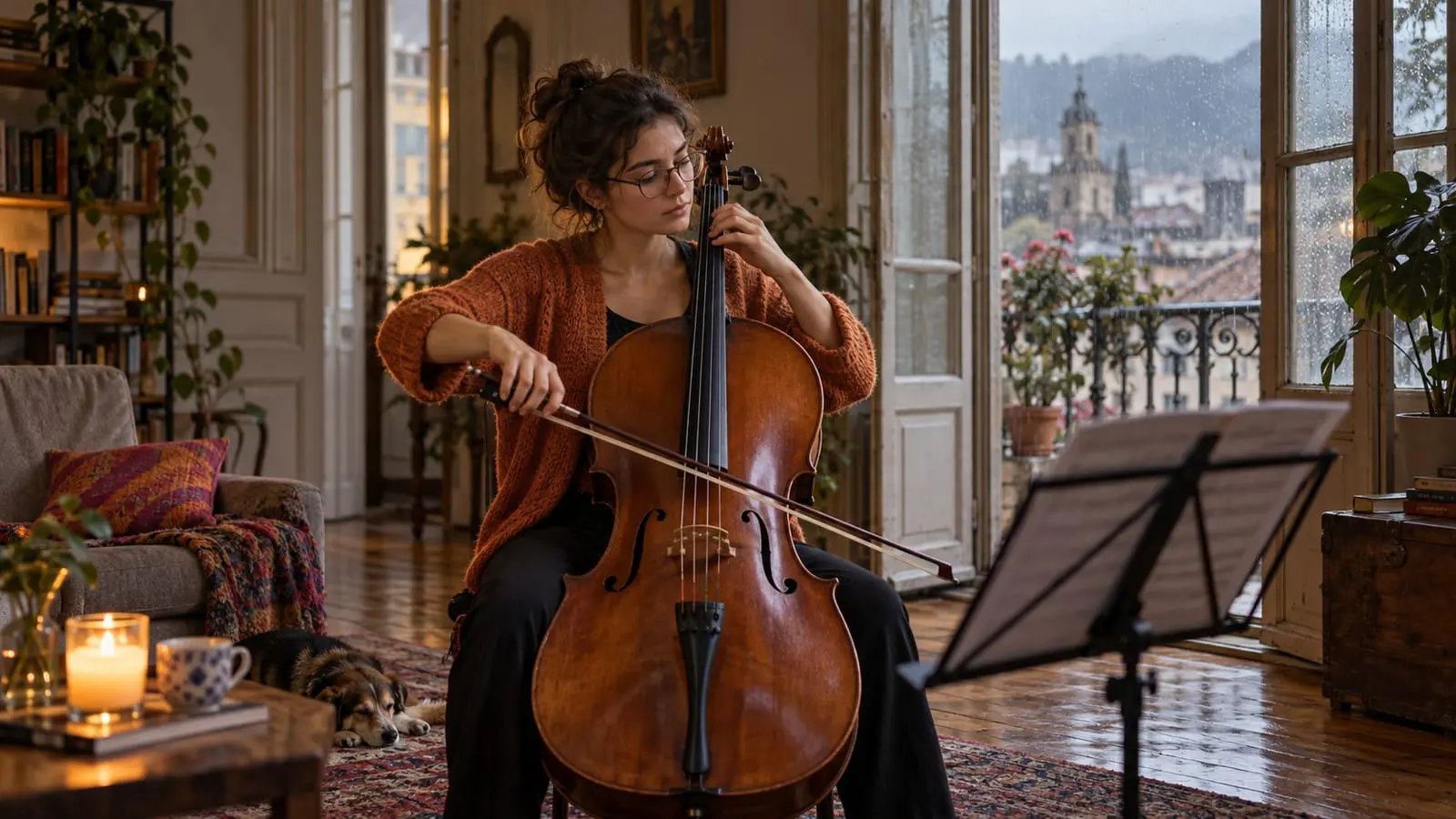
With a weekly lesson and 20 to 40 minutes of practice almost every day, most students play simple first-position melodies with a pleasant tone within 3 to 6 months. Learning extensions and the early neck positions takes 1 to 2 years, and reaching intermediate repertoire with vibrato and thumb position usually takes 3 to 5 years.
These are approximate timelines. On cello, your pace of progress depends most on the bow rather than the left hand: a relaxed right arm that knows how to use its weight changes everything else.
In short
- With regular practice, your first melodies in first position generally come within 3 to 6 months.
- Extensions and shifts to the early neck positions usually become secure between the first and second year.
- The cello has no frets: intonation develops through listening, and open-string resonance is an excellent guide.
- Solid basic skills and fluent reading in bass clef are usually enough to join a youth or amateur orchestra.
- The right chair, endpin adjustment and instrument size can save months: poor posture is one of the most common obstacles.
Cello milestones and approximate timelines
| Stage | What you achieve | Approximate time with regular practice |
|---|---|---|
| Posture and open strings | Sit correctly, hold the bow without tension and produce an even tone on all four open strings. | 2 to 6 weeks |
| First position | Simple melodies using the left hand, basic reading in bass clef and two-note slurs. | 3 to 6 months |
| Extensions and half position | Extend the hand backward or forward, play two-octave scales and begin fast string crossings. | 6 to 12 months |
| Neck positions | Shift to second, third and fourth positions; play late-beginner method pieces and attend your first orchestra rehearsals. | 1 to 2 years |
| Vibrato and thumb position | Controlled vibrato, neck positions, an introduction to thumb position and reading in tenor clef. | 2 to 4 years |
| Intermediate | Movements from Baroque suites, simple sonatas, and confident playing of orchestral and chamber repertoire. | Ages 3 to 5 |
A 6-year-old with a fractional-size cello progresses differently from a 40-year-old adult, and neither is “behind.” What matters is building a solid foundation at each stage before moving to the next: skipping posture work to get to songs quickly often sends you back to square one. As an outside reference, ABRSM estimates that preparing for a Grade 1 cello exam takes about 60 hours in total (lessons plus independent practice), and a Grade 8 exam about 320; these are averages that vary from person to person.
The bow: where much of the first year goes
Many beginners want to move quickly to the left hand, but the sound comes from the right arm. The cello needs the bow to rest on the string with the arm's weight, without squeezing with the fingers, and to travel parallel to the bridge at the right contact point.
- Mindful open-string practice: long, slow bow strokes, listening for an unbroken sound as you reach the tip.
- Contact point: closer to the bridge for a full sound, closer to the fingerboard for a soft one; the bow should not wander between the two.
- Flexible thumb: a stiff right thumb makes the sound rough and tires your hand quickly.
- String crossings: change your arm level rather than jerking your wrist around.
Filming yourself from the side reveals a crooked bow path or a raised shoulder, things you may not feel while playing.
Left hand: extensions, positions and thumb position
In first position, the four fingers of the left hand cover a smaller musical interval on the cello than on the violin, because the notes are farther apart on the fingerboard. That's why extensions come up very early: widening the space between the first and second fingers to reach certain notes. Learning them properly, without twisting your hand, is the main task of the first few months.
Next come position shifts. The hand travels along the neck guided by the arm and the ear, not the eyes. The first positions (half, second, third and fourth) are usually consolidated between the first and second years; thumb position, where the thumb rests on the strings to play the upper register, comes later and opens the door to intermediate repertoire.
Vibrato is another milestone. Trying it too early often creates tension; teachers introduce it once your hand is stable in the positions and your intonation is consistent.
Playing in tune without frets: how to train your ear
With no frets, every note depends on where you place your finger. At first, some teachers use fingerboard tapes as visual guides; these are temporary and gradually removed as your ear takes over.
- Tune before every practice session; the cello tuner shows you A, D, G and C.
- Use resonance: when you play an in-tune G, D, A or C, the open string of that name vibrates sympathetically, giving the cello more resonance.
- Play slow scales against a drone, such as an open string sounding while you play the melody on another string.
- Sing the note before playing it: if you can hear it in your mind, your finger finds it more easily.
When you can join an orchestra and what repertoire to expect
A youth, school or amateur orchestra usually expects fluent bass-clef reading, counting rests and first-position playing with some extensions. As a rough guide, you may be ready between your first and second year. Orchestral cello parts alternate between bass lines and melodies, developing both pulse and phrasing.
| Level | Repertoire examples |
|---|---|
| Beginner | Popular songs, simple minuets and first-position method pieces. |
| Late beginner | Arrangements of Colombian and Latin American music, gavottes and short Baroque dances. |
| Intermediate | Movements from Bach's suites for solo cello, Baroque sonatas and lyrical pieces such as Saint-Saëns's “El cisne.” |
What helps and hinders your progress on cello
What helps
- A correctly sized cello and a sturdy, armless chair at the right height.
- Keeping the instrument ready in a safe corner with its endpin stop: if getting it out takes five minutes, you practice less.
- Practicing almost every day in 20 to 40-minute sessions with a clear goal.
- Playing with others as soon as you have a foundation, even just duets with your teacher.
What slows progress
- An endpin that is too short or too long, forcing you to hunch over.
- Squeezing the bow to “get more sound.”
- Moving to higher positions without secure intonation in first position.
- For children, continuing with a cello they have outgrown; we explain how to check the fit in our guide to choosing your first cello.
In cello lessons, your teacher adjusts these factors from the first session, and weekly guidance prevents small bad habits from setting you back for months.
Frequently asked questions
Is cello harder than violin?
Neither is easier in every way. You play cello sitting down with the instrument supported, which feels more natural for many people; in return, it requires wider extensions and longer shifts. If you are choosing between them, read our violin or cello comparison.
Can I start playing cello as an adult?
Yes. Adults usually grasp reading and theory quickly, and the seated posture is comfortable at any age. What helps most is accepting that tone takes months to develop and avoiding comparisons with people who started as children.
Do I need to read music before starting?
No. You learn bass-clef reading alongside the instrument from the first lessons. Tenor clef and treble clef appear later for high passages.
Do fingerboard tapes slow down ear development?
Not if used briefly: they provide a visual reference while your hand learns the distances. The problem is relying on them for years. Ideally, your teacher removes them gradually as your intonation becomes more stable.
Sources
We checked the facts in this article against these sources on October 22, 2026.