
My child wants to quit their instrument: what should I do?
Wanting to quit an instrument is very common. Before deciding, it's worth understanding what's behind it and trying a few changes. Sometimes a break, or stopping, is fine too.
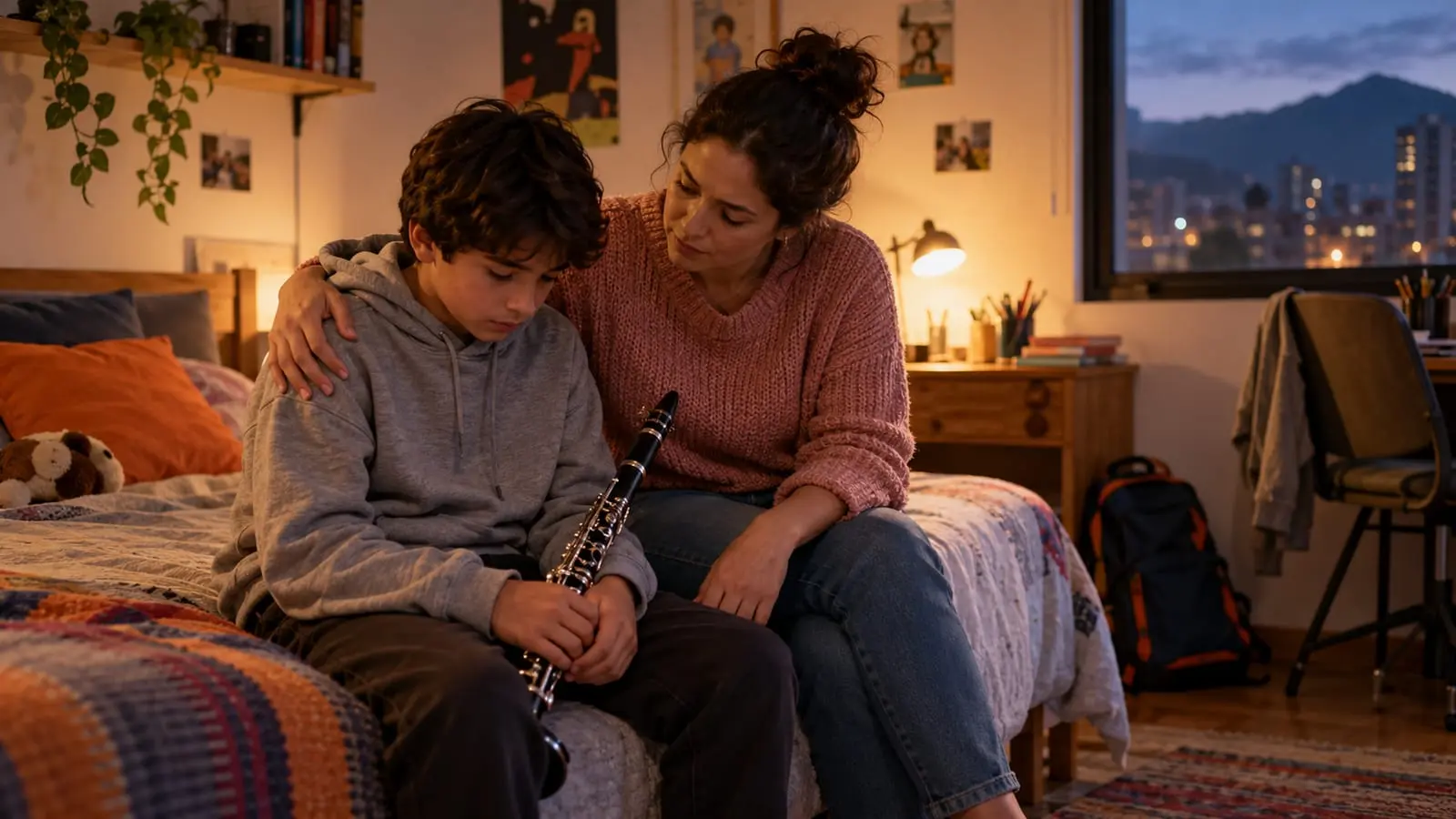
Don't decide in the heat of the moment. “I don't want to do this anymore” after a frustrating practice session isn't the same as weeks of lost interest. Before responding, find out what's behind it: a piece that's too difficult, repertoire they don't connect with, a teacher they don't click with, an instrument that wasn't the right fit or an overloaded schedule.
Often, one specific change solves the problem. Sometimes a break with a return date is the healthiest option. And sometimes stopping is the right decision. Here, we help you tell these situations apart.
In short
- Wanting to quit an instrument is very common, especially once the novelty of the first few months wears off and during adolescence.
- Before deciding, have a calm conversation to understand the real cause.
- Changing the repertoire, teacher, lesson format or even the instrument solves many cases.
- A break with a date to talk again is a valid option, rather than a failure.
- If the lack of interest continues after making changes, bringing things to a thoughtful close is also a learning experience.
First: don't decide in the heat of the moment
Almost every child learning an instrument says at some point that they want to quit. It often happens when the novelty of the first few months wears off, when the pieces become more demanding, or during the preteen and teen years, when interests and free time change. A study of young people ages 10 to 17 found that about half had stopped taking lessons or participating in other musical activities by age 17, especially between ages 15 and 17.
First, separate a passing moment from a pattern. Suggest a simple agreement: “Let's keep going until the end of the month (or the recital), and talk about it in the meantime.” Then find a calm moment away from the instrument to talk. Some helpful questions:
- What do you like least about lessons or practicing?
- Is there anything you do like, even just one song or part of a lesson?
- If you could play any song, which would you choose?
- Do you want to stop playing this instrument or stop making music altogether?
- How do you feel about your teacher?
Listen without defending the lessons or reminding your child how much they've cost. Right now, you're looking for information.
Common causes and what to try in each case
| What your child says | What may be happening | What to try |
|---|---|---|
| “It's too hard.” | They've hit a plateau, or the piece is beyond their current level. | Talk to the teacher about adjusting the difficulty, breaking things into smaller goals and returning to pieces your child enjoys. |
| “It's boring.” | The repertoire doesn't interest them, or lessons have become repetitive. | Include music they like, play with others and set a goal such as a video or recital. |
| “I don't like my teacher.” | They don't connect, or the teacher's approach is too rigid or impatient for them. | Talk to the teacher or try someone whose approach fits your child's personality better. |
| “I don't have time.” | Their schedule is overloaded with school, homework and other activities. | Review the whole week, change the lesson time or cut back on another activity. |
| “I'm embarrassed to play.” | Fear of making mistakes in front of others or of performing. | Start with small performances for family and gradually build up. |
| “I want to play drums.” | They've discovered another instrument that interests them more. | Consider switching: the skills they've learned carry over. |
If your child also mentions pain in their hands, back or neck, don't ignore it: posture or instrument size may be an issue, and you need to review it with the teacher.
Make a change before giving it all up
The repertoire
This is the simplest change and often the most effective. A song your child chooses can rekindle their enthusiasm within a few weeks. On piano, it might be music from their favorite film; on guitar, a song everyone is listening to; on violin, a video game theme or a bambuco they heard at school.
The teacher
Not every teacher connects with every child. Switching isn't disloyal: it's about finding the right person. Before deciding, a trial lesson lets you see how another teacher relates to your child, and the teacher directory lets you browse options by instrument.
The lesson format
Sometimes the problem is logistics rather than music: the lesson is at a bad time, the journey is tiring or learning through a screen isn't working. Switching from online to in-home lessons (or vice versa), or from one-to-one lessons to a small group with a friend or sibling, can change everything.
The instrument
If their interest in music is still alive but the instrument doesn't appeal to them, switching makes sense. Their ear-training, reading and rhythm skills won't disappear. This guide to choosing an instrument for your child helps you think through the next step.
A break is an option too
Between carrying on as before and stopping altogether, there's a middle ground: a break with a date to revisit things. For example, pause during exams or the midyear school break, then agree on a specific date to talk again.
- Keep the instrument visible and available, with no obligation to play it.
- Keep music in your lives: concerts, shared playlists and playing for fun.
- Agree with the teacher on how to resume, so returning doesn't mean starting from scratch.
Some children return with more enthusiasm after a break, precisely because music has stopped feeling like an obligation. And if they do not return, the decision can be made more calmly and with more information.
When stopping really is the better choice
There's a limit to how much you should insist. These signs suggest that stopping may be the right decision:
- The lack of interest lasts for months, even after changing the repertoire, teacher or lesson format.
- Lessons cause ongoing distress: crying before every session, discomfort or fear.
- They've discovered another activity they enthusiastically commit to.
- You realize that wanting them to continue is more your wish than theirs.
If you decide to stop, bring things to a thoughtful close: finish the current stage (the month, the recital or one last piece), celebrate what your child has learned and leave the door open. Many adults return to music years later, and that's much easier when the memories are good.
What to avoid saying or doing
- Reminding your child how much it has cost: “After everything we've invested…” only adds guilt.
- Comparing them with siblings, cousins or classmates who are still playing.
- Threatening punishment if they stop, or using practice as punishment.
- Deciding without consulting the teacher or listening to your child.
- Letting them quit at the first setback every time. Learning to work through a difficult stage is part of the process too.
The balance lies between not giving up at the first “I don't want to” and not forcing your child to continue something that no longer benefits them. If daily practice is the sticking point, see these ideas for motivating your child to practice.
Frequently asked questions
Is it normal for a child to want to stop playing an instrument?
Yes, it's very common. It happens when the novelty wears off, when pieces become more demanding or when their interests change. It doesn't mean music isn't for them; it means it's worth finding out what's going on.
Should I force my child to continue?
Forcing a child rarely works. What can help is asking them to honor a commitment for a set period while you work out the cause together and try a change. Then you can decide with more information.
How much time should I give it before deciding?
A few weeks, or until the next milestone (the end of the month, a recital or the end of the semester), is usually enough to try a change and see how your child responds. What matters is that the time frame is clear to both of you.
Does switching instruments mean starting from scratch?
No. Rhythm, ear-training and reading skills, along with the habit of practicing, carry over to the new instrument. A child switching from piano to drums or from violin to guitar usually progresses faster than someone who has never played.
Sources
We checked the facts in this article against these sources on October 22, 2026.