
Learning violin as an adult: myths, patience and orchestras
The violin has a reputation for being impossible if you didn't start as a child. It isn't. Here's what's myth, what takes patience and how to get to play with others in an amateur orchestra.
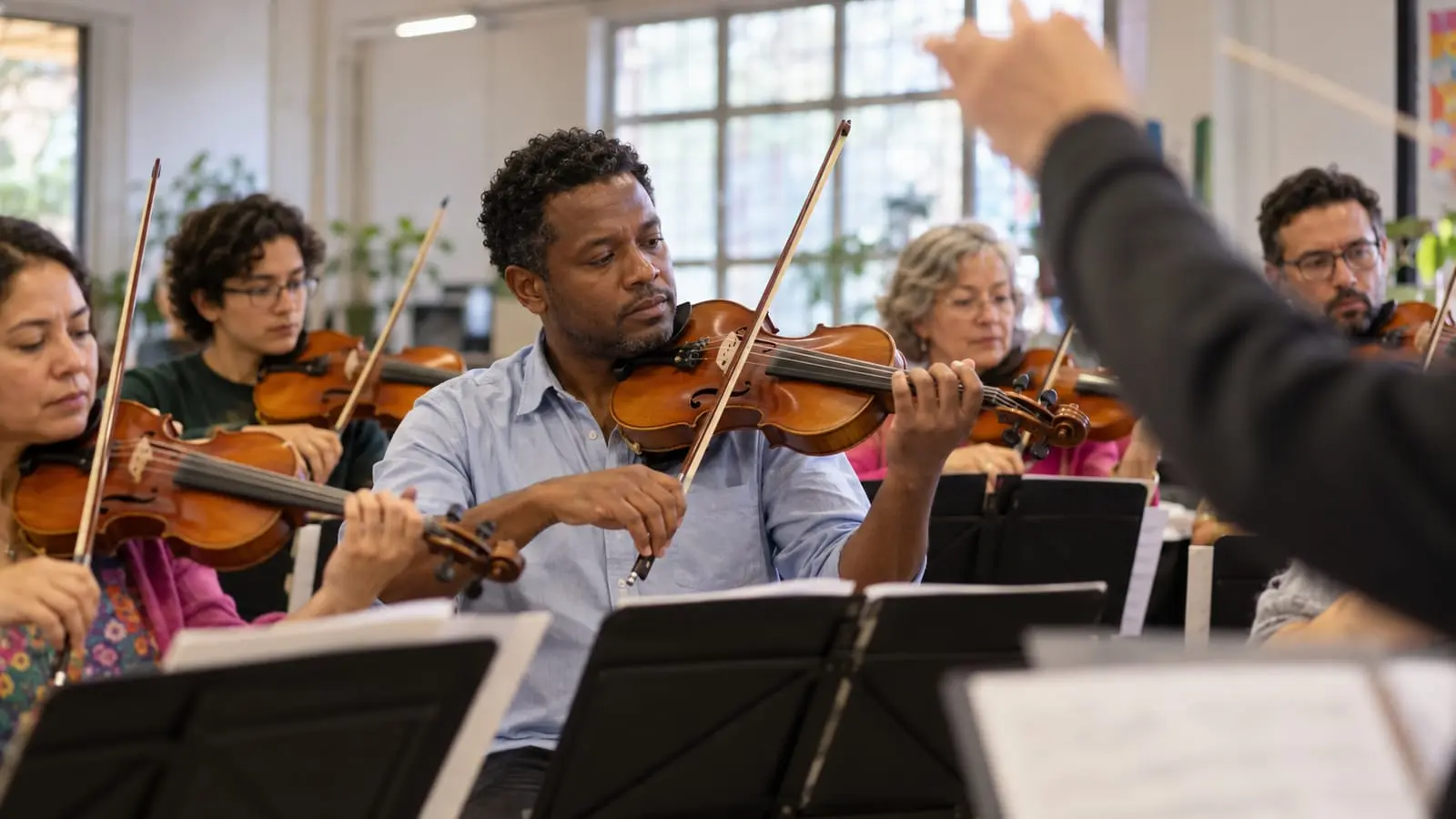
You can learn violin as an adult. What you cannot skip is patience: violin takes longer than other instruments to sound good because tone depends on your bowing and intonation depends on your ear. With good guidance, practice most days, and healthy expectations, you can enjoy it and even play in an amateur orchestra.
In this guide, we separate myths from reality, explain how to handle those first few months of scratchy sound, and outline what you need to play with others.
In short
- Starting as an adult does not prevent you from sounding good: it calls for patience and solid technique from the beginning.
- A scratchy sound in the first few months is normal; long bow strokes, open strings, and careful listening help improve it.
- A shoulder rest and chin rest fitted to your body prevent neck and shoulder tension.
- A practice mute lets you practice in an apartment without disturbing others.
- Amateur orchestras and ensembles exist; to join, you need to read music, count, and play confidently in first position.
Myths about violin and age
| Myth | Reality |
|---|---|
| “If you did not start as a child, you will never sound good.” | Children have an advantage in time and flexibility, but a consistent adult learner can develop a beautiful sound and enjoy a wide repertoire. |
| “You need perfect pitch.” | Most musicians do not have it. You need relative pitch, which you can develop through practice. |
| “You have to practice for hours every day.” | Half an hour of focused practice most days allows real progress. |
| “An adult's fingers cannot respond anymore.” | They become more agile with gradually more challenging exercises. The key is to avoid forcing movements and building tension. |
| “Violin is only for classical music.” | It is played in tango, Celtic music, jazz, pop, film scores, and Latin American music. |
| “You need an extremely expensive violin.” | A student violin properly set up by a luthier is enough to get started. |
Your sound in the first few months: putting patience to work
On piano, a note sounds good if you press the right key. On violin, tone depends on three things at once: bow weight, bow speed, and the point where the bow meets the string between the bridge and fingerboard. If one goes wrong, you get that familiar squeak. That is why the first few months sound scratchy, even when you are doing almost everything right.
The good news is that you can put that patience to good use:
- Long bow strokes on open strings: a few minutes a day, aiming for an even sound from tip to frog.
- Mirror: check that your bow moves parallel to the bridge.
- Weekly recordings: your ear improves before your hands, and recordings reveal progress you miss in the moment.
- A tuner as support, not a crutch: use it to check, but try listening first.
- Fingerboard tapes: many teachers use them initially to guide finger placement and remove them once your ear takes over.
To tune your strings at the start of practice, use the online violin tuner. Bow hold deserves attention of its own, so read how to hold a violin bow.
A violin fitted to your body
Adults bring years of posture habits, sometimes with neck or back discomfort from working at a computer. You hold the violin between your jaw and shoulder, so the fit matters:
- Shoulder rest: its height depends on the length of your neck. If you need to lower your head or raise your shoulder to hold the violin, it is not fitted correctly.
- Chin rest: there are different designs; the right one lets you rest your chin without squeezing.
- Size: most adults use a 4/4 violin; some people with shorter arms or smaller hands feel more comfortable with a 7/8.
- Relaxed left thumb: do not grip the neck as though the violin were about to fall.
Take short breaks regularly and gently shake out your arms and shoulders. If you already have a neck or shoulder injury, consult your doctor before starting and tell your teacher. Some adults prefer viola for comfort or personal taste; we explain the differences in violin or viola.
Practicing in an apartment without driving your neighbors crazy
A violin carries, and in an apartment building it can become a topic at the residents' meeting. Here are options for practicing peacefully:
- Practice mute: made of rubber or metal, it sits on the bridge and reduces volume considerably. Use it for scales and exercises rather than everything, because it changes how the instrument responds.
- Reasonable hours: agree with your neighbors on times to practice without a mute.
- Electric or silent violin: lets you practice with headphones, which is useful at night, although the bow feels different on the strings and it is not completely silent: you can still hear the bow rubbing against the strings.
- Curtains and a rug: absorb some sound and improve what you hear in the room.
Orchestras and ensembles for adult amateurs
Playing in a group is one of violin's great rewards. In Colombia, amateur orchestras can be found at universities, cultural outreach programs, churches, and independent collectives, alongside chamber groups formed among friends. Some hold auditions; others welcome anyone who can read music and play confidently.
What you need to join
- Read sheet music in treble clef with reasonable fluency.
- Play confidently in first position and tune your instrument without help.
- Count measures of rest without losing your place.
- Keep a steady tempo, a skill you can practice with a metronome.
Ask your teacher to prepare you with simple orchestral excerpts and sight-reading exercises. Many adults join the second violin section, where the part is often lower in pitch and more approachable. Playing with others often greatly improves intonation and your sense of rhythm.
A realistic plan for the first year
- Stage 1: posture, bow hold, open strings, and an even sound.
- Stage 2: initial left-hand finger placement, simple scales, and short songs.
- Stage 3: reading music in first position, smoother string crossings, and your first pieces with accompaniment.
- Stage 4: beginner repertoire, work on dynamics, and perhaps your first ensemble.
Everyone moves through these stages at their own pace; for an idea of timelines, read how long it takes to learn violin. One thing holds true throughout: a teacher who corrects your posture from day one saves months of unlearning. Violin lessons can be in-home or online, depending on what suits you.
Frequently asked questions
Is it too late to learn violin at 30, 40, or 50?
No. Starting as an adult takes more patience with tone than other instruments, but with consistent practice you can play beautiful repertoire and even join an amateur group.
What violin size does an adult need?
Almost always a 4/4, the full size. If you have shorter arms or smaller hands, try a 7/8 as well. Your teacher can measure your outstretched arm to confirm the fit.
Can you learn violin in online lessons?
Yes, especially once you have the basics. In the first lessons, when posture and bow hold are critical, the camera needs to show your full side profile and the bow. Some people start with in-home lessons and later switch to online.
How much should I practice violin each day as an adult?
20 to 40 minutes most days is a good foundation. Divide your time between tone work on open strings, left-hand technique, and repertoire, with breaks to rest your neck and shoulders.
Sources
We checked the facts in this article against these sources on October 22, 2026.