
How long does it take to learn the flute?
A clean sound in the low and middle registers comes within a few months; all three octaves and intermediate repertoire take a few years. We walk you through each stage.
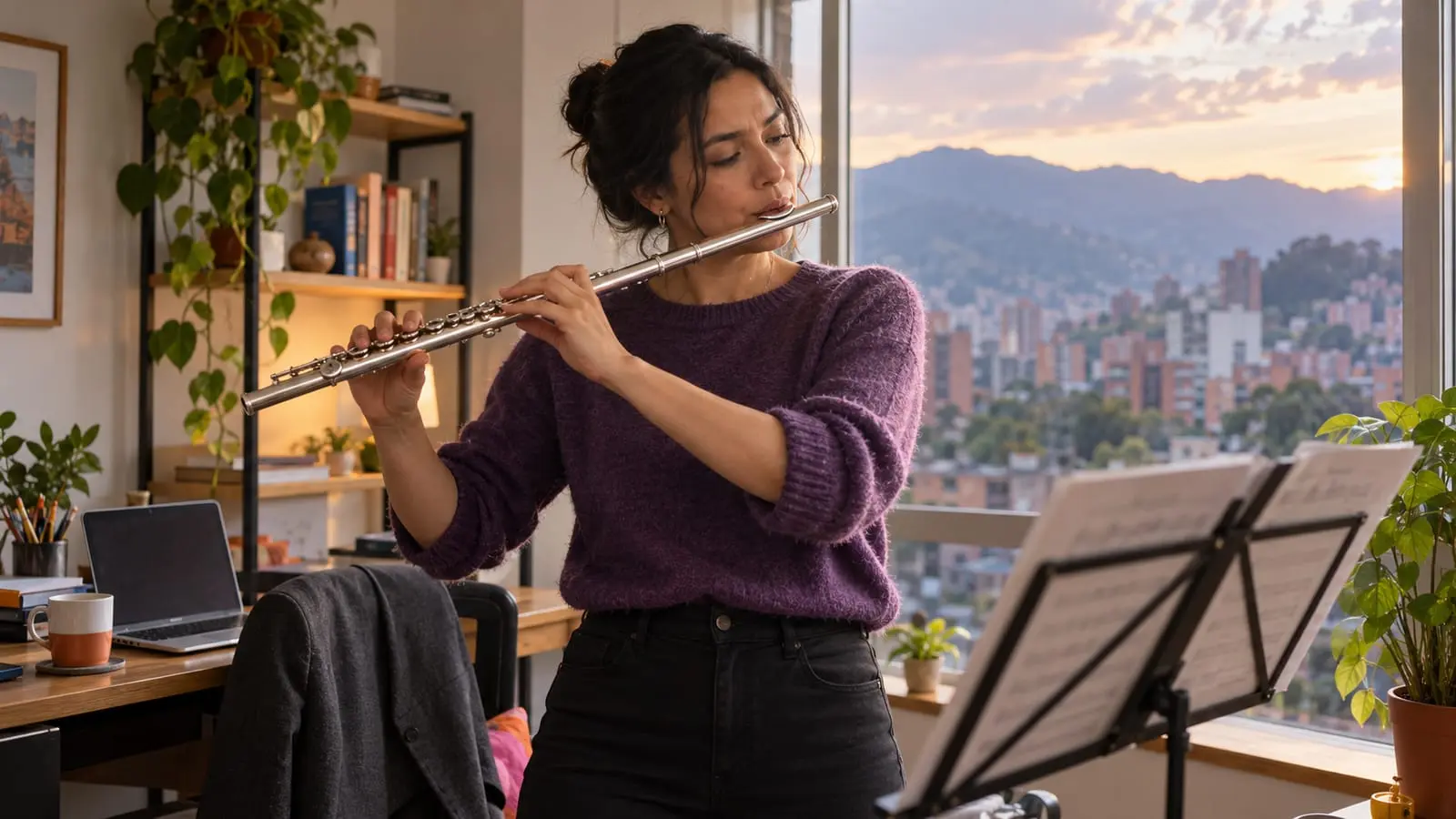
With a weekly lesson and around 20 to 30 minutes of practice almost every day, most students develop a clear sound in the low and middle registers and play simple melodies within 3 to 6 months. Mastering all three octaves with good tone and playing intermediate repertoire usually takes 2 to 4 years.
These ranges are guides, not promises: everyone progresses differently depending on their consistency, age, and flute's condition. What everyone shares is that, on this instrument, tone comes first: almost the entire first year revolves around embouchure and air.
In short
- With regular practice, a steady sound in the low and middle registers typically develops within 3 to 6 months.
- The third octave and intermediate repertoire usually require 2 to 4 years of consistent study.
- The flute has no reed or mouthpiece to hold in your mouth: its sound depends on your lip shape and air direction, which you develop through long tones.
- High notes need faster air and a smaller opening, rather than harder blowing.
- A flute with poorly sealing pads can prevent low notes from sounding even when you're doing everything right.
Stages of learning flute and approximate timelines
| Stage | What you achieve | Approximate time with regular practice |
|---|---|---|
| First sound | Producing a sound on the headjoint alone and then on the assembled flute, without losing half your air. | 1 to 4 weeks |
| Low and middle registers | First-octave notes and the start of the second octave, simple melodies, and planned breaths. | 2 to 6 months |
| A steady second octave | Basic scales, tonguing, short method-book pieces, and fluent treble-clef reading. | 6 to 12 months |
| Third octave | High notes without strain, dynamics from piano to forte, and your first simple Baroque sonatas. | 1 to 2 years |
| Intermediate level | A three-octave chromatic scale, double tonguing, vibrato, and playing in a band or orchestra. | 2 to 4 years |
| Advanced | Concertos from the repertoire, demanding chamber music, and audition preparation. | 5 years or more of serious study |
The ranges are deliberately broad. An adult who practices for 30 minutes six days a week can progress much faster than someone who plays for three hours straight only on Sundays, even though the total time is the same. And a 9-year-old may take longer to control their air but make up for it with consistency. As an external benchmark, ABRSM estimates that preparing for a Grade 1 exam takes an average candidate about 60 total hours (with a teacher and independently), and a Grade 8 exam about 320; according to ABRSM itself, these averages vary with each person’s experience.
The first few months: everything revolves around tone
Unlike the clarinet or saxophone, the flute has no reed or mouthpiece to help you: you blow across the edge of the embouchure hole, as when making a bottle sound. Your lip shape, the opening the air passes through, and the angle at which it reaches the edge determine whether the sound is clear, airy, or absent.
That's why many teachers start with the headjoint alone: without the weight of the body and keys, it's easier to find the right position. You then assemble the flute and work on long tones in the middle register, which usually responds first.
- Practice long tones in front of a mirror: you'll see whether your lip opening is centered or the air is going off to one side.
- It's normal to feel slightly dizzy at first because you're releasing much more air than usual. Stop, breathe calmly, and resume in a minute.
- Use the tuner to check whether the pitch stays steady or drops as you run out of air.
- Keep the assembled flute on its stand during practice, rather than resting it on the keys.
If you can't get that first note yet, how to get a sound out of the flute takes you step by step with the headjoint alone, plus exercises to steady your tone.
Registers and fingering: where most learners get stuck
The low register
The lowest notes, such as C and C sharp, need relaxed lips, slow air, and a flute that seals perfectly. It's normal if they don't sound at first. If they still won't sound after several months, ask your teacher to check the flute: a leaking pad can make an instrument problem seem like yours.
The high register
The classic mistake is blowing harder to go higher. What works is speeding up the air and making the opening smaller, directing it slightly farther forward. Harmonic exercises, where you change notes without moving your fingers, train exactly that.
Fingering
The first and second octaves share almost all the same fingerings, so you learn quickly at first. Some flute-specific details are worth making automatic early on: keeping your right pinky on the E-flat key for most notes and learning alternate fingerings for certain notes, such as B-flat. In the third octave, fingerings change and become irregular, so developing finger memory takes longer.
What helps and what slows your progress
| Factor | Speeds up progress | Slows progress |
|---|---|---|
| Frequency | Short sessions almost every day. | Just one long session a week. |
| Sound | Five minutes of long tones at the start of each practice session. | Playing only songs without working on tone. |
| Instrument | A checked-over flute that seals properly. | Bent keys or leaking pads. |
| Posture | Relaxed shoulders and a flute balanced on three support points. | Pressing too hard with your right thumb or raising your shoulders. |
| Guidance | A teacher who corrects your embouchure each week. | Learning alone and ingraining habits that are hard to spot. |
Your embouchure is almost invisible to you as you play. A tiny change in angle or opening can transform your sound, which is why weekly feedback saves months. Our routine for practicing music at home can help you organize your home sessions.
Children, adults, and learners coming from another instrument
Children commonly start around ages 8 or 9. At younger ages, their arms may not be long enough to reach the playing position, and a curved headjoint, which shortens the instrument, can be a good solution; learn more in our guide to choosing your first flute. Children’s breath control develops over time, so patience matters more than speed.
Adults often progress quickly in reading and understanding, but embouchure takes time at any age. If you come from the recorder, you'll already have a head start in reading and breath control; only some fingerings are similar, and you need to build your sound anew.
Repertoire and ensembles: motivating goals
Setting musical goals, alongside technical ones, makes your time feel better spent. These are common benchmarks for each level:
- First year: popular melodies, Christmas carols, simple arrangements of pasillos, and songs you like, always in a comfortable register.
- Second and third years: short French pieces, minuets and simple Baroque sonatas, and your first experience in a band, youth orchestra, or chamber group.
- Intermediate level onward: complete sonatas, Andean and Latin American music in more demanding arrangements, and audition repertoire if you're interested in studying music.
Playing with others is one of the best ways to speed up progress: it makes you tune, count, and breathe at the right time. Our flute lessons page shows what you work on at each stage, and the teacher directory lets you find someone who teaches this instrument.
Frequently asked questions
Is flute harder than recorder?
At first, yes. A recorder's windway directs the air for you; on a flute, you form that channel with your lips, so producing your first steady sound takes longer. In return, the flute gives you much more control over tone color and dynamics.
Can I learn flute just from videos?
You can learn fingerings and repertoire, but embouchure is hard to correct without someone watching and listening to you. Many self-taught students arrive at lessons with an airy sound or lip tension that takes weeks to undo.
Why do I get dizzy when I play flute?
At first, you release a lot of air and breathe faster than usual. This often happens in the first few weeks and decreases as you learn to manage your air. Take short breaks and don't strain; if the discomfort persists, consult a healthcare professional.
How much should I practice each day as a beginner?
Between 15 and 30 minutes almost every day is a realistic starting point. Your lips tire quickly at first, so two short sessions are more productive than one long session that leaves you blowing with tension.
Sources
We checked the facts in this article against these sources on October 22, 2026.