
How do you clean a plastic or wooden recorder?
A plastic recorder can be washed in warm water; a wooden one should never get wet. How to clean each kind, protect the windway and labium, and what to do if it sounds airy.
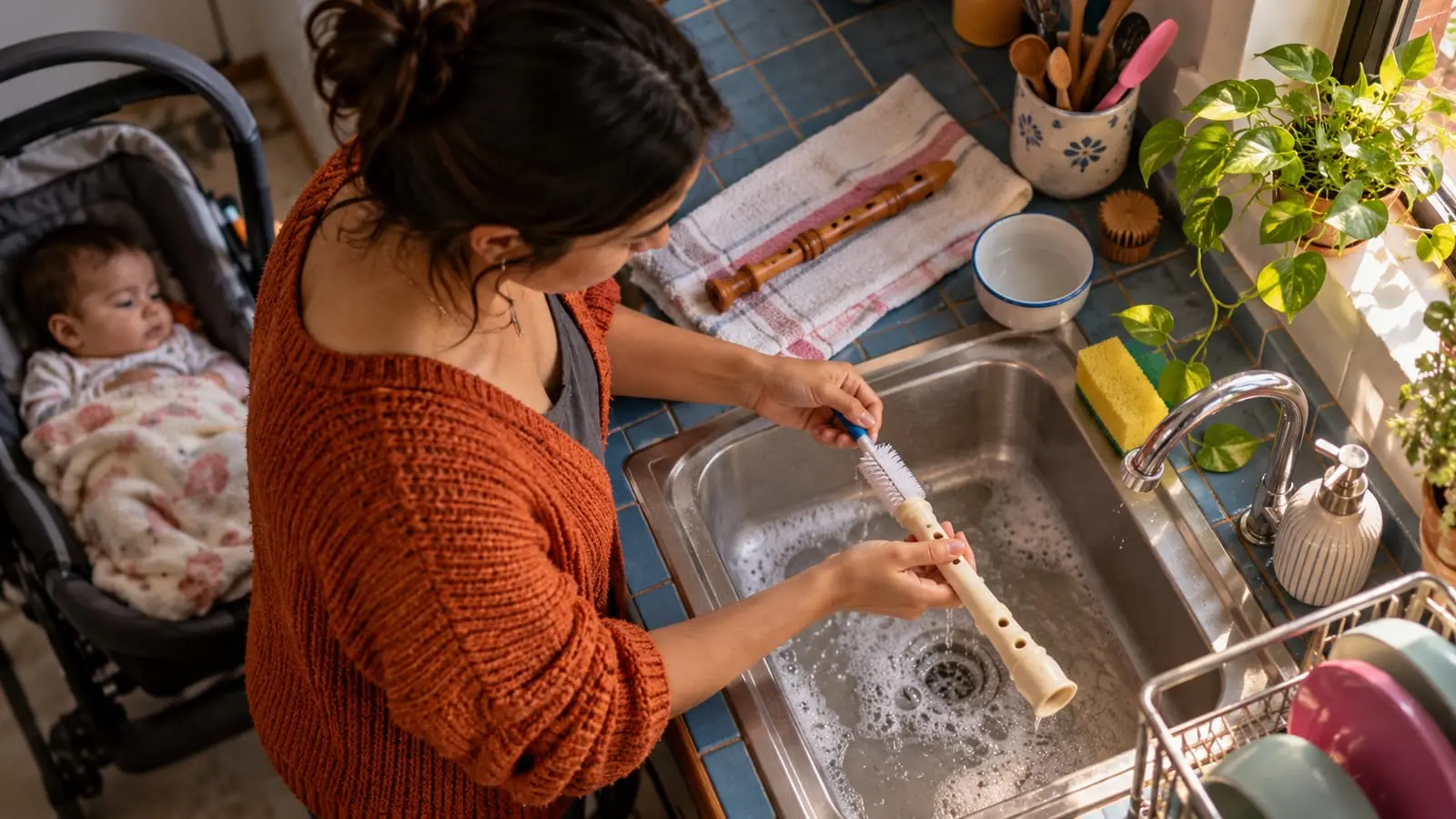
You can wash a plastic recorder: take it apart, wash it with lukewarm (not hot) water and a little mild soap, rinse, shake out the water, and let it dry disassembled. Never immerse a wooden recorder: dry the inside with a cleaning rod and cloth after playing, and oil it occasionally without touching the block.
It’s a simple instrument, but the parts that produce the sound—the headjoint’s windway and labium—are precisely shaped. That’s why many "broken recorders" have actually been bitten, washed in boiling water, or scraped inside.
In short
- Plastic: wash with lukewarm water and mild soap once a week if used daily; never use boiling water or a dishwasher.
- Wood: never immerse it; dry the inside with a rod and cloth, and oil as directed by the manufacturer.
- Don’t put anything hard into the windway or touch the labium’s edge: that’s where the sound is produced.
- If it sounds airy, condensation is usually the cause: cover the window with a finger and blow firmly, or warm the headjoint before playing.
- At school, each child should have a labeled recorder; if sharing is necessary, wash the headjoint between students.
Plastic or wooden recorder: very different care routines
| Aspect | Plastic | Wood |
|---|---|---|
| Washing | Yes, with lukewarm water and mild soap | Never immerse it; dry the inside and wipe the outside with a cloth |
| After playing | Shake out the water and use a rod with a cloth | Always dry the inside of each section |
| Oil | None needed | Yes, inside the bore, occasionally and without touching the block |
| Tight joints | A little cork grease | The product specified by the manufacturer |
| Main risk | Heat deformation; bite damage | Cracks from temperature changes or playing too much when new |
Most recorders required by schools are plastic, and they’re the best choice for beginners: they sound good, withstand everyday use, and can be washed. If you’re choosing one, see how to choose a recorder.
How to wash a plastic recorder
- Take it apart by gently twisting the sections, rather than pulling them straight apart.
- Fill a container with lukewarm water that feels comfortable to your hand, and add a few drops of mild dish soap.
- Leave the sections in the water for a few minutes. You can clean inside the body and footjoint with a soft bottle brush or a rod and cloth.
- Don’t brush inside the headjoint’s windway: let water run through the windway and bore without inserting anything.
- Rinse thoroughly with clean water.
- Shake each part and let it dry disassembled on a clean towel in the shade.
- Reassemble only when completely dry.
For a recorder used almost daily, one wash a week is enough. Never use boiling water, a dishwasher, bleach, alcohol, or abrasive sponges: the plastic can deform or become cloudy, and the windway can lose its shape. Don’t leave it in the sun to dry faster, either.
How to care for a wooden recorder
- After playing, take it apart and pass a rod with a dry cloth through the body and footjoint. In the headjoint, dry the bore without touching the block or windway.
- Let it air out for a while before closing it in its case.
- When it’s new, play it for short periods each day during the first few weeks. The wood needs to adjust to moisture from your breath; playing for hours at a time from the start can cause cracks.
- Occasionally oil the bore with the oil recommended by the manufacturer, using very little and wiping away the excess. Never oil the windway or block: the block absorbs oil and swells.
- Store it away from windows, heaters, and sunlight.
If a crack appears, however small, stop playing it: take it to a wind instrument technician or instrument maker.
The windway, block, and labium: the delicate area
The recorder’s headjoint has a windway formed by a block (the internal plug), leading to a sharp edge called the labium beside the window. Sound is produced when air from the windway strikes that edge. A scratch, nick, or swollen block changes the sound permanently.
- Never insert toothpicks, paper clips, wire, or the rod’s tip into the windway.
- Don’t touch or clean the labium’s edge with your nails or objects.
- Don’t bite the mouthpiece: it deforms the windway entrance. If your child does this, it’s often a sign of tension worth discussing with their teacher.
- Don’t blow harder to make it "louder": the tone becomes unfocused and out of tune, and that isn’t the recorder’s fault.
If it sounds airy or stops sounding
It’s almost always condensation: water droplets inside the windway. Cover the window with a finger and blow firmly through the mouthpiece to push the water out. To prevent it, warm the headjoint between your hands or under your arm before playing, especially on cold Bogotá mornings or in an air-conditioned room. If the problem persists when the recorder is dry, there may be dirt in the windway or damage to the labium; washing usually solves it on a plastic recorder.
Hygiene when sharing recorders at school
The recorder is played with the mouth, so it’s best not to share it. Some guidelines for parents and teachers:
- Each child should have their own recorder, with their name on the bag and body, not the mouthpiece.
- A separate bag for each recorder: don’t store several together in one bag.
- If a school recorder must be shared, wash the headjoint with lukewarm water and soap between students and let it dry.
- Make weekly washing at home a regular habit, for example every Friday.
- If a child has a cold, they shouldn’t lend their recorder and should wash it at the end of the week.
Antibacterial gels and alcohol wipes can dry out the plastic and leave a taste; lukewarm water and mild soap are enough for everyday care. If your child is at the stage when school asks for a recorder, you may be interested in music lessons for children ages 6 to 8.
Common storage mistakes
- Leaving it damp in its bag inside a backpack all day.
- Putting it in a backpack without a bag, next to books that press against it: the joints and mouthpiece can crack.
- Leaving it in a car or beside a sunny window.
- Assembling and disassembling it by pulling straight, which eventually cracks the joint.
- Applying cooking oil or lots of petroleum jelly to tight joints instead of a little cork grease for wind instruments.
If your child is learning, their recorder teacher will teach instrument care as part of the lesson. At home, a short practice routine helps more than a long one; find ideas in how to practice music at home.
Frequently asked questions
Can you wash a recorder with hot water?
Lukewarm water, yes; hot or boiling water, no. Heat deforms the plastic and changes the windway’s shape, permanently changing the sound.
Why does my recorder sound airy?
Condensation in the windway is the most common cause. Cover the window with a finger and blow firmly. If it persists, wash it if it’s plastic, and check the labium for dents or nicks.
How often should you wash a recorder?
If it’s plastic and used almost daily, once a week; if several people share it, between uses. Don’t wash a wooden recorder: dry it after each use.
Does a wooden recorder sound better than a plastic one?
It sounds different—warmer to many listeners—but needs more care. For beginners and school use, a good plastic recorder sounds good, is durable, and can be washed.
Sources
We checked the facts in this article against these sources on October 22, 2026.