
Why learn the double bass? The foundation of the orchestra and of jazz
The double bass holds up the orchestra and makes jazz walk, and few people play it. What it gives you, where to play it and what challenges to expect.
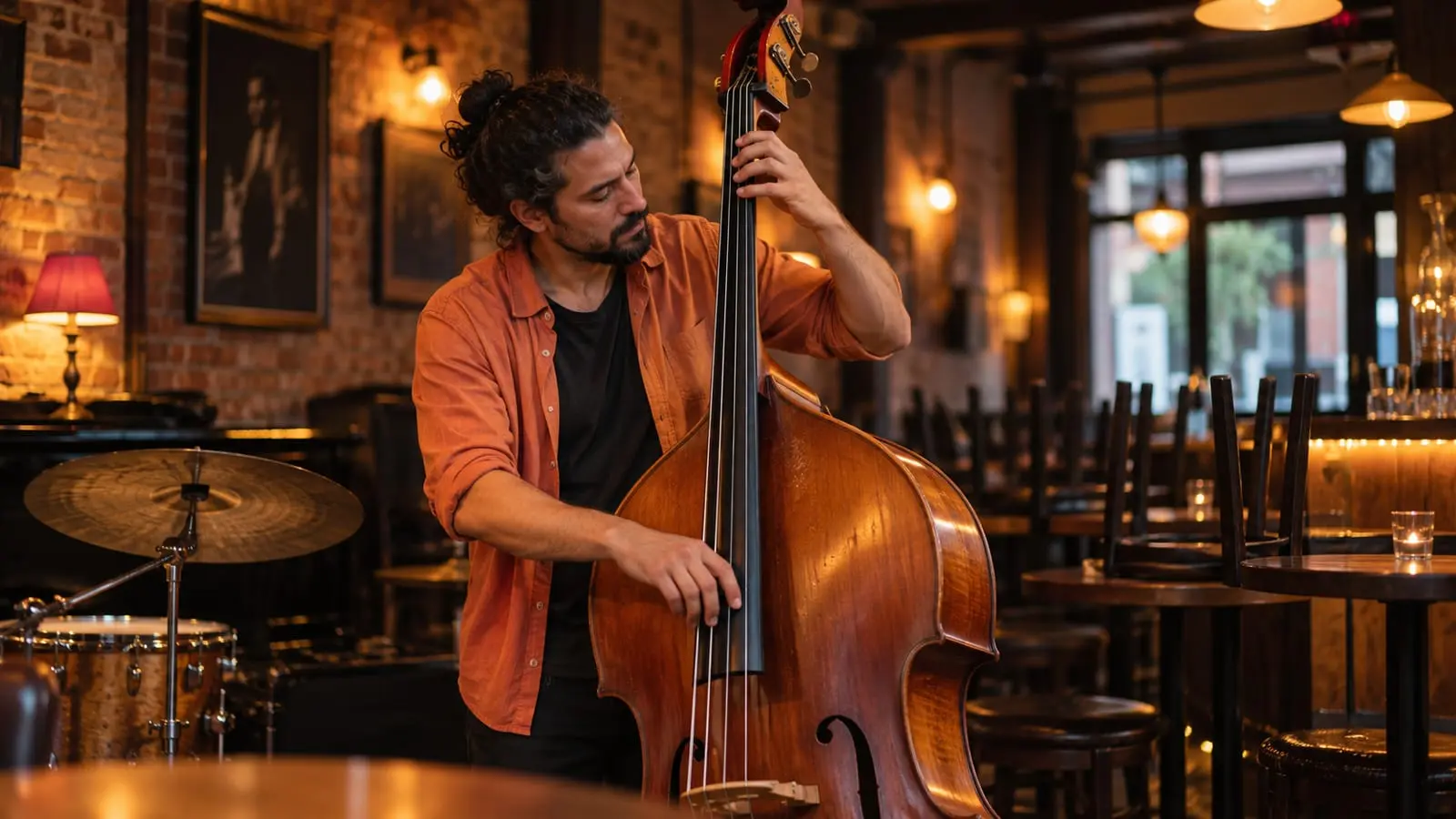
Because it is the foundation of almost any group it plays in: it supports orchestral harmony with the bow, makes jazz walk with pizzicato, and grounds bolero, tango, and salsa. And because double bassists are few, players with a steady pulse and good intonation can usually find a place in youth orchestras, symphonic bands, jazz combos, and chamber groups.
It is not an instrument for everyone: it is large, requires hand strength, and takes planning to transport. Here we explain what it offers, the skills it develops, where it is played, how it differs from electric bass, and what challenges to expect.
In short
- Double bass is the lowest voice in the bowed string family and the harmonic and rhythmic foundation of orchestral music and jazz.
- It is played with a bow and pizzicato, making it useful for classical music as well as jazz, bolero, tango, and salsa.
- Double bassists are usually scarce, which is why youth orchestras, symphonic bands, and jazz combos seek them out.
- Like electric bass, it develops pulse, listening to the whole group, and applied harmony, but without frets and with a bow.
- Its challenges are physical and logistical: size, transport, hand strength, and intonation without frets.
The group's foundation
Double bass sounds an octave lower than written, and that depth supports everything else. In the orchestra, for a long time, its main role was to double the cellos an octave below, adding weight to the bass line; over time, composers gave it greater independence, its own passages, and even solos.
Its role changes in jazz: pizzicato marks the pulse and moves through the chords one note at a time, in what is known as walking bass. If the bassist speeds up, the whole band speeds up; if the line walks steadily, the pianist and drummer feel free to take risks.
In both worlds, the same thing happens: nobody applauds the double bass first, but everyone notices when it is missing.
Skills you develop by playing double bass
- Pulse and timing. Your line is the group's rhythmic reference. You learn to play right on time and hold it steady even when others hesitate.
- Ensemble listening. The bassist listens to everyone: to the melody to avoid covering it, to the harmony to support it, and to the drummer or conductor to stay together.
- Intonation without frets. You place each note with your left hand and check it by ear, across large distances. It is constant ear training.
- Two techniques in one instrument. The bow gives you sustained sound and control of legato; pizzicato gives you attack, resonance, and groove.
- Practical harmony. To play walking bass in jazz or build a tumbao in salsa, you need to know the notes in each chord and how to connect them.
As your hand learns the distances, you can check intonation with the online double bass tuner; over time, your ear takes over.
Where double bass is played
| Format | What the double bass does | Main technique |
|---|---|---|
| Symphony or youth orchestra | Harmonic foundation, passages with the cellos, and occasional solos. | Bow, with some pizzicato. |
| Symphonic band | Many bands include one or two double basses to fill out the low register alongside the tuba. | Bow and pizzicato. |
| Orchestra and chamber groups | A single low voice that needs to sound clear and in tune. | Bow. |
| Jazz | Walking bass, solos, and improvisation. | Pizzicato. |
| Bolero, tango, and Latin music | Rhythmic and harmonic bass; in salsa, the tumbao. | Pizzicato, with bowing and percussive effects in tango. |
| Andean music and fusion | Some estudiantinas and contemporary Colombian music groups use it to extend the low register. | Pizzicato and bow. |
Baby bass is also common in salsa: an electric upright bass played standing up like a double bass. Anyone who has mastered tumbao on one soon adapts to the other.
Few double bassists, many opportunities
Youth orchestras, symphonic bands, and jazz combos often lack double bassists. The reasons are practical: the instrument is large, does not fit in every car or home, and few children choose it when starting out. That leaves an opening for anyone willing to try.
In practice, a double bassist with solid skills usually faces less competition for a place than players of more popular instruments, and their role in the group is hard to replace. Also, bowing and pizzicato let them move between orchestral music, jazz, and popular music.
Double bass or electric bass: how they differ
They share tuning (E, A, D, G) and the role of grounding the group, but the playing experience is very different:
| Aspect | Double bass | Electric bass |
|---|---|---|
| Fingerboard | Fretless: you control intonation with your ear and hand. | Fretted (fretless models also exist). |
| Bow | Yes, as well as pizzicato. | No; played with fingers, a pick, or slap. |
| Posture | Standing or on a high stool, holding the instrument close. | Seated or standing, with a strap. |
| Typical genres | Orchestral music, chamber music, jazz, bolero, and tango. | Rock, pop, funk, salsa, vallenato, and urban music. |
| Sound | Acoustic, rounded, and woody; amplified live with a microphone or pickup. | Needs an amplifier; the equipment shapes the sound. |
| Transport | Complicated: requires a car or a roomy taxi. | Easy: carried in a gig bag on your back. |
Many electric bassists take up double bass to play jazz, and some double bassists play both depending on the project. If electric bass appeals to you more, read why learn electric bass.
Who is double bass a good fit for?
- People who would rather be the group's dependable foundation than the soloist.
- People who love jazz and want the acoustic bass sound they hear on recordings.
- Electric bassists looking to broaden their musical language, and cellists seeking a different role.
- Patient people who enjoy developing intonation and sound gradually.
Height helps, but it is not decisive: smaller double basses exist for children and teenagers, and the teacher adjusts instrument height and posture to each person.
The real challenges of playing double bass
- Transport. In Bogotá, taking a double bass on public transit is almost impossible; you need a car, a roomy taxi, or careful planning. That is why many bassists leave their instrument at home and use the ensemble's when possible, and why in-home lessons are so convenient: the teacher comes to the instrument.
- Space at home. You need a spot where it can stand or lie safely, away from sunny windows and dampness.
- Strength and stamina. The strings are thick and the distances long, so your hands tire at first; good technique and frequent breaks prevent tension.
- Intonation. Without frets and with large distances between notes, playing in tune is a long-term task. Recording yourself and playing against reference pitches help a lot.
- Climate and adjustments. Wood responds to changes in humidity and temperature, and the bridge or soundpost may need adjustment by a luthier. We explain what to check in how to care for a double bass.
The double bass lessons page gives suggested starting ages, instrument sizes, and what beginners work on.
Frequently asked questions
French or German bow: which is better?
Neither is better: they are two bow holds, each with its own tradition. The French hold is similar to a cello bow hold; the German hold, with the hand underneath, is more like holding a saw. Usually, you learn the one your teacher uses and explore the other later if you are interested.
Can you learn double bass without having played another instrument?
Yes. You do not need to play electric bass or cello first. Coming from either offers advantages, but posture, bowing, and intonation are taught from the ground up with any student.
Does double bass belong to the violin family?
It is played with a bow like the violin, viola, and cello, and sits with them in the orchestra. However, it retains features of the viola da gamba family, such as tuning in fourths and sloping shoulders, which explains its somewhat different shape.
What size double bass do I need?
Many adults use a 3/4, and smaller sizes are available for children and teens. The right size depends on your height and arm length; we explain this in how to choose a double bass to get started.
Sources
We checked the facts in this article against these sources on October 22, 2026.