
Music entrance exam at Universidad del Atlántico: what to expect and how to prepare
Universidad del Atlántico first selects applicants using Saber 11 results, then requires a score of at least 3 out of 5 on the program’s specific test. We explain what each program assesses.
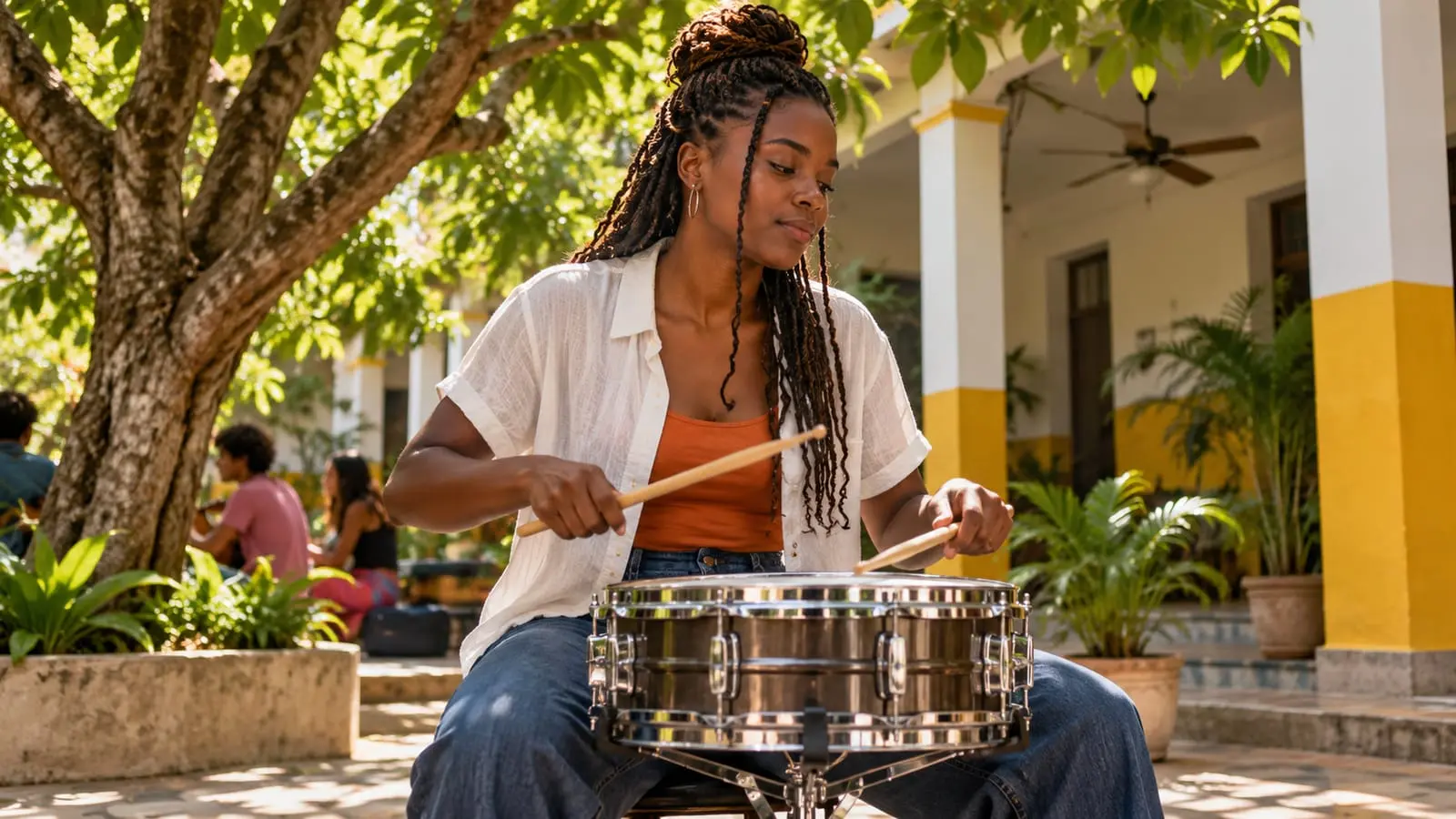
Universidad del Atlántico offers two undergraduate music programs in its Faculty of Fine Arts: the Licenciatura en Música in Barranquilla and the Música program in Puerto Colombia. In the most recent call we reviewed (2026-2), both used two stages: applicants were first shortlisted by their Saber 11 score, then took a specific in-person test requiring at least 3 out of 5 to pass.
The tests for the two programs are similar, but not identical: music education includes a cappella singing and a teaching interview, while music includes dictation, sight-singing, and a more demanding audition. Here we explain each one.
In short
- 2027-1 admissions cycle: applications from October 22 to November 9, 2026 (free through November 2), list of applicants invited to the tests on November 18, music-specific admission tests from November 24 to 28, and the list of admitted students on December 3.
- In 2026-2, Universidad del Atlántico invited eight times as many applicants as there were places to take the fine arts subject-specific test, ranked by overall Saber 11 score.
- To be admitted, applicants had to pass the subject-specific test with at least 3 out of 5; only then was Saber 11 taken into account.
- Music education assessed theory (multiple choice with audio), aptitude (a cappella singing and imitation), a teaching interview, and instrument.
- Music assessed a written theory exam with dictation, sight-singing and rhythmic reading, and an instrumental audition with instrument-specific requirements.
- Music applicants who do not pass can enter the four-semester preparatory program.
2027-1 admissions calendar
Universidad del Atlántico opened undergraduate applications for the first semester of 2027 on October 22, 2026. These are the dates from its 2027-1 application guide that apply to the music programs (Bellas Artes):
| Stage | Date | Notes |
|---|---|---|
| Online application (fee waiver) | From October 22 to November 2, until 11:59 p. m. | For applicants who meet the requirements of the fee-waiver resolution. |
| PIN payment (application fee) | From November 4 to 9 | For applicants who do not qualify for a fee waiver or whose applications were voided; payment is made at Banco Popular. |
| Application deadline with PIN | November 9, 11:59 p. m. | |
| Applicant list publication and corrections | November 10 | Check that your Saber 11 code is entered correctly. |
| List of applicants invited to the music-specific admission test | November 18 | The test date for each program is also published that day; the email address you register is the only communication channel. |
| Bellas Artes program-specific admission tests (including music) | From November 24 to 28 | The exact test dates for Música and Licenciatura en Música are published on November 18. |
| List of admitted students published | December 3 | Places reassigned on December 23. |
The guide warns that you should read the instructions for Música and Licenciatura en Música before applying, given the time needed to prepare for their tests. To arrive well prepared, our music pre-university prep includes mock exams and auditions; see the packages and prices.
The two music programs at Universidad del Atlántico
| Program | Qualification | Duration | Location | Details |
|---|---|---|---|---|
| Music Education | Licenciado(a) en Música | 10 semesters | Barranquilla | Daytime; admissions each semester |
| Music | Profesional en Música | 10 semesters | Puerto Colombia | Emphasis in composition, conducting, or instrumental performance, chosen in the fifth semester |
For music, the university recommends arriving with four to five years of instrumental study, because students are expected to reach the first level of its competency assessment in the first year. It is a candid warning: this is not a program for starting from scratch. If your goal is teaching, music education is the natural path; if you are unsure which suits you, read a music performance degree or a music education degree?.
How the process works: Saber 11 selection and a test you must pass
- Apply through the university's admissions process using your Saber 11 code.
- List of invited applicants: for fine arts programs, eight times as many applicants as there are places are invited, ranked from highest to lowest overall Saber 11 score. Only invited applicants take the test.
- In-person subject-specific test at Facultad de Bellas Artes, with your original identity document.
- List of admitted students: those who pass the test compete based on the sum of their subject-specific test and Saber 11 scores.
The key rule in the 2026-2 guide: admission to a fine arts program with a subject-specific test requires a minimum passing grade of 3 out of 5, and your Saber 11 score is considered only if you pass that test. We did not find published information on how much each score contributes to the final total.
| Stage | Published date |
|---|---|
| Deadline to complete the application | May 19, 2026 |
| Music education subject-specific test | Tuesday, June 2, 2026 |
| Music subject-specific test | Wednesday, June 3, 2026 |
| List of admitted students published | June 11, 2026 |
For 2026-II, the music education instructions listed 34 places. Since Saber 11 determines who is invited, a strong result on the state exam is also part of your preparation.
The music education degree test
| Component | What it assesses | How to prepare |
|---|---|---|
| Theory test | Multiple-choice questions on clefs, key signatures, types of meter, major and minor scales, intervals, and chords; includes audio for identifying instruments and ensemble types. | Review music fundamentals with timed exercises, and listen to music while identifying the instruments and ensemble types you hear. |
| Musical aptitude | Sing a piece of your choice a cappella (a children's, folk, religious, classical, or popular song), and perform melodic and rhythmic imitation exercises. | Choose a song you can sing in tune without support, and practice repeating rhythms and melodies after one hearing. |
| Teaching interview | Your vocation, critical and analytical thinking, ability to propose ideas, and motivation to study music and education. | Think about why you want to teach music and prepare examples from your experience. |
| Instrument | Playing level, pitch accuracy, technique, and interpretation on your main instrument. | Prepare a piece you can perform confidently, and rehearse playing it while nervous. |
You must bring your instrument, except for piano, percussion, and double bass, which the university provides. The options offered in 2026-2 were voice, piano, acoustic guitar, violin, viola, cello, double bass, transverse flute, clarinet, saxophone, trumpet, trombone, euphonium, tuba, electric bass, percussion, and accordion.
Be careful with old guides: the components change between admission cycles (in 2026-2, the music education degree included a teaching-focused interview), so always read the instructions for your term. To prepare for it, see the music admissions interview.
The music program test
In 2026-2, the music test had three parts, taken in rotation on the same day: a written theory exam held in a group (for which applicants were asked to bring headphones), an individual sight-singing and rhythmic reading exam, and an individual instrumental audition.
| Area | Topics |
|---|---|
| Aural skills | Simple and compound meters, simple and compound intervals, major and minor triads, rhythmic reading with simple and compound note values, rhythmic and melodic dictation, and identification of instrumental ensemble types. |
| Music theory | Meters, intervals, major and minor triads, key signatures, and major and minor scales. |
| Sight-singing | Rhythmic reading and independence exercises; singing in tune and melodic reading in C, G, and F major and minor. |
For the instrumental audition, the university publishes instrument-specific requirements on the music program's entrance exam page (some lists date from 2021 and 2022, so confirm they still apply). For example, the guitar list required three études of your choice (by Brouwer, Giuliani, Carcassi, or Sagreras), a piece of your choice, scales, and singing while accompanying yourself. You must bring your instrument here too, except for piano, percussion, and double bass.
If you do not pass the assessment, the university offers a four-semester preparatory program that prepares you for entry to the undergraduate degree. It can be a useful path if your instrumental level is not yet high enough.
How to prepare for the Universidad del Atlántico test
- Do not neglect Saber 11: it determines whether you are invited, so do not let music study push it aside.
- Timed theory practice: the theory test is multiple choice or written; practice answering quickly and confidently.
- Dictation and sight-singing for music: rhythmic and melodic dictation several times a week, and daily sight-singing in C, G, and F. We offer a method in how to prepare for musical dictation.
- Unaccompanied singing for music education: your a cappella song needs to stay in tune even when you are nervous.
- Instrument: prepare your repertoire months in advance; if the list is from 2021 or 2022, confirm it with the program by email.
For reading, follow rhythmic and melodic reading for the entrance exam; for ear training, use our ear training tool; and for a steady beat, use the metronome. The full schedule is in how to prepare for a music entrance exam.
If you live in Barranquilla or the surrounding region, you can prepare with teachers in online lessons at Gissi: music theory, sight-singing, dictation, and instrument, with a plan built around the test date. Find out how in music entrance exam preparation.
Frequently asked questions
Do all applicants take the music test at Universidad del Atlántico?
No. In the 2026-2 cycle, only invited applicants took the subject-specific test: eight times the number of places in each fine arts program, ranked by overall Saber 11 score.
What is the minimum grade on the subject-specific test?
The 2026-2 guide required a minimum passing grade of 3 out of 5 or its equivalent. If you do not reach it, your Saber 11 score is not considered and you are not admitted.
What should I sing in the music education aptitude test?
A piece of your choice a cappella, which may be a children's, folk, religious, classical, or popular song. Choose one you know well and that lets you demonstrate pitch accuracy without accompaniment.
Do I have to bring my instrument?
Yes, except for piano, percussion, and double bass, which the university provides according to the 2026-2 instructions.
What happens if I do not pass the music test?
The university states that applicants who do not pass the music program assessment can enter the four-semester preparatory program, which prepares them for the undergraduate degree.
Sources
We checked the facts in this article against these sources on October 23, 2026.
- Universidad del Atlántico: undergraduate applications for the first semester of 2027
- Universidad del Atlántico: 2027-1 application guide (calendar, shortlisted applicants and minimum score)
- Universidad del Atlántico: 2026-2 registration guide (invited applicants, minimum score, and calendar)
- Universidad del Atlántico: instructions for the 2026-2 program-specific test for the undergraduate degree in music education
- Universidad del Atlántico: instructions for the 2026-2 Music admission exam
- Universidad del Atlántico: Music program (applicant profile, duration, and specializations)
- Universidad del Atlántico: undergraduate degree program in music education
- Universidad del Atlántico: admission exam requirements by instrument, Music program