Music therapy: what it is, its uses, types, and evidence-based benefits
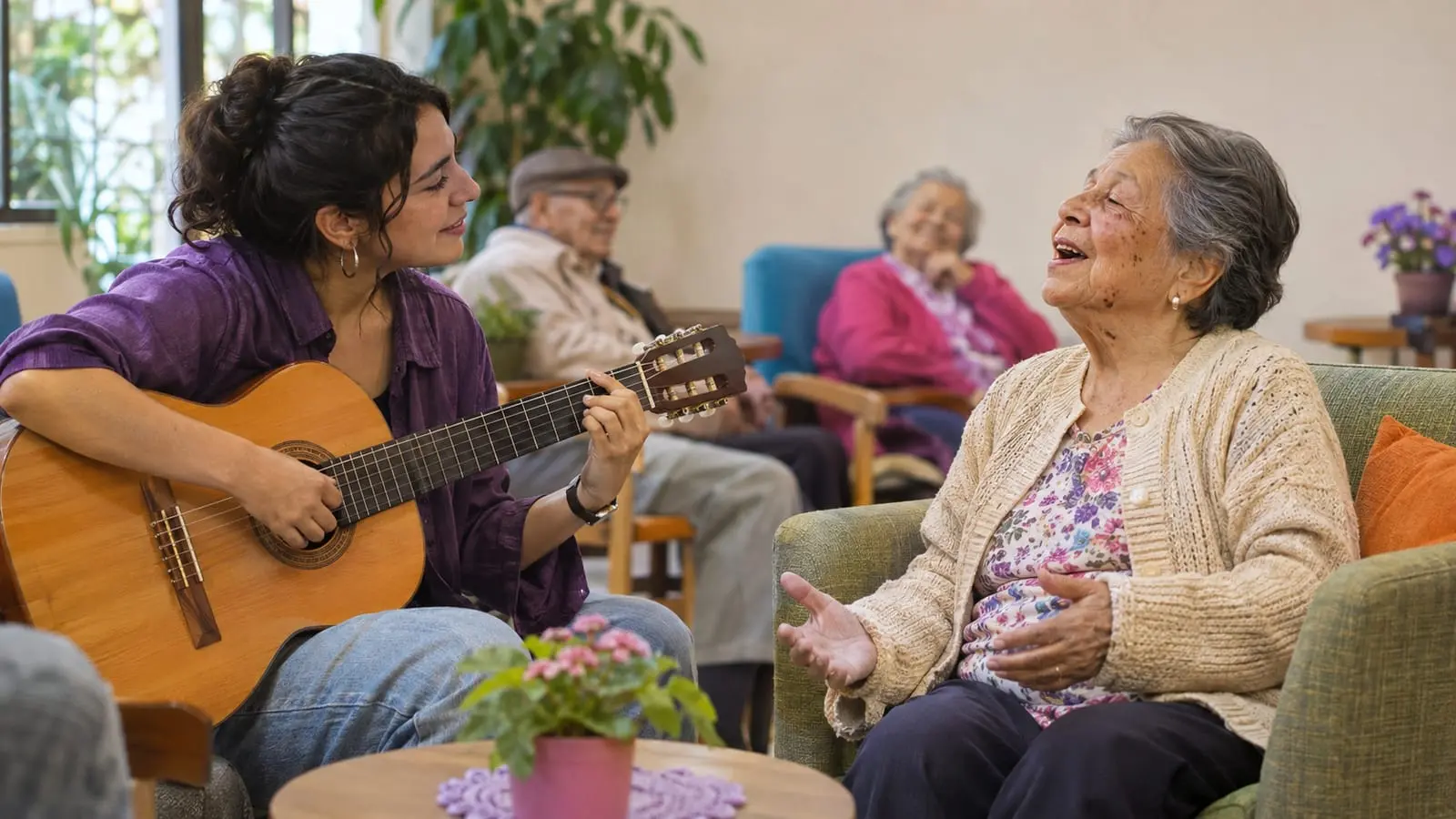
Music therapy is the professional use of music within a therapeutic relationship, guided by a trained music therapist, to address communication, emotions, attention, or movement. It complements other treatments, is not a cure, and requires no musical knowledge.
In this article
- At a glance
- What is music therapy, and what makes it different?
- What are the types of music therapy?
- What happens in a music therapy session?
- How long is a music therapy session, and how often are sessions held?
- What is music therapy used for, and who can it support?
- Benefits of music therapy
- What does the evidence say about music therapy?
- Music therapy or music lessons?
- How can you recognize a trained music therapist?
- Music therapy at Gissi
- Frequently asked questions
- Sources
- About the author
At a glance
- Music therapy uses music to work toward defined therapeutic goals under a trained music therapist's guidance. It is neither a music lesson nor relaxing background music.
- A session usually includes an initial assessment, agreed-upon goals, and active techniques (playing, singing, improvising) or receptive ones (listening).
- It may support people with autism, Down syndrome, ADHD, dementia, or stress, or those undergoing rehabilitation, always as a complementary service.
- Cochrane finds probable benefits for autism and depression symptoms, with moderate-certainty evidence and clear limitations. It is not a cure.
- Sessions usually last between 30 and 60 minutes, once a week, and no musical knowledge is needed.
You may have heard the term at your child's school, in a senior living facility, or in a medical recommendation, and wondered what it means or how it differs from simply playing music. This guide explains it without promises of miracles.
You'll learn about the different types, what a session is like, who it may support, what systematic reviews say, and how to recognize a trained professional. Finally, we explain Gissi's music therapy service.
What is music therapy, and what makes it different?
The World Federation of Music Therapy describes music therapy as the professional use of music and its elements as an intervention in medical, educational, and everyday settings. In practice, what sets it apart is having a goal for each person, a music therapist to support them, and a way to assess their progress.
Scientific reviews typically group the techniques into four types:
- Receptive: listening to music chosen for a purpose, then discussing or responding to what it brings up.
- Improvisation: creating music in the moment with instruments or the voice, without a score.
- Re-creation: singing or playing existing music, often in a group.
- Composition: creating songs or pieces, sometimes with original lyrics.
None of this requires prior musical talent. The goal is not a good performance, but the effect the experience has on the person.
What are the types of music therapy?
When people search for "types of music therapy," they usually find two different classifications: how the person participates and the music therapist's theoretical model.
Active or receptive
In active music therapy, the person makes music: singing, playing, improvising, or composing. In receptive music therapy, they listen to music chosen for a purpose, then talk, draw, or move in response to what they felt. Most sessions combine both.
Individual or group
In an individual session, all the time is devoted to one person, allowing every detail to be tailored to them. In a group session, the group itself is part of the work: taking turns, listening to each other, and making music together. Nordoff Robbins, for example, offers one-on-one, small-group, and large-group work, and recommends a format after an initial session.
The main models
A model is a way of thinking about and organizing the work. These are the most commonly mentioned models, explained in plain language. No single model is generally better than the others: the choice depends on the person and the training of whoever leads the sessions.
| Model | How it works | Often used with |
|---|---|---|
| Nordoff-Robbins (creative music therapy) | The therapist and the person make music together, usually through improvisation, and the therapist responds to what the person contributes to build connection and expression. | Children and adults with autism, disabilities, brain injuries, or dementia |
| Benenzon model | Created by Argentine physician and musician Rolando Benenzon. It draws on the relationship between therapist and patient through sound, the body, and instruments, and on each person's history with sound. | People with communication difficulties or disabilities in Spanish-speaking settings |
| Bonny Method of Guided Imagery and Music (GIM) | The person relaxes, listens to a selection of classical music chosen by the therapist, and describes the images and sensations that emerge. They discuss these afterward. | Adults working through emotional issues or pursuing personal growth |
| Neurologic Music Therapy (NMT) | A set of standardized techniques that use rhythm and music to work toward movement, speech, and attention goals. It requires specific training. | Rehabilitation after a stroke or brain injury, and other movement disorders |
| Analytical music therapy (Priestley) | Developed by British music therapist Mary Priestley. The therapist and the person improvise together, then discuss what the music expressed. | Adults receiving psychotherapy |
Many music therapists combine elements to suit each case instead of following a single model. What matters is that they can explain what they do and why.
What happens in a music therapy session?
Each provider has its own approach, but the process is usually similar:
- Initial assessment. The music therapist talks with the person or their family, reviews any information they share from the healthcare team or school, and observes how the person responds to music.
- Goals. A few specific goals are agreed upon, such as improving communication, emotional regulation, attention, or mobility. These are written down so they can be reviewed.
- Sessions. These combine active and receptive techniques: singing, playing simple instruments such as drums or xylophones, improvising together, listening to and discussing a song, or moving to the rhythm.
- Progress monitoring. Observations from each session are recorded, and the goals are reviewed to see whether they are still appropriate.
Sessions can be individual or in a group. We explain how long they last below. A family member or caregiver can participate when that is helpful.
How long is a music therapy session, and how often are sessions held?
There is no single standard session length. In general, a session lasts between 30 and 60 minutes and takes place once a week to maintain continuity. For young children or people who tire quickly, the music therapist may suggest shorter sessions. Brief sessions are also offered in hospitals and institutions.
At Gissi, sessions last 60 minutes and are usually weekly. The first is an initial assessment, where we get to know the person and agree on goals with the family. Sessions can take place at home in Bogotá or by video call, depending on what works best for your situation.
The number of sessions needed depends on the goals and the individual, and is reviewed as progress is monitored. A responsible music therapist will not promise a result within a set number of sessions.
What is music therapy used for, and who can it support?
Music therapy can provide support in many situations. The possibility of support does not mean a guaranteed outcome, and it never replaces a diagnosis or treatment:
- Autism (ASD): it can support communication and interaction. This is the area with the most research, which we summarize below.
- Down syndrome: it can support language, coordination, and emotional expression as part of a child's therapy plan.
- ADHD: it can support sustained attention and self-regulation through rhythmic routines and games with rules.
- Language difficulties: singing and rhythm are used to work on articulation, turn-taking, and vocabulary.
- Older adults and dementia: it can support mood, connections with others, and memories associated with songs.
- Stress and anxiety: it can offer a guided space for expression and calm.
- Rehabilitation: rhythm is used to support walking, breathing, and coordination, always in collaboration with the rehabilitation team.
This guide does not cite systematic reviews for several of these situations. Treat them as possibilities to discuss with the healthcare team, not as promises.
For more specific information, see our guides to music therapy for children, music therapy for older adults, and music therapy activities.
Benefits of music therapy
The most frequently mentioned benefits fall into the following categories. For each one, we explain how strong the supporting evidence is. Details of the reviews appear below in the evidence section.
Communication and relationships with others
Taking turns making music, copying a rhythm, or singing together can offer a form of communication that does not rely on words. This is one goal when working with autistic children, for example. The evidence here is partial: the Cochrane review could not determine whether it improves social interaction and communication.
Emotions and mood
Music can help people identify and regulate their feelings. This is one of the areas with stronger evidence: reviews on depression and dementia found that it probably helps reduce depressive symptoms, with moderate certainty, although there are still few studies.
Memory and cognition
Familiar songs often bring up memories and spark conversation in older adults. That is different from improving memory: for dementia, the Cochrane review found that it probably does not change cognition. The benefit is emotional and social rather than cognitive.
Movement and coordination
Rhythm is used to support walking, breathing, and coordination. Neurologic Music Therapy is used mainly in rehabilitation, always in collaboration with the medical team. It is widely used, but we do not review studies specific to this area here, so it is a good idea to discuss it with your rehabilitation team.
Pain and anxiety in the hospital
In healthcare settings, music is used during procedures and waiting periods to offer calm. It is studied as a support, rather than a replacement for pain relief or treatment. The evidence cited in this guide does not cover this category, so we leave it as uncertain.
What does the evidence say about music therapy?
Cochrane, an organization that summarizes health research, has reviewed music therapy for several conditions. These are the findings we were able to read, presented along with their limitations.
Autism
Sourced figure
Cochrane's autism review concludes that music therapy probably reduces overall symptom severity, with moderate-certainty evidence.
The Cochrane review of music therapy for autistic people brought together 26 studies with 1,165 participants, mostly children. It concludes, with moderate certainty, that music therapy probably reduces overall symptom severity and improves quality of life in the short term. It cannot say whether it helps with social interaction and communication, and data on adverse effects are very limited. There is almost no long-term follow-up.
Dementia
The 2018 review included 22 trials with 1.097 participants living in institutions. With at least five sessions, music probably reduces depression symptoms and improves behavioral problems at the end of treatment. It probably does not change agitation or cognition, and there is no evidence that effects persist weeks later.
Sourced figure
Cochrane's 2025 dementia update concludes that music-based therapy probably improves depressive symptoms.
Depression
The 2017 review included 9 studies with 421 participants. With moderate-quality evidence, music therapy added to usual treatment may be more effective than usual treatment alone, especially in the short term. The studies were few and varied, so the authors urge caution.
Music therapy or music lessons?
In a music lesson, the goal is learning to play or sing, and the teacher structures progress around musical skills. In music therapy, the goal is therapeutic and music is the medium. Both can coexist and often complement each other. If you're unsure, read music therapy or music lessons and explore our music lessons, such as piano or singing.
How can you recognize a trained music therapist?
In Colombia and other countries, some people use the term without specific training. Before you begin, ask:
- Where they studied music therapy, which program they completed, and in which years.
- Which groups of people they have worked with and how they set goals.
- How they record progress and coordinate with the doctor, school, or therapists.
- What they do not promise: a responsible professional does not talk about cures.
Music therapy training takes place in dedicated programs. One example in Bogotá is the Master's Program in Music Therapy at the Faculty of Arts of the Universidad Nacional de Colombia, which awards a master's degree in music therapy and accepts professionals from music, the arts, healthcare, or education. In other countries, associations such as the American Music Therapy Association require completion of an approved program.
Music therapy at Gissi
At Gissi, we offer music therapy, with sessions led by a music therapist, at home in Bogotá or online by video call. This is a separate service from music lessons.
Sessions last 60 minutes and are usually weekly. They are led by music therapists with master's or doctoral degrees. The first session is an initial assessment, where we agree on goals with the family, then monitor progress afterward. We also work with institutions such as care homes for older adults, schools, and rehabilitation centers. No musical knowledge is needed. If you would like to learn how we work or whether the service fits your needs, get in touch for a conversation with no obligation.
Frequently asked questions
What do you need to study to become a music therapist?
You need specific training in music therapy, typically through graduate programs or their equivalents. In Bogotá, one example is the Master's Program in Music Therapy at the Universidad Nacional de Colombia. Always ask where the person leading the sessions studied.
Do I need any musical knowledge?
No. Music therapy does not assess whether you play well or sing in tune. Techniques are adapted to each person, using simple instruments, the voice, or just listening.
Does music therapy replace other treatments?
No. It is an addition to medical treatment, therapies, and school support, and it is a good idea for the music therapist to coordinate with the healthcare team. No scientific review presents it as a cure.
What are the benefits of music therapy?
It can support communication, mood, movement, and connection with others. Cochrane reviews find probable benefits for autism symptoms, depression, and behavioral problems in dementia, with moderate certainty and clear limitations. It is not a cure.
Is music therapy the same as listening to relaxing music?
No. Listening to music can be pleasant and relaxing, but music therapy has defined goals, a trained music therapist, an initial assessment, and progress records. The review findings are based on professionally guided sessions.
Can music therapy take place online?
Yes. Gissi offers sessions at home in Bogotá or by video call, depending on what works best for each person. For young children, an adult should stay nearby at the screen.
Is music therapy for adults or only for children?
It's for all ages. It is used with adults experiencing stress, anxiety, depression, or rehabilitation, and with older adults, particularly those with dementia, to support mood and connection with others.
Who can offer music therapy in Colombia?
Someone with specific music therapy training, such as the master's in music therapy at Universidad Nacional de Colombia or an equivalent program. Ask about their degree, experience with your situation, and how they track progress.
Sources
We checked the facts in this article against these sources on November 8, 2026.
- Cochrane: music therapy for autistic people (plain-language summary)
- Cochrane: music-based interventions for people with dementia (van der Steen et al., 2018)
- Cochrane: 2025 update on music-based therapy and dementia
- Cochrane: music therapy for depression (Aalbers et al., 2017), discussed in BJPsych Advances
- American Music Therapy Association: what music therapy is
- Faculty of Arts, Universidad Nacional de Colombia: Master's Program in Music Therapy
- Nordoff Robbins: what music therapy is and how it works (one-on-one, small group, or large group)
- Academy of Neurologic Music Therapy: what Neurologic Music Therapy is
- Association for Music and Imagery: frequently asked questions about the Bonny Method (GIM)
About the editorial team
Author
Bachelor of Music Education, Universidad Pedagógica Nacional · Music teacher with 6+ years teaching children, teens and adults
Gisselle Torres holds a degree in Music Education from the Universidad Pedagógica Nacional. She is a flutist and has taught music for more than 6 years. She teaches children, teens and adults at home and online, and writes these guides from what works in her lessons.
See Gisselle's profile and lessons
Fact check
We check every figure and fact in each guide against published sources and update it when they change. Last review: November 8, 2026.